Hey there, if you’ve ever stood in a foundry, watching molten metal bubble like something out of a science fiction movie, you know that getting the carbon content just right is make or break. Too low, and your castings will be brittle, prone to cracking the second they cool. Too high, and they’ll be hard to machine, like trying to carve a bar of concrete. That’s where I come in— I’m with a Carbon Raiser supplier, and let me tell you, this stuff isn’t just some random bag of black powder; it’s the secret sauce that controls exactly how much carbon ends up in that hot molten metal. Carbon Raiser
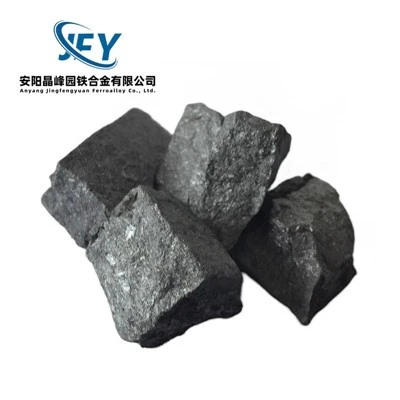
I get it, most folks in the foundry game are busy chasing production numbers, fixing furnace issues, and keeping their teams safe— they don’t have time to deep dive into every little additive. But here’s the thing: skipping the small stuff with your carbon raiser can cost you big down the line, whether that’s reworking scrap castings, dealing with rejected parts, or even running your furnace inefficiently. Let’s break this down like we chat in the break room, no stuffy jargon, just real talk about how this stuff actually works.
First off, let’s get one basic thing straight. Molten metal (usually cast iron, since that’s where carbon raisers see the most use) starts off with whatever amount of carbon you put in the furnace at tap-out, right? Wait, no— actually, it’s a mix of the pig iron, scrap steel, and any other raw materials you load, plus whatever gets added during the melt. But those raw materials? They’re inconsistent. One batch of pig iron might have 3.5% carbon, the next 3.8%, just because of where it was made. Scrap steel? Barely any carbon at all, like 0.05% or less. So if you’re loading a furnace with mostly scrap to keep costs down, you’re starting from scratch— literally. That’s where carbon raiser comes in.
But not all carbon raisers are created equal. I’ve seen guys grab cheap, low-grade carbon from random suppliers, thinking “it’s just carbon, right?” and end up with a mess. Why? Because carbon raiser’s whole job is to dissolve into the molten metal, and fast. If it’s got too many impurities— like ash, sulfur, or even chunks that are too big— it’ll float to the top as slag before it can do its job. Or it’ll take forever to dissolve, and by the time it does, you’ve already poured your metal, leaving spots with too little carbon or too much. Let’s be real: in foundries, time is money. You can’t wait 20 extra minutes for carbon to mix in while your furnace is sitting idle, wasting fuel.
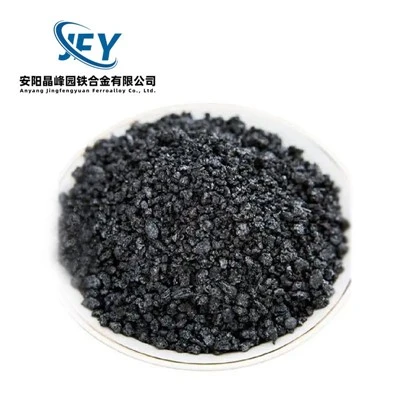
Here’s how the process actually works, step by step, like I watched it happen last week. When you add carbon raiser to the molten metal (usually after the scrap is mostly melted, or during the final blow before tapping), it’s made up of super high-carbon, low-impurity materials— think calcined petroleum coke, or graphite, stuff that’s almost pure carbon. When it hits the hot metal (we’re talking 2,800°F to 3,000°F, give or take), the surface of those carbon particles starts to react with the molten iron. The small size of the particles (we screen ours to a consistent 10-20 mesh, perfect for mixing) means more surface area touching the metal, so it dissolves faster. That’s key— if it’s too coarse, only the edges melt; too fine, it gets sucked up into the furnace fume system before it can sink or mix.
Wait, but what about the carbon content we’re actually targeting? Let’s say you need a gray iron casting with 3.2% to 3.5% carbon, that’s the sweet spot for strength and machinability. Let’s do a quick example: you load 10 tons of scrap steel (0.05% carbon) into the furnace. That gives you 0.005 tons of carbon to start with— basically nothing. Your pig iron adds another, say, 0.3 tons, so now you’re at 0.305 tons. You need 0.35 tons total for 10 tons of metal, so you’re short 0.045 tons, or 45 kilograms, of carbon. That’s exactly what you’d use carbon raiser for. But if you measured wrong, or your carbon raiser has impurities that add extra weight (like ash that doesn’t count as carbon), you’d add too much and end up with 3.7% carbon, which is too high.
I’ve had so many customers come to me after dealing with bad carbon raiser, saying “we added what we were supposed to, but we’re still low on carbon.” Nine times out of ten, it’s because their old raiser only had 85% actual carbon, not 95% like it said on the bag. The rest was filler that didn’t dissolve, so when they calculated their dose, they added extra useless material, not enough real carbon. That’s the kind of headache we eliminate by testing every batch before it leaves our warehouse— we measure the fixed carbon content, the ash, sulfur, all that, so our customers know exactly how much actual carbon they’re getting per pound.
Another thing people don’t talk about: how carbon raiser affects the uniformity of carbon across the entire heat. If you add it too early, while the metal is still solid in spots, it might sink to the bottom of the furnace and not mix. Add it too late, right before tapping, and it won’t have time to distribute evenly, so your first ladle has too much carbon, the last ladle too little. We work with every customer to adjust their dosing based on their furnace size, tap time, and desired carbon range. Like, for a 5-ton induction furnace, we recommend adding 70% of the carbon raiser after 80% of the scrap is melted, then the last 30% 10 minutes before tapping— that way it’s fully mixed, no hot spots.
I also can’t skip over the science bit that makes this stick: when carbon dissolves in molten iron, it forms cementite (Fe3C) and graphite, depending on the cooling rate. But the amount of total carbon is fixed once the raiser is fully dissolved, right? Wait, almost— some carbon will be lost to the furnace atmosphere, or to slag, especially if you have too much oxygen in the metal. That’s why we tell customers to account for a 2-5% loss when calculating their dose, not just add exactly what they need. A good carbon raiser won’t add extra loss from impurities, either— sulfur is a big one. Too much sulfur in your metal makes castings hard and brittle, so our raisers have under 0.5% sulfur, way below industry limits.
Let me share a quick story to make this real. Last month, a customer in Detroit was having a problem with their brake caliper castings— 12% of them were being rejected for being too brittle. They thought it was their scrap mix, or their pouring temperature. They were using a cheap carbon raiser from a overseas supplier, so we asked them to switch to ours for one heat. We sent their lab a sample of our raiser, confirmed it was 94% fixed carbon, 0.35% sulfur. They adjusted their dose, added it at the right time, and that heat had a consistent 3.3% carbon. Not a single rejected casting from that batch. They called me the next week, saying their rework costs dropped by $1,200 that month— all from switching the carbon raiser. That’s the kind of win we live for.
Now, let’s get to the common mistakes I see all the time, because no one’s perfect, but avoiding these saves so much hassle. First, not calibrating your scale. If your scale is off by 5 pounds, that’s 5 pounds of extra carbon raiser (or missing) per ton of metal, which adds up fast. Second, using carbon raiser for steel, not just cast iron. Wait, carbon raiser works for steel too, but steel usually targets lower carbon, like 0.2-0.5%, so you need a different grade, more fine carbon for fast dissolution. Third, not testing your carbon content after tapping. You should always take a sample, run a quick carbon test, and adjust the next heat if you’re off— no matter what the recipe says. We even have free guides for our customers on how to do that test in 2 minutes, no fancy lab needed.
Here’s the thing I want everyone to remember: carbon raiser isn’t just an expense, it’s an investment. When you pick a reliable supplier, you’re not just getting a bag of carbon, you’re getting consistent carbon content every single time, lower rework, less scrap, and a smoother production line. I’ve been doing this for 12 years, and I’ve seen foundries go from 10% scrap to under 2% just by switching their carbon raiser. It sounds too simple, but that’s how it works.
If you’re currently dealing with inconsistent carbon content, too many rejected castings, or just want to optimize your heat to save money, I’m here to help. We’ll send you a free sample, help you calculate exactly how much carbon raiser you need for your furnace, and even walk you through the dosing process step by step. No pushy sales stuff, no fine print— just real advice from someone who’s been in the foundry trenches, not just sitting in an office.
Don’t get stuck guessing about your carbon content. The right carbon raiser can make or break your castings, your budget, and your downtime. Reach out whenever you’re ready to chat about what you need. We’re here to make your process simpler, your castings better, and your bottom line stronger.
Carbon Raiser References
- “Foundry Additives: Properties, Selection, and Application,” International Foundry Research Association, 2021.
- Calculation of Carbon Content in Molten Cast Iron, American Foundry Society, 2019.
- Effects of Carbon Raiser Impurities on Molten Metal Quality, Journal of Manufacturing Processes, Vol. 45, 2020.
Anyang Jingfengyuan Ferroalloy Co., Ltd.
As one of the most professional carbon raiser manufacturers and suppliers in China, we’re featured by quality products and good price. Please rest assured to buy bulk carbon raiser in stock here and get quotation from our factory. We also accept customized orders.
Address: Longquan Town Industrial Park, Long’an District, Anyang City, Henan Province
E-mail: Jingfengyuan@jfyferroalloys.com
WebSite: https://www.jfy-ferroalloy.com/
