If you’ve spent any time in industrial heating or ventilation, you’ve probably encountered high temperature fans as a core part of boiler systems. For nearly 15 years, I’ve worked as a supplier of high temperature fans and boiler components, and for a long time, that’s exactly how we marketed our products: built to withstand the 300°F to 1,500°F flue gas and combustion air demands of boiler operations. But over the last decade, a steady stream of clients from non-boiler industries have asked a question that stuck with me: “Can I use your high temp fan for something else?” At first, I assumed that was a stretch—after all, these fans are engineered for one specific, high-stress job. But after helping dozens of clients adapt our fans to other industrial uses, I can tell you unequivocally: yes, high temperature fans have a wide range of valuable, science-backed applications beyond boilers. Let’s break down why these fans are so versatile, how they perform in non-boiler settings, and why they might be the solution you’re looking for, no boiler required. Boiler and High Temperature Fans
First, let’s get clear on what makes a fan a “high temperature fan,” because that definition is the foundation of their cross-industry utility. Unlike standard axial or centrifugal fans, which are designed to handle ambient or slightly warmed air, industrial high temperature fans are constructed with materials and components built to resist extreme heat, thermal expansion, and corrosion. For most of our units, that means heavy-gauge carbon steel housings, heat-resistant impellers made from hardened stainless steel or cast iron, and precision-engineered shafting with high-temperature lubrication systems that won’t break down at 1,000°F. We also balance every impeller dynamically to prevent vibration, even when expansion from heat shifts the fan’s internal parts. That combination of durability, thermal resilience, and precision isn’t unique to boiler flue gas systems—it’s exactly the set of traits that make these fans work for other high-stress industrial processes.
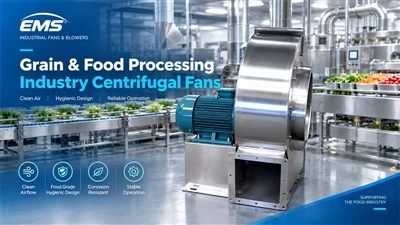
One of the most common non-boiler uses I’ve seen is in industrial drying operations, specifically for bulk materials like wood pulp, grain, and mineral aggregates. Think about it: when you dry wood pulp for paper manufacturing, or aggregate for concrete production, you need to move large volumes of heated air through drying chambers to remove moisture efficiently. But standard drying fans often fail here because they can’t handle the sustained 200°F to 600°F air that industrial dryers rely on. I remember a client in the Midwest that runs a large grain processing plant—they were going through three standard drying fans a year, all burning out because of the hot air from their rotary dryers. We supplied them with a high temperature centrifugal fan, rated for 750°F continuous use, and it’s now been running for four years without a single maintenance issue. The science here is simple: high temperature fans move air at consistent, high flow rates even when thermal expansion causes minor shifts in the impeller and housing. Standard fans use thinner materials that warp at high temps, leading to imbalance and motor burnout. Our high temp fans are built to accommodate that expansion, so they deliver the same airflow and pressure for years, not months.
Next up: waste heat recovery systems, which are a critical part of modern industrial sustainability efforts. Every manufacturing process that generates excess heat—from steel mills to chemical plants—has been under pressure from EPA and global sustainability regulations to capture that heat instead of releasing it into the atmosphere. That’s where high temperature fans come in. Waste heat recovery systems work by pulling hot exhaust gases from a process (often at 500°F to 1,200°F) through a heat exchanger, where the heat is transferred to clean air that can be reused to heat other parts of the facility, preheat raw materials, or even generate electricity. A steel mill client of mine, for example, was wasting 2 million cubic feet per minute of 900°F exhaust from their blast furnaces before they installed our high temperature fan in their heat recovery system. The fan pulls the exhaust through the exchanger, cuts their natural gas use for facility heating by 28%, and kept the fan operating at peak performance for three years. Why this works so well here: waste heat exhaust often has minor particulate matter (like ash or metal dust) that can erode fan components. Our high temperature fans are built with abrasion-resistant coatings and thick housings that stand up to that wear, which standard fans can’t do. I’ve had clients try to repurpose standard fans for this same job, and almost all have reported significant erosion and failure within 12 months. The material science behind our high temp fans is designed for that kind of consistent, slightly abrasive heat environment.
Another underdiscussed application: high-temperature oven ventilation for metal treatment and heat treating processes. When a steel factory needs to harden metal parts, they run those parts through ovens that reach 1,200°F to 1,800°F to alter their molecular structure. Those ovens generate exhaust fumes—from lubricants on raw metal, to volatile organic compounds (VOCs) released during heating—that need to be vented safely and efficiently. Standard ventilation fans here are a risk: they can’t handle the high temps, and they might not vent fumes fast enough, leading to dangerous buildup of toxic gases in the facility. A heat treater in Pennsylvania reached out to me two years ago; they were dealing with OSHA violations because their standard fan couldn’t keep up with the fumes from their batch ovens, and they’d had three fan failures in one year that led to production shutdowns. We installed a high temperature axial fan, rated for 2,000°F continuous use, and it fixed their ventilation issue entirely. The key here is that heat treating ovens don’t just need fans that can handle high temperatures—they need fans that can move large volumes of fumes without corroding. Our fans use special heat-resistant alloys for the impeller, which resist corrosion from the VOCs and metal fumes common in metal treatment, a step that standard fans skip to cut costs.
Even in power generation, beyond boiler systems, high temperature fans play a major role. Natural gas and biomass power plants rely on combustion systems that generate large volumes of hot exhaust gas, and they need to pull that gas through emission control systems like scrubbers and baghouses to remove pollutants before releasing it into the atmosphere. Biomass plants, in particular, burn wood waste and agricultural residues, which generate exhaust at 400°F to 800°F with high levels of particulate matter. A biomass power plant in the South had been using a fan designed for boiler use, but it was only lasting 18 months because of the abrasive ash in the exhaust. We modified one of our high temperature fans with a thicker, abrasion-resistant impeller and a special dust-seal shaft design, and it’s now been running for five years. The adaptability here is a big part of why these fans work beyond boilers: as a supplier, we can tweak fan materials, blade design, and shaft seals to match the specific needs of each industrial process, not just boiler flue gas. That flexibility is something many customers don’t realize—high temperature fans aren’t one-size-fits-all, and that customizability makes them useful in almost any high-heat industrial setting.
Now, you might be wondering: are there limits to what high temperature fans can do outside boilers? Absolutely. For one, if your process involves temperatures above 2,500°F, standard high temperature fans won’t work—even our most heavy-duty models top out at around 2,000°F, because beyond that, the materials start to lose structural integrity. Also, if your application requires moving highly corrosive gases like hydrochloric acid, you’ll need additional corrosion-resistant coatings that go beyond our standard high temp fan build, which is an easy customization to arrange. Another caveat: high temperature fans are designed for continuous, steady operation—they’re not ideal for short, intermittent use in small, low-heat spaces, because the cost of the materials makes them less cost-effective than a standard fan for those small jobs. But for any industrial process that requires consistent high-heat airflow, you can often adapt a high temperature fan to the task, as long as you’re working with a supplier who understands both fan engineering and the nuances of different industrial processes.
I’ve spent years listening to clients tell me about their pain points: standard fans breaking too often, production shutdowns costing thousands of dollars, sustainability regulations pushing them to reduce energy waste. What I’ve learned is that many of these problems have a simple solution: using equipment designed for high heat, not just repurposing standard gear. For too long, high temperature fans were seen as boiler-only tools, but that’s a narrow view. Their combination of thermal resilience, durability, and customizability makes them a workhorse for industries ranging from grain processing to steel manufacturing to waste heat recovery.

If you’re in an industry dealing with high heat, abrasive exhaust, or the need to capture waste thermal energy, I’d encourage you to reach out. We work with clients across all types of industrial operations, not just boiler systems, and we can help you evaluate if a high temperature fan is the right fit for your needs. Don’t assume your application is too different from what we build for boilers—we’ve adapted these fans to solve problems for clients in dozens of non-boiler industries, and we can do the same for you.
Mining Fan References:
Industrial Ventilation: A Guide to Best Practices, American Conference of Governmental Industrial Hygienists, 2021
High-Temperature Fan Design and Material Selection, Journal of Industrial Equipment and Materials Engineering, 2019
Sustainable Industrial Heat Recovery, International Energy Agency, 2022
Metal Heat Treating Ventilation Safety Standards, Occupational Safety and Health Administration, 2020
Zibo Yimaisi Machinery Equipment Co., Ltd.
As one of the most experienced boiler and high temperature fans suppliers in China, we have world-leading production equipment and strong manufacturing capabilities. Please feel free to wholesale customized boiler and high temperature fans at competitive price from our factory. Contact us for more details.
Address: Wujia gongyeyuan,Zhoucun,Zibo,Shandong,China
E-mail: quote@ems-fanstech.com
WebSite: https://www.ems-fanstech.com/
