If you’ve ever stood at a construction site, watched a crew load a mountain of dirt, gravel, or demolition debris into a truck, and wondered just how much that machine can haul, you’re not alone. As a dump truck supplier who’s spent 15 years on the ground (and behind the scenes) moving everything from suburban home sites to large-scale highway projects, this question is one I hear every single week. New site managers, small business owners, even veteran operators sometimes mix up “capacity” — how much a truck can physically carry in its bed — with payload, or the total weight it can safely transport, plus the difference between light-duty and heavy-duty models. Today, let’s break this down clearly, no jargon, no fancy charts, just the real-world answers you need. Dump Truck
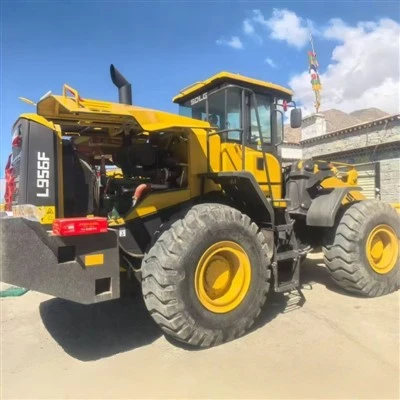
First, let’s define what “dump truck capacity” actually means here. When most people ask that question, they’re referring to the volume of material the truck’s bed can hold, right? That’s the number you’ll see advertised on spec sheets, usually in cubic yards or cubic meters. But here’s the first mistake many make: a cubic yard of loose gravel is not the same as a cubic yard of dense wet concrete, or even a cubic yard of fluffy topsoil. That’s why a truck’s rated volume is just the starting point.
Let’s start with the light-duty models, which are perfect for small jobs: landscaping, small residential excavations, or moving mulch for a local nursery. These are the pickups with dump beds, often called “dump body trucks” built on a half-ton or three-quarter-ton chassis. Their capacity tops out at around 3 to 5 cubic yards of loose material. Wait, let’s put that in perspective: a cubic yard is about the size of a standard fridge, so a 5 cubic yard bed holds roughly five fridges’ worth of loose dirt. These trucks are nimble, easy to maneuver on narrow residential streets, and ideal for jobs that don’t require heavy loads. But here’s the catch: while their volume is low, their payload (the maximum safe weight they can carry) is usually only 2,000 to 4,000 pounds. That means if you’re loading wet sand, which can weigh up to 3,000 pounds per cubic yard, you might only fit a yard and a half before hitting that weight limit — not the full 5 yards the bed looks like it can hold. That’s a critical point for anyone planning a small job: don’t just go by volume, calculate weight too.
Next, the medium-duty dump trucks, the workhorses for most commercial small to mid-sized projects: small construction sites, road repairs, apartment complex landscaping. These are chassis built on a Class 6 or 7 frame, with beds ranging from 10 to 15 cubic yards in volume. Payload here jumps to 12,000 to 20,000 pounds. Let’s test that with that same wet sand: 15 cubic yards would weigh about 45,000 pounds, way over the payload, so in reality you’d be looking at 4 to 6 cubic yards of wet sand, or a full 10 to 12 cubic yards of lighter material like mulch, dry topsoil, or gravel. That gap between advertised volume and usable load is something I remind every customer of when they come to pick a truck. I’ve seen so many owners overstuff their medium-duty trucks, thinking they’re getting more bang for their buck, only to get a warning from a weigh station, or worse, damage the suspension — which means expensive repairs and downtime.
Then there’s the heavy-duty side, the big rigs that build the interstates, high-rise foundations, and large-scale mining operations. These are Class 8 dump trucks, the ones you see rumbling down the highway with beds that look small compared to the wheels. Wait, their volume ranges from 15 cubic yards all the way up to 40 cubic yards, and some custom off-road mining models go even higher. Their payload is where it gets impressive: a standard Class 8 dump truck can carry 25,000 to 40,000 pounds of material. Mining-specific models? They can handle 100,000 pounds or more, with beds that hold 60,000 pounds of dense rock. Again, weight is the limiting factor here. I had a customer last year, a highway contractor, who tried to load 18 cubic yards of dense wet concrete into a heavy-duty truck that only had a 35,000 pound payload. That concrete would’ve weighed almost 54,000 pounds — way over. He ended up having to send half the load back, which cost him extra time and fuel. That’s the kind of mistake that comes from not understanding that volume and capacity aren’t the same thing.
Now, why is this number so important for your job? Let’s use a common example: a backyard excavation for a new patio. You need to remove 10 cubic yards of old dirt. If you rent a light-duty dump truck, you’d have to make 4 trips — each carrying about 2.5 cubic yards, since the wet dirt would hit the payload limit. A medium-duty truck would carry almost all of it in one trip, maybe two at most, saving you time and fuel. For a 1-mile job, that means 4 hours of work vs. 1 hour, a huge difference in labor costs. That’s why picking the right capacity isn’t just about how much fits in the bed — it’s about your bottom line.
Wait, let’s bust another myth: “bigger is always better.” I’ve had customers who show up wanting a 40-cubic-yard mining truck for a 1,000 square foot residential project. It’s like using a semi to move a couch — you’re wasting money on fuel, maintenance, and maneuverability. A 40-cubic-yard truck is 30 feet long, 12 feet high, and can’t fit through standard residential gates, so they’d have to park it on the street and haul material with smaller trucks anyway. It’s a total waste. That’s why as a supplier, I don’t just push the biggest truck I have. I ask questions: what’s the job size, what material are you moving, where will the truck be driving? A landscaper doing weekly mulch runs doesn’t need a heavy-duty rig. A highway contractor can’t use a light-duty truck to move 20 tons of rock. Matching the truck’s capacity to the job is the best way to avoid headaches.
Now, what about the fine print on capacity numbers? You might see “heaped capacity” vs. “struck capacity” on a spec sheet. Struck capacity is the volume of the bed when it’s level with the top of the sides — that’s the number most states use to calculate weight limits, so you can’t legally exceed that for road travel. Heaped capacity is the extra pile you can add on top, usually a 10% to 20% increase, which is great for off-road sites where you don’t have to worry about weigh stations, but never use that for road hauling. I’ve had operators get pulled over because they filled their truck to heaped capacity on a public road, and got a $500 fine — that’s a $500 mistake from not reading the small print.
So, to sum up the numbers for quick reference, based on common use cases:
- Light-duty (Class 3-5): 3-5 cubic yards, payload 2,000-4,000 lbs. Ideal for small landscaping, residential hauling.
- Medium-duty (Class 6-7): 10-15 cubic yards, payload 12,000-20,000 lbs. Ideal for small construction, road repairs, mid-sized landscaping.
- Heavy-duty (Class 8): 15-40 cubic yards, payload 25,000-40,000 lbs. Ideal for large construction, highways, commercial excavation.
- Off-road mining/quarry models: 40-60+ cubic yards, payload 100,000+ lbs. Ideal for mining, large rock hauling.
But here’s the thing: these numbers aren’t universal. A truck’s capacity also depends on its chassis strength, the type of bed (aluminum beds are lighter, so you can carry more payload than steel beds, which are better for sharp, heavy material like rock), and local weight limits. Some states have stricter bridge weight limits, so a heavy-duty truck might only be allowed 30,000 lbs on certain roads, even if its payload is 40,000 lbs. That’s another reason to talk to a supplier who knows the area — we can help you navigate those rules.
As someone who’s been selling and supporting dump trucks for years, the most common question I get after “what’s the capacity?” is “how do I pick the right one for my job?” The answer isn’t just the numbers. It’s about your timeline, your budget, the terrain you’re working on, and even access to the job site. If you’re working on a narrow, steep site, a heavy-duty truck might not fit, no matter how much it can carry. If you’re hauling material over 50 miles, fuel efficiency becomes a bigger factor than raw capacity.
I’ve seen customers go wrong in two ways: either they pick a truck that’s too small, leading to dozens of extra trips, or too big, leading to wasted money and time. That’s why I make it a point to sit down with every customer, ask about their last job, their current project, and their goals, before recommending a truck. Last month, a new excavator operator came in thinking he needed a 15 cubic yard truck for his first commercial job, which was removing debris from a 5,000 square foot office remodel. Turns out his access road was only 10 feet wide, so a 12 cubic yard medium-duty truck was perfect — it fit through the gate, got him where he needed to go, and saved him $20,000 in upfront rental costs vs. the heavy-duty model he was looking at.
Now, if you’re in the market for a dump truck, whether you’re a small business owner expanding your fleet, a contractor taking on a new project, or someone renting for a one-time job, the takeaway is this: don’t just look at the cubic yard number. Ask about payload, confirm the bed type, check local weight limits, and think about where you’ll be driving the truck. That’s how you get the right capacity, no wasted money, no delays, no fines.
At the end of the day, a dump truck’s capacity is more than just a spec on a page. It’s the difference between a job that runs on time and on budget, and one that hits snags that eat into your profits. I’ve been part of enough projects where a wrong truck choice turned a smooth week into a chaotic mess, and enough where the right truck made the work go twice as fast. If you’re not sure which truck fits your needs, or you want to learn more about custom options for specific jobs, don’t guess — reach out. A little clarity upfront saves a lot of headaches later.
If you’re ready to talk through your project, ask questions about capacity, payload, bed types, or anything else dump truck related, you can connect with our team to discuss your needs and find the right vehicle for your job. No pushy sales pitches, no hidden fees — just straight answers from people who work with these trucks every day.
Dump Truck References
- U.S. Environmental Protection Agency. (2022). Heavy-Duty Dump Truck Emissions and Fuel Efficiency Guidelines.
- National Truck Equipment Association. (2021). Dump Truck Capacity and Payload Standards for Construction Applications.
- Construction Equipment Association. (2023). Guide to Selecting Dump Trucks for Residential and Commercial Projects.
- Federal Motor Carrier Safety Administration. (2022). Commercial Vehicle Weight Limit Regulations for Road Haulage.
Best Heavy Industry (Shandong) Co., Ltd.
As one of the most professional dump truck manufacturers and suppliers in China, our products have good reputation in the market. Please feel free to buy premium dump truck made in China here from our factory. Quality products and reasonable price are available.
Address: Quanpu Industrial Park, Liangshan County, Jining City, Shandong Province.
E-mail: ensonzhouau@gmail.com
WebSite: https://www.trustmytrucks.com/
