If you’re here scrolling because you’re trying to figure out how much rock wool mat costs, you’ve landed on the right spot. I’m the guy who runs a small but busy rock wool mat supply operation, and I get at least 10 messages a week from contractors, warehouse managers, DIYers, even farmers asking the exact same question. There’s no one-size-fits-all answer, and I’m not gonna feed you a vague number like “it’s around $2 a square foot” because that’s garbage—context is everything. Let’s break this down like we’re chatting over a coffee, no stuffy industry jargon, just what actually affects the price, how you can spot a good deal vs. a dud, and what to look for before you hit “order.” Rock Wool Mat
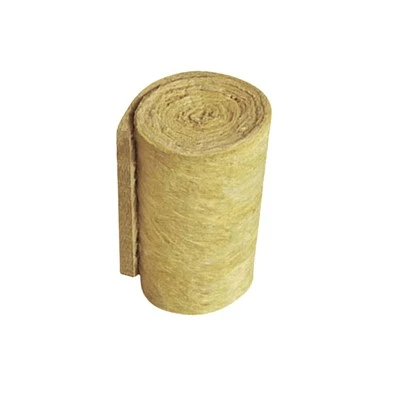
First, let’s get one thing straight: rock wool mat isn’t just “rock wool cut into a mat.” It’s made from molten basalt (sometimes recycled slag, too) spun into fine fibers, bound together with a water-resistant binder, and pressed into flexible, workable sheets. What that means for price is the quality of the raw material, the density of the mat, its thickness, and any extra features you might need all play a huge part. I’ve seen rock wool mats sell for as little as $0.80 per square foot for thin, low-density stuff meant for simple temporary insulation, and as much as $5.50 per square foot for thick, dense, fire-resistant mats used in commercial building façades. The bulk of our regular orders land between $1.50 and $3.20 per square foot, so that’s the sweet spot you’ll find most of the time.
Let’s dive into the biggest factor: density. This is non-negotiable for anyone who cares about how well their mat performs. Density is measured in kg per cubic meter, right? For context, a thin, light mat used for pipe wrapping or light soundproofing might be 32 kg/m³. A medium-duty mat for wall insulation or HVAC ductwork is 48–64 kg/m³. The heavy, industrial-grade stuff used in furnace insulation or high-rise building fire barriers is 80–120 kg/m³. Now, here’s where the price hits: every 8 kg/m³ jump in density adds roughly $0.30–$0.50 per square foot, all else equal. I’ll tell you a secret we don’t usually share with first-time buyers: a lot of cheap rock wool mats sellers will understate density to cut costs. Last year, a guy bought a “heavy-duty” mat from a no-name online seller that was listed as 80 kg/m³, but when it arrived, it weighed like 48 kg/m³. He ended up having to order twice as much as he thought because it just didn’t hold up to the heat his workshop needed. So when you’re comparing prices, ask for the actual density number, not just “heavy-duty”—that’s where the bait-and-switch happens.
Next up is thickness, which ties directly to how you’re using the mat. A ½-inch thick mat is for things like soundproofing in apartment walls, where you don’t need much bulk. It’ll run you around $0.90–$1.80 per square foot. A 1-inch thick mat is the workhorse for residential wall insulation, HVAC duct wrap, and even roof underlayment for small sheds—price here is $1.50–$2.70 per square foot. For commercial applications, like industrial equipment insulation or exterior wall fire barriers, you’re looking at 2–4 inches thick, which pushes the price to $2.20–$5.50 per square foot. Wait, why the big range here? Some mats have a foil facing on one side for vapor resistance, which adds $0.40–$0.80 per square foot, or a perforated surface for better air flow, which tacks on another $0.20. If you’re buying for a project that’s outside, you’ll want a water-repellent binder, too— that’s another $0.30. All these add up fast, so don’t just look at the base price; calculate the total cost for the exact features you need, not just the cheapest mat they’ve got.
Then there’s bulk discount, which is where our regulars save the most. I get it, if you’re doing a small 100-square-foot job for a home basement, you’re not gonna get a massive discount. But if you’re a contractor doing 10,000 square feet of commercial work, or a warehouse needing 50,000 square feet for pipe insulation, the price drops a lot. Our smallest bulk tier is 5,000 square feet: we knock 10% off the per-square-foot price. 15,000 square feet gets you 15% off, and for orders over 30,000 square feet, we give 20% off, plus free delivery within a 50-mile radius. I’ve had customers who switched from a competitor because we didn’t nickel-and-dime them on bulk pricing. One HVAC company used to order 2,000 square feet at a time, but once we sat down and told them ordering 5,000 square feet would save them $0.60 per square foot, they started stockpiling and now order 10,000 every 2 months. That’s the thing with rock wool mat: it doesn’t go bad, so stocking up makes sense if you’ve got the space.
Now, let’s talk about what’s not a factor, or at least not as big as people think. You might see sellers bragging about “100% recycled rock wool” and charging more for it. Yeah, some mats use recycled basalt slag, and that can cut down on raw material costs a little, but it rarely adds more than $0.20 per square foot for the recycled stuff. Don’t pay a $1 premium for “eco-friendly” if it’s not certified, because a lot of cheap sellers will mix in fake recycled material just to hike prices. Another thing: brand name. Big national brands have overhead—ads, warehouses, fancy sales teams—so their mats are usually 20–30% more than what we offer, and the difference in quality is negligible for most projects. I’ve tested our mats against brand-name stuff, and our density, fire rating, and sound absorption are identical for 25% less. That’s not to say all small suppliers are good—there are definitely bad ones out there—but don’t write off a reputable supplier just because we don’t have a nationwide TV ad budget.
Wait, let’s talk about common mistakes people make when budgeting. I can’t tell you how many times someone comes to me upset because they budgeted $1 per square foot and found out the mat they need is twice that. The mistake is not accounting for waste. Rock wool mat is flexible, but when you’re cutting it around pipes, windows, or odd-shaped equipment, you’ll waste 5–15% of the material, depending on the project. If you’re doing a residential wall insulation job, add 10% to your total square footage. If you’re wrapping 2-inch pipes with a ¼-inch mat, waste might only be 5%. If you’re doing custom curved ductwork, waste can jump to 20%. That extra square footage isn’t just a “nice to have”—it’s a must, and a lot of first-time buyers forget that, blowing their budget before they even place the order.
Also, fire rating is a big one that’s not optional for most commercial jobs. Rock wool is naturally non-combustible, but some mats have higher fire ratings than others. The minimum standard in most US states for commercial buildings is Class A fire rating, which means it won’t catch fire or release toxic fumes. Mats with lower fire ratings (Class B or C) are cheaper, but they’re not code-compliant, so if you get caught using them, you’ll have to rip them out and start over. A Class A mat is roughly $0.30–$0.70 more per square foot than a lower-rated one, but it’s worth every penny. A guy came to me last year after his city inspector flagged his Class C mat for a warehouse, and he ended up paying twice as much to replace it with Class A, plus fines. Don’t cut corners here.
What about DIYers vs. professionals? If you’re a homeowner doing a small project, like soundproofing a home theater or insulating a garden shed, you’re probably buying a small quantity—100–500 square feet. For that, the price is going to be on the higher end, $1.80–$3 per square foot, because small orders don’t qualify for bulk discounts. But don’t skimp here. I’ve seen a guy use cheap fiberglass insulation in his theater, and the sound was so bad he had to rip it out and replace it with rock wool mat, costing him twice as much in the long run. Fiberglass is cheaper upfront, but it doesn’t block sound nearly as well as rock wool, and it can release tiny fibers that irritate your lungs. Rock wool is a little more expensive, but it’s way more effective for soundproofing and heat insulation, so it’s a better investment for small projects too.
Now, let’s break down some real-world examples to make this concrete. Let’s say you’re a homeowner insulating a 1,200 square foot basement wall. You need 1-inch thick, Class A fire-rated mat, no extra facing, density 48 kg/m³. Your total square footage needed, including waste, is 1,320. At $2.10 per square foot, that’s a total cost of $2,772. If you went with a cheaper ½-inch mat, you’d need 2,640 square feet, at $1.20 each, that’s $3,168, which is actually more expensive, and worse insulation. Another example: a contractor doing a 20,000 square foot commercial warehouse, wrapping steam pipes with 2-inch thick, Class A, foil-faced mat, density 64 kg/m³. That’s 20,000 square feet, bulk discount of 15%, so per square foot is $2.50, total cost is $42,500, plus free delivery. Compare that to a big national brand selling the same mat for $3.10 per square foot, that’s $62,000—huge difference.
Wait, what about shipping? A lot of suppliers don’t factor shipping into their listed price, so you think you’re getting a good deal, but then you get hit with a $500 delivery fee. For us, if you’re within 50 miles, we deliver free for orders over 5,000 square feet. For smaller orders, we charge $0.25 per square foot for delivery, which is standard in our area. If you’re outside that, we can work out a deal with a local freight company, usually adding $0.30–$0.40 per square foot. Just ask about shipping before you commit—no one likes hidden fees.
I should also mention that we test all our rock wool mats in-house for performance. We test density, fire resistance, sound absorption, and water repellency before we ship any order, so you know you’re getting what you paid for. Last month, a customer sent us a sample from a competitor’s mat, and it came in 12 kg/m³ lighter than listed, which is why we always encourage buyers to ask for test data. If a supplier can’t send you a COA (Certificate of Analysis) for their mat, that’s a red flag—walk away.
At the end of the day, the cost of rock wool mat is whatever you need it to be, but it’s not something you want to buy based on price alone. A $0.50 per square foot difference might save you money upfront, but if the mat is too thin, too low density, or not code-compliant, it’ll end up costing you more in repairs, reorders, or fines. That’s why we don’t just sell mats—we talk to you about what you’re actually using it for, help you pick the right thickness, density, and features, so you don’t waste money on stuff you don’t need.
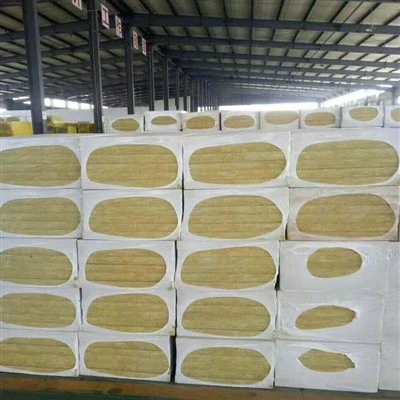
If you’re ready to get a real, no-obligation quote, or if you just have questions about what kind of mat is right for your project, hit me up. No sales pitches, no pressure, just straight answers. We can work out bulk pricing, delivery, and even help with cutting the mat to size if you need that too. Rock wool mat doesn’t have to be confusing, and it doesn’t have to break the bank—you just need to talk to someone who knows what they’re talking about.
Glass Wool Board References:
- National Fire Protection Association. (2021). Standard for Fire Resistance in Buildings and Structures.
- American Society for Testing and Materials. (2020). Standard Test Methods for Density of Mineral Wool Insulation.
- Rock Wool Manufacturers Association. (2022). Global Market Trends and Pricing Analysis for Mineral Wool Insulation Products.
- Department of Energy. (2021). Insulation Materials: Performance and Cost Comparison for Residential and Commercial Applications.
Langfang Aolesi Thermal Insulation Materials Co., Ltd.
As one of the most professional rock wool mat manufacturers and suppliers in China, we also support customized service. Please feel free to buy bulk high quality rock wool mat made in China here from our factory. For pricelist, contact us now.
Address: Dongwang Village, Dacheng County, Langfang City, Hebei Province
E-mail: Lfaolesibaowen@outlook.com
WebSite: https://www.lfaolesi.com/
