If you’ve ever stood next to a vertical lathe during a heavy turning or boring job, you know that vibration isn’t just an annoyance—it’s the kind of problem that scrapes good parts, wears out tooling faster than it should, and even puts unnecessary stress on the machine itself. As someone who’s been selling vertical lathes for over 12 years, I’ve seen first-hand how many operators and shop managers write vibration off as “just part of machining big parts.” But over time, I’ve learned that most vibration issues aren’t unavoidable. They usually come down to small, manageable adjustments—some on the shop floor, some on the machine itself, and some in how you plan a job. Let’s walk through what I’ve picked up along the way. Vertical Lathe
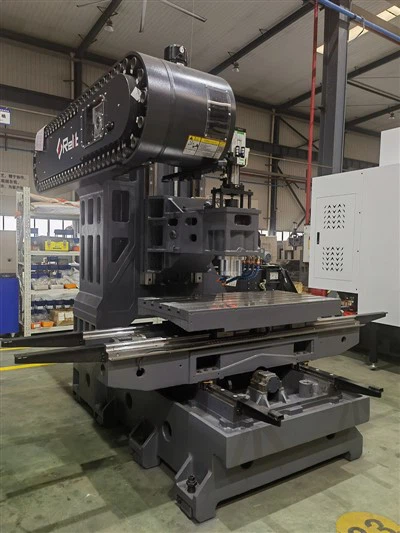
First, I want to be clear: I’m not talking about the tiny, harmless vibration that every machine makes when it runs. We’re talking about the kind that shakes the entire workholding chuck, makes your digital readout bounce, or leaves a wavy, rippled surface on your finished part. That’s the vibration that costs you money. I’ve had customers come to me months after buying one of our vertical lathes, frustrated that their heavy-duty turning jobs were coming out wrong. Nine times out of ten, the fix wasn’t a full machine overhaul—it was changing how they set up the job.
Let’s start with the workholding, because that’s usually the first place vibration creeps in. Vertical lathes hold parts on a rotating chuck, right? If that part isn’t seated perfectly, even a small gap between the part and the chuck jaws creates a wobble that amplifies as it spins. I had a customer making 40-inch steel flanges a couple years back—he was getting 10 scrap parts a week because of surface ripples. When we went out to look at his setup, he was just tightening the jaws with a standard air wrench, not double-checking for runout. The fix? He started using a dial indicator to verify chuck runout before each job, and he added soft jaw inserts for parts that don’t have a precision machined surface. Those soft inserts conform to the part, eliminating tiny gaps that would otherwise cause movement. Also, if you’re holding a part that extends more than twice its diameter from the chuck? That’s a recipe for vibration. Overhang increases the effective leverage, so even a small imbalance will shake the part. We started including a recommendation with every machine we sell: if your part overhang is more than 1.5 times its diameter, use a steady rest or tailstock support. One customer was turning 6-foot diameter gear blanks without a tailstock, and after adding a light tailstock pressure, their vibration dropped by more than half. That’s a cheap fix, no new equipment needed.
Next up, tooling setup. I’ve seen operators grab the longest tool they can for a deep cut, because it feels like it’ll get the job done faster. But longer tool holders and boring bars are more flexible—they bend and vibrate during the cut, especially when you’re using high spindle speeds or heavy feeds. Last year, a job shop that bought two of our VTLs came to us saying their internal boring operations were producing inconsistent part diameters. We looked at their tooling: they were using a 20-inch boring bar for a 18-inch deep bore. That’s way too long. We suggested switching to a shorter bar that could reach the bottom of the bore, and using a modular tool holder instead of a solid one. Modular holders distribute vibration more evenly, and when you use the shortest possible tool for the job, you reduce deflection by a lot. Another thing to check: tool nose radius and insert condition. A worn insert with a chipped nose won’t cut smoothly—it will skip across the material, creating tiny vibrations that add up to a rough finish. We train all our customers to inspect inserts before every job, and replace them if they have even a small chip. It’s a $5 insert that can save you $1,000 in scrap parts. Also, make sure the tool is clamped tightly in the turret. I can’t tell you how many times we’ve found a tool that was only hand-tight, or had a dirty taper inside the holder that prevented a full, secure fit. A loose tool is one of the most common hidden vibration sources.
Then there’s the spindle and machine rigidity. Our vertical lathes are built with heavy cast iron frames and precision spindle bearings, but that doesn’t mean you can ignore how you use the spindle. If you’re running parts at too high a speed for their weight, that creates centrifugal force that causes imbalance and vibration. Balancing your workholding and the part before you start is non-negotiable. Even a part that looks perfectly round can have a small imbalance—especially if it’s made of dense material like cast iron or stainless steel. We recommend using a static balance check for small parts, and dynamic balancing for larger, high-speed jobs. I had a customer making diesel engine flywheels—they were running at 800 RPM, which is fast for a 200-pound part. When they balanced the flywheel on our recommended balancer, their spindle vibration dropped by 30%, and their tool life went up by 25%. It also helps to avoid sudden changes in speed or feed rate during a cut. If you’re turning a straight cylinder, don’t yank the feed lever up or down abruptly. Slow, consistent movement through the material keeps the cut smooth and prevents vibration from building up in the spindle.
Another area that’s often overlooked is the machine’s foundation and surrounding environment. Wait, you’re inside a building, right? Your VTL is sitting on a concrete floor, but over time, that floor can settle, or heavy forklifts driving nearby can create ground vibration that travels into the machine. A customer in Michigan had his VTL near a loading dock where fork trucks were driving every 10 minutes. He was getting vibration in all his precision jobs, even when his setup was perfect. When we tested his machine, we found that the floor under the machine was settling by a few thousandths of an inch, and the ground vibration from the dock was transferring directly to the spindle. The fix? We recommended adding adjustable leveling pads to his VTL, and sealing the floor around the machine to prevent dust and debris from getting under the feet. We also suggested not running heavy forklifts within 10 feet of the machine during precision jobs. That’s a big one—even a small vibration from outside the machine can ruin a finish if the machine isn’t properly anchored. If you just installed a new VTL, take the time to level it properly with a precision level, not just a quick check with a tape measure. We do that for all our customers when we install the machine, but sometimes after a year or two, the leveling shifts, and that creates its own vibration.
Also, think about your cutting parameters. A lot of operators default to “higher speed = faster, better” but that’s not always true for reducing vibration. For roughing cuts, you want to use higher feed rates and lower spindle speeds, because roughing is about removing material quickly without worrying about a perfect finish. Lower speeds mean less centrifugal force and less tendency for the tool to chatter against the part. For finishing cuts, you can bump up the speed a little, but keep the feed rate consistent and the depth of cut light. Chatter happens when the frequency of the cut matches the natural frequency of the tool or the part. If you find a cut that’s producing a wavy finish, try changing the spindle speed by just 50 RPM. That small shift can throw off the frequency and eliminate the vibration entirely. I’ve seen that work so many times—one operator was getting a bad finish turning a 12-inch aluminum part at 1,200 RPM; when he went to 1,250 RPM, the vibration stopped, and he didn’t have to scrap a single part. Don’t be afraid to test small changes in speed and feed—sometimes it’s just a 10 or 20 RPM difference that makes all the difference.
Let’s talk about specific scenarios for vertical lathes, too. Unlike horizontal lathes, vertical lathes hold parts vertically, so gravity plays a role. If you’re turning a tall part, like a pipe flange that’s 5 feet tall, gravity can cause the part to deflect slightly as it spins, especially if it’s thin-walled. Thin-walled parts are extra tricky because they’re flexible—they bend during the cut, causing vibration. For thin-walled parts, we usually recommend using a lower spindle speed and a shallower depth of cut, and sometimes adding a temporary support structure inside the part. One customer was turning 48-inch diameter aluminum valve bodies that were only 1/4-inch thick. Without any support, the part would flex so much that the finish was rough, and the part was out of tolerance. We had them make a simple wooden mandrel that fit inside the valve body, supporting the walls while they turned the outside. That fixed the problem completely—no more flex, no more vibration. It’s a simple, low-cost trick that works for almost any thin-walled part on a VTL.
I also want to mention tool path planning. On a vertical lathe, you’re usually turning around the axis of the part, so how you move the tool from point to point can affect vibration. Avoid sharp, sudden direction changes in your tool path. When the tool has to stop and reverse quickly, that creates a shock that transfers through the spindle and into the part. We recommend using smooth, gradual transitions when moving between cuts. For example, when moving from roughing to finishing, don’t make a hard turn at the end of the cut—instead, arc smoothly away from the part. That small adjustment reduces the stress on the tool and the machine, and cuts down on vibration.
Now, let’s talk about what I’ve learned from selling vertical lathes for all these years. The best part of my job is helping customers troubleshoot their problems, and vibration is probably the most common issue we get asked about. What I’ve found is that most vibration problems aren’t the fault of the machine—they’re from small, avoidable mistakes in setup or operation. A lot of people think that if their VTL is top-of-the-line, they don’t have to worry about these things, but even our most precise machine will have vibration issues if you seat a part wrong or use a tool that’s too long.
If you’re struggling with vibration in your vertical lathe, don’t just keep running jobs and scrapping parts. Take it step by step: first check your chuck and workholding for runout, then check your tooling length and condition, balance your part, level your machine, and test small changes to your spindle speed and feed rate. Most of the time, you’ll fix the problem before you even need to call for service.
When you do have a problem that you can’t figure out, or if you’re in the market for a new vertical lathe that’s built with rigidity and vibration reduction in mind, reach out. We work with job shops, large manufacturing plants, and everything in between, and we know how to set up a machine to minimize vibration from the day it’s installed. We don’t just sell you a machine and walk away—we offer training and ongoing support to make sure your parts come out right, every time.
At the end of the day, reducing vibration on a vertical lathe is about working with the machine, not against it. It’s about taking the time to set up correctly, instead of rushing through a job. The small adjustments add up to less scrap, longer tool life, and parts that meet your exact specifications. That’s what makes our job worthwhile—helping you get the most out of your equipment, so you can run a more efficient, profitable shop.
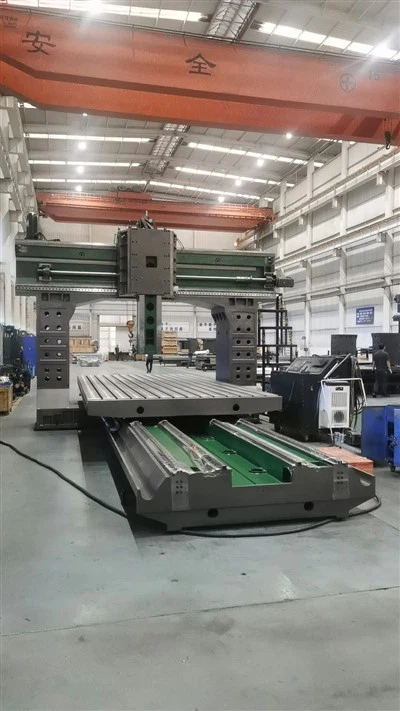
If you’re ready to discuss how to reduce vibration in your vertical lathe operations, or if you’re looking for a vertical lathe built with vibration resistance at its core, connect with our team to start a conversation. We’re here to help you solve problems, not just sell machines.
Horizontal Milling Machine References
- Modern Machine Shop. “Chatter Reduction Strategies for Turning Operations.” 2022.
- VDI 3423. “Vibration in Machining Processes: Causes and Mitigation.” Verein Deutscher Ingenieure, 2019.
- Kennametal. “Tooling Best Practices for Rigidity and Vibration Control in Large-Part Machining.” 2021.
- ISO 230-7. “Test Code for Machine Tools: Set-up and Testing of Vertical Turning Lathes.” International Organization for Standardization, 2020.
Smartech Machinery & Equipment Co., Ltd.
As one of the most professional vertical lathe manufacturers and suppliers in China, we also support customized service. Please rest assured to buy bulk vertical lathe made in China here from our factory. Contact us for more details.
Address: Room 2832, Changping Commercial Mansion, Shihua Road, Futian Free Trade Zone, Shenzhen, China
E-mail: smartech@smartechcnc.cn
WebSite: https://www.smartech-cnc.com/
