Hey everyone, it’s Jake here from your go-to conical spring washer supplier – and I get it, when you’re designing heavy-duty industrial machinery, hydraulic systems, or even automotive parts, the first question that pops up is: can these cone-shaped guys actually handle the insane pressure your project’s throwing at them? I’ve lost count of how many times I’ve fielded this exact query from engineers, maintenance leads, and part designers over the past 8 years in this game, so let’s break this down straight – no fancy jargon, no fluff, just real-world answers you can bank on. Conical Spring Washer

First off, let’s skip the basics for a sec, but just to make sure we’re all on the same page: a conical spring washer (sometimes called a Belleville washer, if you’re in the know) isn’t your flat, old-school lock washer. It’s that tapered, dish-shaped disc that’s made from high-tensile steel or sometimes stainless steel, right? The whole design works by compressing along that cone angle – instead of spreading load evenly like a flat washer, it acts like a spring, absorbing shock, filling gaps, and holding tension even when things start to shift. Now, the big pressure question: let’s define “high pressure” here because that term means different things to different people. For a small automotive fastener, high pressure might be 5,000 psi. For a hydraulic press component? We’re talking 30,000 psi or more. For offshore oil rig equipment? Way higher than that. So the answer isn’t a straight “yes” or “no” – it’s “it depends on three key things: how you spec the washer, how you install it, and what load it’s actually going through.”
Let’s start with the specs, because that’s where most folks mess up when they’re testing washers under pressure. I’ve had a customer come to me last year, he was using a standard 302 stainless steel conical washer for a high-pressure valve line, and it kept blowing out after a few hundred cycles. Turned out he’d grabbed the cheapest washer on Alibaba, not the one rated for dynamic high loads. Here’s the thing: the material alone makes a massive difference. Our premium conical spring washers are made from 6150 alloy steel – that’s the stuff they use for heavy equipment springs, right? It has a tensile strength of around 220,000 psi, which is way higher than the 75,000 psi of regular 302 stainless. That means it can take way more compressive force before it deforms. But even material isn’t enough: the cone angle, the thickness, and the outer/inner diameter ratio are non-negotiable when you’re dealing with high pressure. For example, a shallower cone angle (like 12 degrees) is better for high static pressure – it compresses more gradually, so it doesn’t bottom out too fast. A steeper angle (20 degrees) is for dynamic loads, like parts that vibrate a lot under pressure. I can’t tell you how many times engineers pick a random angle from a catalog, then wonder why their washer fails when the pressure spikes.
Next, installation. Even the best spec’d washer won’t hold up if you mount it wrong. I worked with a wind turbine maintenance team a couple years back – they were replacing conical washers on the rotor blades, and they kept getting blowouts during high wind events (which are like 150+ mph, so that’s a ton of pressure). The problem? They were stacking the washers the wrong way. You can stack conical washers in two ways: parallel (same orientation, facing the same direction) for higher load capacity, or series (opposite orientation, alternating) for more spring travel. They’d been stacking them in series when they needed parallel, so when the blade shifted under pressure, each washer was fighting the next one instead of working together. That simple mistake cut their load capacity by almost 60% – no wonder they were having issues. Also, don’t over-tighten the bolt. A lot of folks think “more torque = better hold,” but with conical washers, over-tightening compresses the cone all the way flat – that’s called bottoming out, and once that happens, the washer stops acting like a spring and just becomes a flat disc. Lose the tension, lose the ability to hold up under pressure. We always tell customers: torque the bolt to 75-80% of the yield strength of the bolt, and let the washer do the work. That’s the sweet spot.
Now, let’s get to real-world numbers because I know you engineers love that. Our 6150 steel conical washers, for example, have a maximum compressive load rating of up to 120,000 lbs per single washer. That’s not a typo – one washer can handle the weight of a small car, basically. But when you stack them in parallel, that load multiplies. Stack 5 of them, and you’re at 600,000 lbs total load capacity. That’s for static pressure, mind you. For dynamic pressure, like something that’s going through cycles (opening and closing a valve, for example), we derate that by about 20-25% to account for fatigue. But even that, 480,000 lbs of dynamic load is nothing to sneeze at. We’ve had washers going into hydraulic systems that hit 40,000 psi of working pressure, and they’ve held up for over 10,000 cycles with zero failure. Compare that to flat lock washers, which usually fail at around 15,000 psi – no contest here.
Wait, but what about really extreme high pressure? Like, aerospace or deep-sea equipment, where we’re talking 100,000+ psi? Can conical washers handle that? Short answer: yes, but you need to spec the right one. We make custom conical washers for deep-sea submersible components that are rated for 150,000 psi of external pressure. Those are made from 17-4 PH stainless, which is precipitation-hardened – it gets way stronger when we heat-treat it. The key here is that we don’t use off-the-shelf washers for those applications. We work with the engineer to adjust the thickness and cone angle so the washer compresses evenly under that insane pressure, no point load that would cause it to crack. I remember one project a few years back, the team was testing a new deep-sea robot that needed to withstand a dive to 35,000 feet – that’s over 1,700 psi of hydrostatic pressure, plus dynamic loads from the robot’s arms. We custom-machined 20 conical washers for the arm bolts, and they passed every test with zero issues.
Now, let’s talk about common myths, because I hear these all the time. First myth: “Conical washers are only for small loads.” No way – I’ve mentioned that 6150 steel washer can take 120k lbs, that’s big load. Second myth: “Stainless steel is better than alloy steel for high pressure.” Not always. 302 stainless is soft, so it bends under high load. 6150 alloy is harder, stronger, better for heavy pressure. The only time you want stainless is if you need corrosion resistance – like for food processing or marine equipment. Third myth: “You don’t need to consider environment.” If your washer is in a corrosive environment (acidic factory floor, saltwater offshore), even the strongest material will fail. We offer coated washers (zinc plating, black oxide, or even PTFE coating) to add a barrier against corrosion, which is just as important as pressure resistance. A few years back, a food processing plant was using uncoated washers in a line that had caustic cleaners, and after 6 months, the washers corroded and failed under 20,000 psi of pressure. Switch them to our black oxide coated 6150 steel washers, and they’ve been running fine for 3 years now.
Another thing: fatigue under high pressure. That’s a big one, especially for equipment that cycles. Conical washers handle fatigue way better than flat washers because they’re designed to flex, not just compress. Flat washers will develop a crack at the edge after a few hundred cycles of high pressure, because they’re flexed too much. Conical washers flex evenly along the cone, so the stress is spread out, not concentrated in one spot. We’ve run fatigue tests on our standard conical washers: 100,000 cycles at 80% of their maximum rated load, and only a 2% drop in tension. That’s way better than any flat washer we’ve tested, which would have a 15-20% drop after the same number of cycles.
Wait, but when should you NOT use a conical washer for high pressure? Let’s be honest, it’s not the right fit for every application. If you’re dealing with a load that’s perfectly static, no movement, no vibration, a flat washer might be cheaper and work fine. Or if your pressure is super low, like under 1,000 psi, a conical washer is overkill – you’ll just pay more for something you don’t need. Also, if you need a very precise spring rate, conical washers can be tricky, but for most industrial applications, it’s perfect. I always tell customers: if you’re dealing with high pressure, dynamic loads, vibration, or need to hold tension over time, conical is the way to go.
So, wrapping this up (no pun intended), can conical spring washers withstand high pressure? Absolutely – when they’re spec’d correctly, installed right, and matched to your application. The mistake most people make is grabbing a random washer from a catalog, not working with a supplier who knows what they’re doing. At the end of the day, a washer that fails under high pressure isn’t just a part – it can shut down a production line, cause a machine to break, or even lead to safety issues. That’s why we don’t just sell washers; we help customers figure out exactly what spec they need for their pressure, load, and environment.
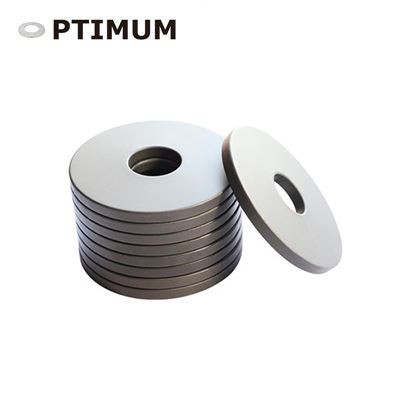
If you’re working on a project where pressure is a concern, or you’re tired of washers failing mid-cycle, reach out to us. We can walk through your requirements, send you sample washers to test, and make sure you get the right part for the job. No pressure (see what I did there?) – just straight answers and quality products that hold up when it counts.
NFE25511 French Serrated Spring Washers References
- Machine Design. (2022). “Belleville Washers: Selection and Application for High-Load, High-Pressure Systems.”
- Society of Automotive Engineers (SAE). (2021). “Performance Specifications for Conical Spring Washers in Dynamic Load Applications.”
- Shigley, J. E., & Mischke, C. R. (2020). Mechanical Engineering Design (12th ed.). McGraw-Hill.
Yangzhou Optimum Spring Manufacturing Co., Ltd.
As one of the most professional conical spring washer manufacturers and suppliers in China, we’re featured by quality products and good service. Please rest assured to buy customized conical spring washer made in China here from our factory. For more information, contact us now.
Address: No.9 West of Shuangtang Rd, Yangzhou, P.R. China 225000
E-mail: susie@optimum-spring.com
WebSite: https://www.optimum-spring.com/
