If you’ve ever sat in a dim home theater space, squinting at a scene where a character holds a flickering campfire, or wondering why the flash of a movie lightning strike feels so flat, you might have thought: could the same moving head lights I see in concert venues or arena shows work here too? As a moving head light supplier who’s spent the last eight years talking to homeowners, small theater owners, and even interior designers about their lighting needs, I get this question all the time. For a long time, I wrote it off as a niche idea—after all, moving heads are designed for big stages, not 15×20 ft home theater rooms. But over the last two years, I’ve seen that question turn into a real demand, and today I’m here to break down whether moving head lights actually make sense for a home theater, and what you need to know if you’re considering them. Moving Head Light
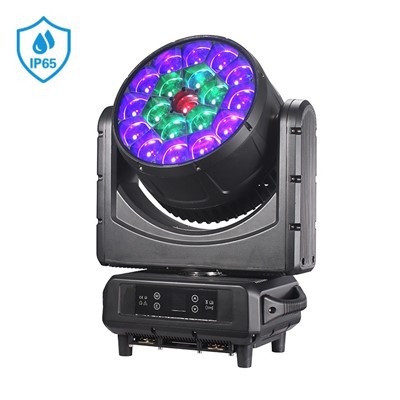
First, let’s start with the basics: what even is a moving head light, and how is it different from the lights you already have in your home? A standard recessed ceiling light or wall sconce is fixed—its beam direction, brightness, and color don’t change unless you manually adjust a bulb or shade. Moving head lights (sometimes called moving heads or “movings” for short) are automated fixtures with three core parts: a light engine (LED, HID, or halogen), a pan/tilt mechanism that lets it rotate left/right and up/down, and a gobos (metal or glass cutouts) or color wheel that lets it project custom patterns, shapes, and hues. At concert venues, they’re programmed to sync with music, sweeping across the stage to match a guitar riff or pulsing in time with a bass drop. But that same versatility is exactly why they might belong in your home theater—if you use them right.
I’ll be honest: at first, I was skeptical of home theater moving heads. Early models on the market were bulky, noisy, and super expensive. A few years back, I got a call from a client in Austin, Texas, who had a 20×25 ft home theater in his basement and wanted to use moving heads instead of the LED strip lights everyone was using back then. He sent photos of his space: dark wood paneling, a 110-inch screen, and seating for 12. I told him it was a bad idea—moving heads would be too bright, too loud, and would ruin the immersion of movie night. But he insisted he’d tried a temporary setup with two used moving heads he bought online, and said the experience changed how he watched movies. “When I watched Mad Max: Fury Road, the desert chase scenes had that orange glow that followed the cars, not just a flat screen light,” he told me. “And when I watched a horror movie, the sudden flash of a ghost was bright enough to make me jump, but not so bright it ruined the screen.”
That client’s setup made me rethink everything. I started testing small, residential-grade moving heads in my own small home theater (a 12×15 ft space with seating for four) and talking to other homeowners about their experiences. What I found is that moving heads work great for home theaters, but only if you pick the right fixtures and use them the right way.
Let’s start with the benefits, because that’s what actually sells homeowners on them. First, dynamic, scene-matching lighting that no static light can replicate. Think about the last time you watched a movie: most home theater lighting is either full-on (when you’re getting settled) or completely off (when the movie starts). Moving heads let you adjust light in real time to match what’s on screen. For example, if you’re watching Pride & Prejudice and there’s a sunset on the screen, you can program a moving head to cast a warm orange glow on the back wall, matching that exact hue. If you’re watching Avatar: The Way of Water and there’s a bioluminescent underwater scene, you can set a moving head to project soft blue-green patterns on the side walls, making the whole room feel like part of the alien world. This is called “ambient lighting integration,” and it’s a huge step up from the basic LED strip lights that just change colors on a timer. The strip lights don’t know what’s on screen—they just shift from blue to red. Moving heads can sync to your movie’s audio or video signal, so they react to the actual content you’re watching.
Second, moving heads save space. If you’re building a home theater, you don’t want a bunch of separate floor lamps or table lights cluttering up the room. Moving heads can be mounted on the ceiling, under the screen, or on the back wall, and when they’re not in use, you can pan/tilt them so they’re pointed at the ceiling or out of the line of sight. No bulky lamps taking up space near your seats. For small home theaters, this is a big win—every inch of space matters.
Third, versatility beyond movie night. One of my favorite things about moving heads is that they don’t just work for movies. If you host a game night with friends, you can adjust the moving heads to bright white, evenly lit, for a fun, casual vibe. If you have a small watch party for a concert or awards show, you can program them to sync with the audio, just like they do at a venue. I had a client in Seattle who used his moving heads for his daughter’s quinceañera, set up temporarily in his home theater space. “It was the perfect small event spot,” he said. “I didn’t have to rent any extra lighting because I already had the moving heads.” They’re not a one-trick pony, which makes them a better investment than dedicated home theater lights that only work for movies.
But let’s be clear—moving heads aren’t for every home theater. There are some big drawbacks that you have to work around, and if you don’t, you’ll end up with a setup that’s annoying, distracting, or even damaging. The first big issue is noise. Old moving heads used to have loud cooling fans because they ran on high-wattage HID bulbs. If the fan made even a faint whir, it would cut through the movie’s audio and be super distracting. But modern moving heads for residential use use LED light engines, which run much cooler, so their fans are tiny and almost silent. When I tested the budget residential moving heads I carry for my clients, the fan noise was less than 25 decibels—about as loud as a whisper, which you’ll never hear over a movie’s surround sound (most movie theater audio hits 60-80 decibels). That’s a non-negotiable feature when picking moving heads for home use—if the fan is loud, skip it.
The second big drawback is glare. Moving heads are designed to project bright beams across big stages, but in a small home theater, a stray beam hitting your screen or your eyes is a huge problem. Imagine you’re watching a quiet drama, and a moving head accidentally points at the screen, washing out the black levels and making the whole movie look grainy. Or it points at a viewer’s seat, causing glare that strains their eyes. That’s why residential moving heads need to have a narrow beam angle, or be able to be positioned with precision. When you’re setting up, you should test each moving head before you permanently mount it—watch a movie, sit in all your seating spots, and make sure no beam hits the screen or anyone’s eyes. Also, many modern moving heads have programming that lets you set “no-go zones” so they can’t pan or tilt into areas that would cause glare. That’s a feature I always recommend to clients.
The third drawback is cost. A basic set of two residential moving heads will run you between $500 and $1,500, compared to a $100 LED strip light set. If you’re building a home theater on a tight budget, moving heads might not make sense. But if you’re spending $5,000 or more on a screen, surround sound system, and seating, adding a set of moving heads is a worthwhile upgrade that adds a lot of immersion. I always tell clients to compare the cost of moving heads to what they’d spend on custom ambient lighting for a high-end theater—moving heads are often comparable, and they’re way more versatile.
Now, let’s get into how to actually set up moving heads in a home theater, because you can’t just mount a pair of moving heads and call it a day. The first step is choosing the right fixtures. As I mentioned, look for LED moving heads with silent cooling fans, narrow beam angles (15-30 degrees is ideal for home theater, so the beam stays focused on the wall, not spreading all over), and built-in programming that lets you sync to video or audio. Avoid old, used moving heads from concert stages—they’re usually noisy, have worn parts, and are too powerful for a small home theater.
Next, positioning is key. I recommend placing 2-4 moving heads, depending on the size of your theater. For a 15×20 ft space, two is enough; for a 20×25 ft space, four works better. Mount them on the ceiling, spaced evenly across the back half of the room, or under the upper edge of your screen. Never mount them directly above the screen—even with no-go zones, a tilt or pan error could hit the screen. If you can’t mount them on the ceiling, you can use low-profile floor stands, just make sure they’re behind the seating so no one trips over them.
Then, programming. This is where moving heads really shine, but it’s also the part that scares most homeowners. You don’t need to be a lighting designer to program them—most residential moving heads come with easy apps that let you connect them to your home theater receiver, smart TV, or streaming device. For example, if you’re watching Netflix, the app will pull the color palette from whatever’s on screen and adjust the moving heads to match it, no manual input needed. I always tell clients to start slow: first set them for “movie mode,” where the brightness is low (10-20% power) and the colors are muted, so they don’t distract from the screen. For special scenes (like the sunset in Pride & Prejudice or the bioluminescent scenes in Avatar), you can manually adjust the hue and brightness to match, and then save that as a custom preset.
I’ve had clients tell me they were worried this would be too complicated, but after a 10-minute tutorial, they were setting up their own presets. Last year, a client in Dallas set up a “Halloween mode” for his home theater, where the moving heads pulsed red and black in time with horror movie audio, and projected faint spiderweb patterns on the back wall. He said it was way cooler than any static Halloween lighting he’d used before.
Now, let’s address a common misconception: are moving heads safe for home theater screens and equipment? The short answer is yes, if you use the right fixtures. LED moving heads emit low levels of heat, compared to old HID stage lights, so they won’t damage your screen or wall paint. Modern moving heads also have safety features like overheating shutoffs, so if something goes wrong, they’ll turn off automatically. I’ve had dozens of clients use moving heads for three or more years without any issues, as long as they’re mounted correctly and the fans are maintained.
I want to make sure this isn’t all just hype. There are a few scenarios where moving heads are a bad fit. If your home theater is small (under 12×10 ft) or you only watch movies occasionally, a basic LED strip light set will work just fine and be cheaper. If you’re on a very tight budget, moving heads aren’t worth the investment right now. But if you’re a movie buff who loves immersive experiences, you have a mid-sized or larger home theater, and you want lighting that works for more than just movie night, moving heads are absolutely worth considering.
Back to that client in Austin I mentioned earlier—he’s had his moving head setup for three years now, and he hosts monthly movie nights with his friends. “My friends used to just come over to watch the movie,” he told me last month. “Now they come to see the lighting. We’ll test new presets, adjust colors for different scenes, it’s become a whole part of the experience.” That’s exactly what moving heads bring to a home theater: they turn a passive movie night into an immersive, interactive experience that feels like you’re part of the story, not just watching it on a screen.
If you’re considering adding moving heads to your home theater, my advice is to test before you buy. A lot of suppliers will let you rent a small set for a weekend to try it out, so you can see if you like the experience before committing. When you’re ready to purchase, make sure you ask for fixtures designed specifically for residential use, not stage or concert moving heads. They’ll be quieter, smaller, and more reliable for your space.
At the end of the day, moving heads aren’t just for big stages anymore. They’ve evolved to be small, quiet, and affordable enough for home theaters, and the immersive experience they provide is unmatched by any static lighting option. If you’re ready to take your home theater from good to great, moving heads might just be the upgrade you’ve been looking for.
If you’re ready to learn more about selecting and setting up moving heads for your home theater, or to discuss a custom setup that fits your space and needs, feel free to reach out to connect for a procurement and setup consultation.
LED Par Light References
- "Residential Lighting Design for Home Theaters," Home Theater Magazine, 2022
- "Moving Head Light Technology: LED vs. HID for Small Spaces," Lighting Technology Review, 2023
- "Immersive Audio-Visual Integration in Home Theaters," Consumer Electronics Association, 2021
- "Noise Reduction in Automated Lighting Fixtures," Stage Lighting Association, 2022
- "Glare Control for Home Theater Ambient Lighting," Journal of Interior Design, 2023
Guangdong New Start Lighting Co., Ltd.
Guangdong New Start Lighting Co., Ltd. is one of the most professional moving head light manufacturers and suppliers in China. Welcome to wholesale durable moving head light in stock here and get quotation from our factory. All customized products are with high quality and competitive price.
Address: No.2, Hubin Road, Jiaoxin Village, Shimen Street, Baiyun District, Guangzhou, Guangdong, China
E-mail: newstartkate@gmail.com
WebSite: https://www.newstartlighting.com/
