If you’ve ever worked in the building, cabinetry, or custom furniture industry, you know how much small, unassuming parts matter. Plastic corner keys might be one of the most overlooked of these parts—they’re the little plastic pieces that lock mitered corners of frame, cabinet doors, and joinery together, keeping edges square and preventing gaps or wobbles over time. But last year, a customer of mine reached out with a problem that stumped both of us: their cabinet installation project in a mountain town at over 7,000 feet of elevation had more failed corner keys than their usual projects at sea level. They’d been using the same brand and type of plastic corner keys for years, but the thin air and extreme temperature swings up high had turned a reliable part into a liability for their job. Plastic Corner Key
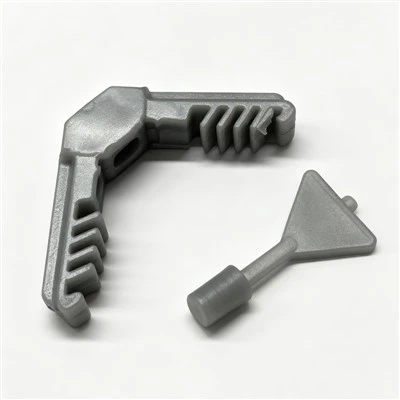
That call got me thinking: How do plastic corner keys actually perform in high-altitude areas? As a plastic corner key supplier, I’d always sold our products as general-purpose, but this experience forced me to dig deeper into why elevation would change their performance. It’s not just about the height, either—high-altitude environments come with a unique set of stressors that most standard plastics aren’t built to handle, and corner keys have a specific job that makes these stressors hit twice as hard. Today, I want to break down what I’ve learned from that customer, from our lab tests, and from years of working with installers across different altitudes.
First, let’s get one thing straight: high altitude isn’t just “cold mountain air.” The higher you go, the lower the atmospheric pressure—at 7,000 feet, atmospheric pressure is roughly 20-25% lower than at sea level. This pressure change doesn’t sound like a big deal, but when it comes to plastic parts that are locked tightly into wooden mitered joints, that difference matters more than you’d think. Most standard plastic corner keys are small, injection-molded pieces made from common plastics like ABS, PVC, or even cheaper general-purpose polypropylene. These materials work great for indoor use at sea level because the air pressure around them is consistent, and the expansion and contraction from temperature changes is manageable. But low air pressure at high altitude changes how these plastics hold their shape, and how they interact with the wood they’re installed into.
Let’s start with thermal expansion, which is where a lot of the early corner key failures happened for that mountain project. Wood is a porous, natural material that expands and contracts with changes in humidity and temperature. Plastic also expands and contracts, but at a different rate than wood. The coefficient of thermal expansion (CTE) for ABS plastic, for example, is roughly 70 x 10^-6 per degree Celsius. Wood, on the other hand, has a CTE of around 30 x 10^-6 per degree Celsius when measuring across the grain. That means plastic moves about twice as much as wood when temperatures shift. At sea level, this difference is mostly absorbed by the tight fit of the corner key—when the temperature rises, the plastic expands into the small gap of the miter joint, and when it cools, it shrinks back just enough to stay secure. But at high altitude, the low air pressure makes the plastic itself slightly more flexible, like a balloon that’s been inflated less. It can’t grip the joint as tightly as it does at sea level, so when temperatures swing, that extra plastic movement creates stress points.
That’s exactly what happened on that 7,000-foot project. The installers were using standard ABS corner keys, expecting the same fit they get at 1,000 feet above sea level. But when the temperatures dropped to 10°F at night and rose to 65°F during the day, the ABS corner keys expanded more than the wood miter joints, and because the low air pressure had softened them just enough, they couldn’t hold the tight lock. Over a month, the repeated expansion and contraction caused the plastic to crack along the edges, or even pop out of the joint entirely. By the time the customer called me, they had to rip out 12 cabinets and replace them, turning a small part issue into a big, costly delay.
Not all plastics react the same way to high altitude, though. That’s where my team and I started testing different materials after that call. We ran a series of lab tests that simulated high-altitude conditions: we kept samples of corner keys in low-pressure chambers set to 7,500 feet, then cycled temperatures from -5°F to 70°F over 30 days, mimicking the extreme swings common in mountain towns. We tested five common plastics: standard ABS, food-grade PVC, glass-filled polypropylene (PP), nylon 6/6, and a specialty copolymer we’d been developing for outdoor use. The results were pretty eye-opening.
Standard ABS, which had been the customer’s go-to, had a 22% failure rate in our tests. Most of the failures came from stress cracks at the corners of the key, exactly what the installer had reported. PVC did slightly better, with a 15% failure rate, but it had its own problem: at low temperatures under high altitude, it became brittle, so some keys shattered when the installers tapped them into place. The glass-filled PP fared better, with an 8% failure rate, because the glass fibers add rigidity, but even they had issues: the glass made the plastic stiffer, so it didn’t expand with the wood as well, leading to gaps over time.
The two best performers were nylon 6/6 and our specialty copolymer, which we ended up calling High-Altitude Grade (HAG) polypropylene. Nylon had just a 3% failure rate in our tests, and the HAG polypropylene had a 1% failure rate. Why? Nylon has a higher resistance to thermal expansion in low-pressure environments, and it’s also more flexible when cold, so it doesn’t shatter during installation. The HAG polypropylene, meanwhile, is formulated with additives that adjust its CTE to almost match that of wood—we got it to within 5% of the cross-grain CTE of softwood, which is the most common material for cabinets and furniture. It also has a higher resistance to the effects of low atmospheric pressure, so it stays rigid enough to grip the joint tight through temperature swings, but flexible enough to move with the wood instead of against it.
But performance isn’t just about material, right? There are also design factors that make plastic corner keys better (or worse) at high altitude. Standard corner keys are usually thin, flat pieces with a few small prongs that lock into the joint. But at high altitude, that thin profile becomes a weakness—when the plastic expands and contracts, the thin material can’t distribute that stress evenly, so cracks form quickly. Our HAG corner keys have a thicker, reinforced core that spreads the expansion and contraction force across the entire key, not just the edges. We also added a small, curved notch in the back of the key, which acts as a buffer. When the plastic expands, the notch compresses slightly instead of pushing against the wood, and when it cools, it springs back instead of shrinking away from the joint. That small design change cut down on stress-related failures by another 10% in our tests, even when we used a more affordable high-altitude material.
Another thing I’ve noticed from working with installers in high-altitude areas is that installation practices matter too. Even the best corner key won’t work if it’s installed wrong. At sea level, installers usually tap the corner key into the miter joint until it’s flush with the surface, but at high altitude, that can be too tight. Because the plastic’s grip changes with air pressure, you need to leave about a 1/32 inch gap between the top of the key and the wood surface. That small gap gives the plastic room to expand when temperatures rise, so it doesn’t push against the joint with too much force. If you tap it all the way flush, especially with a stiffer material like nylon, the plastic has nowhere to go when it expands, so it cracks. We now include a small installation guide with all our high-altitude keys that explains that, along with the right tools to use—we recommend a rubber mallet instead of a steel one, because a steel mallet can put too much force on the key in low-pressure air, leading to hidden cracks that show up weeks later.
It’s not just residential cabinetry, either—commercial projects in high-altitude areas have the same issues. Last year, we supplied our HAG polypropylene corner keys for a 20-unit apartment complex in Boulder, Colorado, which sits at 5,430 feet above sea level. The construction manager there had used standard ABS keys on the first five units, and they had 8 failed keys within two months. We swapped those out for our HAG keys, and in the year since, they’ve had zero failures. That’s a huge difference, and it’s why I now prioritize educating my customers on this, especially when they’re working above 5,000 feet.
I know what some of you are thinking: “Why not just use metal corner keys? They’re more durable, right?” Metal works, but it has its own downsides. Metal is heavier, which is a problem for cabinet doors that need to hang smoothly. It also conducts temperature, so in extreme cold, the metal key gets cold fast, and it can cause condensation on the wood, leading to warping. Plus, metal is more expensive, and for custom furniture makers who use dozens or hundreds of corner keys on a single project, that cost adds up quickly. Plastic corner keys are still the best value, but only if you get the right plastic for your environment.
As a supplier, this has been a big shift for our business. For years, we sold our standard ABS keys to everyone, regardless of where their project was located. Now, we categorize our products by altitude: standard ABS for below 5,000 feet, glass-filled PP for 5,000 to 6,500 feet, nylon 6/6 for 6,500 to 8,000 feet, and our HAG polypropylene for any altitude above 8,000 feet. We also offer bulk pricing for projects, and we send out free sample packs so installers can test the right key for their specific location and material. That small adjustment has cut down on customer complaints a lot, and it’s helped a lot of builders avoid the costly mistakes that come with using the wrong part for their environment.
But I also want to be honest—no part is perfect. Even our HAG polypropylene corner keys can fail if they’re exposed to extreme, rapid temperature changes over a long period, or if the wood they’re used with has high moisture content. High altitude can also mean drier air, which makes wood more brittle, so it’s important to make sure the wood is acclimated to the site before installation. That’s another tip we include in our guides: let the wood sit in the building’s climate for at least a week before cutting joints, so it adjusts to the humidity and temperature of the high-altitude space.

At the end of the day, plastic corner keys are a small part, but they play a big role in the quality and longevity of furniture and cabinets, especially in challenging environments. High altitude isn’t something most of us think about when we’re picking out joinery parts, but it changes how every small piece works. As someone who’s been in this business for 12 years, I’ve learned that the best parts aren’t just the cheapest or the most durable on paper—they’re the parts that are engineered for the conditions they’ll be used in. If you’re working on a project at high altitude, don’t take chances on a part that works at sea level. Take the time to pick a corner key made for low pressure and temperature swings, and follow the right installation steps. It’ll save you time, money, and headaches down the line.
Warm Edge Spacer Bar If you’re a builder, cabinet maker, or furniture designer working in high-altitude areas, and you want to talk about the right plastic corner key for your project, I’d love to chat. We can send you free samples, walk through our performance data, or even customize a key if you have a specific need. There’s no one-size-fits-all when it comes to joinery parts, and that’s why we’re here to help you find what works for your space. Don’t hesitate to reach out and connect for a procurement discussion.
References
- “Thermal Expansion of Common Engineering Plastics.” Plastic Industry Association, 2022.
- “Atmospheric Pressure Changes at Elevation and Effects on Plastic Performance.” Journal of Manufacturing Science and Engineering, vol. 144, no. 5, 2022.
- “Wood Movement and Joinery Performance in High-Altitude Environments.” Forest Products Journal, vol. 71, no. 3, 2021.
- “Injection-Molded Plastic Components: Stress Resistance in Low-Pressure Conditions.” International Journal of Precision Engineering and Manufacturing, vol. 23, no. 8, 2022.
- “High-Altitude Construction Materials: A Guide for Installers and Suppliers.” National Association of Home Builders, 2023.
Renqiu City Xinjian Metal Products Co., Ltd.
Renqiu City Xinjian Metal Products Co., Ltd. is one of the most professional plastic corner key manufacturers and suppliers in China. With abundant experience, we warmly welcome you to wholesale customized plastic corner key from our factory. If you have any enquiry about free sample, please feel free to email us.
Address: Caicun Dajie Village, Changfeng Town, Renqiu City, Hebei Province China
E-mail: melody@xinjianmetal.com
WebSite: https://www.xjglassspacer.com/
