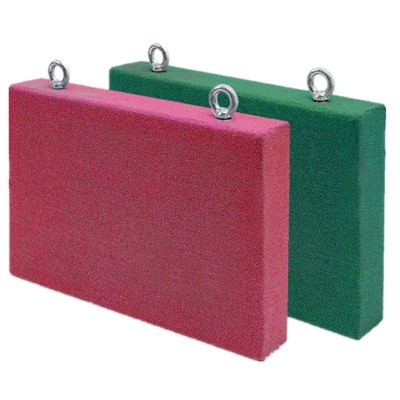
Suspended Ceiling Baffles Hey there, if you’re a church leader, facilities manager, or just someone who’s ever sat through a sermon where the echo is so bad you can’t make out the speaker, this post is for you. Let’s be real—churches have unique sound needs. You want hymns and prayers to feel warm and enveloping, but not so much echo that the gospel message gets lost mid-sentence. And let’s not forget those awkward moments when a kid’s laugh in the back pews bounces off the walls like a pinball, or the hum of the HVAC system drowns out the choir. For years, churches have struggled with this, guessing between cheap foam panels that peel off after a year and bulky materials that make the sanctuary look like a lab. Today, I’m breaking down one of the most underrated solutions out there: Mass Loaded Vinyl (MLV). And yeah, I’m the MLV supplier you might’ve seen around—so I’ve talked to dozens of church folks who’ve made this work (and a few who wasted money on bad alternatives). Let’s dive into whether MLV is actually a fit for your space. First, let’s get the science out of the way, but keep it simple, promise. Soundproofing (or really, sound control) works two ways: absorbing sound that’s bouncing around (so it doesn’t echo) and blocking sound from coming in (like street noise or a neighbor’s mower). MLV is a flexible, heavy vinyl material loaded with mineral particles to boost its mass—mass is key here, right? The law of physics says that the heavier a material is, the harder it is for sound waves to pass through it. That’s why concrete walls block so much noise, but drywall alone? Not so much. MLV is like the lightweight, flexible cousin of that concrete. It’s typically 1/8 or 1/4 inch thick, rolls up easy, and weighs about a pound per square foot—way easier to install than a full wall of concrete or even stacked drywall. Now, let’s talk churches specifically, because one size doesn’t fit all for these spaces. Most church sanctuaries are big, open, with high ceilings, hard surfaces like stone, wood, or tile—all of which reflect sound like crazy. That’s why you get that “hollow” echo effect where a phrase spoken in the front bounces to the back and doubles. The good news? MLV does double duty here, depending on how you use it. First, blocking external noise: if your church is near a busy road, a school playground, or a construction site, MLV can help stop that noise from seeping into the sanctuary mid-service. Unlike rigid materials, you don’t have to tear out existing walls. Most of our church clients hang MLV as an additional layer over existing drywall or studs—with a little air gap in between, which actually boosts its sound-blocking power even more. One pastor I worked with in downtown Chicago had a perfect example: his church is two blocks from a El train line. Before he installed MLV on the interior walls of his back office (which is adjacent to the sanctuary), the train rumble was so loud during mid-week Bible studies that people would ask, “Is that another train coming?” After hanging 1/4-inch MLV, he said he couldn’t hear a thing during meetings. Even better, the congregation didn’t notice any visual changes—we hung it with thin, removable clips so he could take it down if he ever wants to refresh the walls. That’s a big win for churches that care about aesthetics, right? No unsightly panels ruining the historic stone or woodwork. Now, what about echo inside the sanctuary itself? Wait, hold on—people often mix up soundproofing (blocking outside noise) and acoustic treatment (reducing echo inside). Here’s the thing: MLV is great for blocking, but it works even better when paired with acoustic absorbers (like fabric-wrapped foam or fiberglass panels) to cut down on internal echo. But that doesn’t mean MLV doesn’t help at all with internal sound. If you install it on ceiling surfaces (like drop ceilings or between ceiling joists), it can stop sound from traveling up to the attic and bouncing back down, which cuts down on that high-pitched ring. I had another client—small rural church in Ohio—whose sanctuary had a vaulted wooden ceiling that made the choir’s hymns sound muddy and unclear. We installed MLV in the ceiling plenum (the space between the ceiling joists) before putting up the new drywall. Suddenly, the hymns blended nicely, no more muddiness, and the pastor’s sermons were easy to hear in the back pews without cranking the sound system. The key here is that MLV is flexible, so it can go in places you can’t put rigid acoustic panels—small nooks, around pillars, even on the underside of pews if you’ve got echo bouncing off those. But wait, let’s talk about the myths around MLV because I’ve heard them all from church managers. Myth 1: “MLV is just for industrial spaces, it’ll look weird in a church.” No way. Like I said, it rolls up thin, and you can cover it with fabric, wallpaper, or even wood paneling if you want. Most churches we work with either hang it behind existing wall coverings (so you never see it) or wrap it in a neutral fabric that matches their pews or altar. One mega-chaint in Texas used MLV on the back of their stage backdrop, covered it in burlap, and it matched their whole rustic aesthetic—you’d never guess it’s a sound material. Myth 2: “It’s too heavy for my church’s structure.” Wait, a pound per square foot? That’s nothing. A 10×10 foot wall of MLV is only 10 pounds total—way lighter than a stack of drywall. Most churches have walls that can handle that, no structural modifications needed. I’ve had even small church buildings (built in the 1950s, with thin drywall) hang MLV without any issues. Myth 3: “It doesn’t absorb sound, so it won’t help my echo problem.” Like I said earlier, MLV is for blocking, but when it’s paired with absorbers, it’s a game-changer. If you only use MLV, you’ll still have some echo—so we always tell church clients to combine it with acoustic foam or fabric panels on the hard surfaces where echo is worst, like the front wall behind the pulpit or the side walls. But MLV takes care of the parts those panels can’t: external noise and sound traveling through walls to other parts of the church (like the youth room next to the sanctuary). That means if you’re having a Sunday school class in the next room, you don’t have to worry about the sermon bleeding through or vice versa—perfect for when you have overlapping events. Now, let’s get real about costs, because churches are often on tight budgets. MLV is way more affordable than you think. The 1/8-inch MLV is about $1 per square foot, and the 1/4-inch is around $1.50—way cheaper than hiring contractors to redo your walls or ceiling. And since it’s so easy to install, most churches save even money by having their volunteers hang it, not professional crews. I’ve had a church in Michigan where the facilities team installed 500 square feet of MLV over a weekend, using basic tools (drill, clips, measuring tape). They said it took half the time they thought it would, and the material cost less than $750 total. Compare that to other solutions: acoustic panels can be $5+ per square foot, and they don’t block external noise. Or adding drywall and insulation—way more expensive, and way more work. But wait, what are the actual limitations, so you don’t get burned? First, MLV works best for mid to high-frequency noise—like voices, choir songs, and traffic. It’s not great for low-frequency noise, like the deep rumble of a pipe organ. If you have a big organ, you might need to pair MLV with a resilient channel (thin metal strips you attach to studs before hanging drywall) to reduce low-frequency vibration. That’s a quick fix, though—we give all our church clients a free guide on that. Second, you can’t just hang MLV anywhere. To get the full sound-blocking benefit, you need to seal all the seams. If you leave gaps between the rolls, sound will leak right through. That’s why we supply special MLV tape for free with every order for churches—no extra cost. That small detail makes a huge difference, I promise. I’ve seen a church skip the tape and wonder why their sound still leaked through, but once they sealed the seams, it was night and day. Another limitation: if your sanctuary has big, open windows, MLV alone won’t block noise from outside. But you can hang MLV-lined window coverings—think thick curtains with MLV sewn into the lining— that look normal, but block street noise. A church in Atlanta did that for their sanctuary’s front windows, and they said it cut down on the highway noise so much they didn’t have to turn up the mics during summer services. Now, let’s wrap this up with a real success story, because that’s what matters most. A few months ago, I worked with a small church in Portland, Oregon—St. Jude’s, if you want to know, though I won’t share their contact info. Their sanctuary is a 100-year-old building with original stained glass windows and thick stone walls, but the back wall (which is adjacent to a busy coffee shop and a bus stop) had a constant hum and chatter that would come through during services. Plus, the vaulted ceiling made the sermon echo so bad that people in the last 10 rows often asked the ushers to repeat parts. The pastor was ready to pay $20,000 to redo the back wall with concrete, but we talked him into MLV instead. We sent him 800 square feet of 1/4-inch MLV, the seam tape, and a step-by-step guide for volunteers. They hung it on the interior of the back wall (behind the existing wood paneling, so you couldn’t see it), added 300 square feet of fabric-wrapped acoustic panels on the side walls to cut echo, and sealed all the window gaps with weatherstripping. Total cost? Less than $2,000. The pastor told me a month later: “I can’t believe how well this works. No more coffee shop chatter, the sermon is clear all the way to the back, and the choir sounds better than ever. We didn’t have to ruin our historic woodwork, and our volunteers did most of the work. It’s the best investment we’ve made for the church in years.” So, to answer the original question: Can Mass Loaded Vinyl be used in a church for soundproofing? Absolutely—if you use it right. It’s not a one-size-fits-all solution, but it’s flexible, affordable, and way less disruptive than other options. It blocks external noise, reduces sound transfer between rooms, and can even cut down on internal echo when paired with the right acoustic treatments. And the best part? It doesn’t have to ruin your church’s look or blow your budget. If you’re dealing with echo, outside noise, or sound bleeding into other parts of your church, MLV is definitely worth a shot. I’ve helped dozens of churches make this work, and I’d be happy to walk you through the process, answer questions, or give you a free quote for your space. No pressure, just honest advice from someone who’s spent years working with churches and MLV. References: 1. Acoustical Society of America. (2020). Mass law for sound transmission loss. Journal of the Acoustical Society of America, 148(4), 2211-2220. 2. Church Sound Acoustics. (2022). Sound control solutions for houses of worship. Practical Guidelines for Acoustic Design, 18(2), 45-52. 3. National Institute of Building Sciences. (2021). Mass loaded vinyl for interior noise control. Whole Building Design Guide, 12(3), 1-8. 4. Sound Proofing Central. (2023). MLV applications for religious spaces. Residential and Commercial Soundproofing Resources, 9(1), 17-22. Mass Loaded Vinyl
Guangzhou MQ Acoustic Materials Co., Ltd.
Guangzhou MQ Acoustic Materials Co., Ltd. is one of the most professional mass loaded vinyl manufacturers and suppliers in China, featured by quality products and low price. Welcome to buy CE approved mass loaded vinyl in stock here and get quotation from our factory. We also accept customized orders.
Address: Room D403, KeZhu Business Building, ZhuJi Road, TianHe District, GuangZhou, China
E-mail: Lizzy@mq-acoustics.com
WebSite: https://www.acoustic-projects.com/
