If you run a custom hardware production business, you know every single part of a project—from material selection to prototyping tweaks—has the power to make or break your bottom line. For years, I’ve sat across from startup founders, small engineering teams, and even Fortune 500 product managers who all ask the same question: How do I get high-quality custom hardware without bleeding cash? I get it. Custom work is non-negotiable for so many products, but unplanned costs, last-minute design changes, and misaligned supplier timelines can add up fast. As a custom hardware supplier who’s worked on projects from medical device enclosures to industrial sensor brackets, I’ve tested dozens of cost-saving strategies that actually stick—no shortcuts on quality, no hidden fees, and results that hold up over time. Let’s break down the ones that make the biggest difference, without cutting corners on what makes your product unique. Custom Hardware

First, let’s talk about material selection—this is where 30-40% of custom hardware costs live, according to the National Association of Manufacturers, and it’s an area where small, intentional tweaks save way more than you’d think. Too often, teams default to “industry standard” materials without checking if they’re actually necessary for their use case. For example, a client last year came to me needing custom aluminum brackets for a portable solar charger. They’d specified 6061-T6 aluminum, a common aerospace-grade alloy that’s strong, corrosion-resistant, and weldable—but it’s also 15-20% more expensive than the more durable 5052 aluminum, and overkill for a product that only needs to withstand indoor and mild outdoor use. We ran a quick load test, confirmed 5052 had all the tensile strength and scratch resistance they needed, and swapped it out. That single change cut their material cost by 18% without any impact on the final product’s performance. The key here is to work with a supplier who can walk you through material specs based on your exact environment, not just a generic list. We keep a database of common use cases—outdoor enclosures, food-grade hardware, medical components—and match each project to the most cost-effective alloy, plastic, or composite that meets regulatory and performance needs. Another material trick: standardize grades where you can. If you have multiple parts across a product line that can use the same 304 stainless steel, rather than mixing in 316 for a single minor part, you’ll qualify for bulk pricing and avoid the extra setup fees that come with switching material grades mid-production.
Next, prototyping and design for manufacturing (DFM) changes—this is where most custom projects blow their budget before production even starts. I’ve had projects where a client’s initial design called for 12 individual custom-machined parts, each with unique thread patterns and tight tolerances, but a quick DFM review from our engineering team cut that number to 5 by integrating overlapping functions into a single part. For example, a medical device housing that originally had a separate snap-fit, mounting bracket, and seal groove—all custom machined from plastic—could be molded as one part with optimized tooling, reducing labor and part count by 60%. The American Society of Mechanical Engineers estimates that DFM changes made early in a project’s design phase can reduce production costs by up to 50%, compared to making changes once the mold is already cut or parts are being machined in bulk. That said, prototyping doesn’t have to mean 1:1 high-fidelity models every time. For early-stage startups, working with a supplier who offers low-cost rapid prototypes (like 3D-printed functional test parts) lets you test fit and function without paying for custom machining or molding tooling. We offer prototyping packages tailored to project stage: a quick 3D print for $150 for early design checks, and a slightly more expensive CNC prototype for fit testing, so clients don’t waste money on over-engineered prototypes that won’t make it to production. The big mistake I see teams make is waiting until the last minute to involve their hardware supplier in design. When you loop us in at the sketch phase, we can flag a tolerance that’s too tight (tolerances under ±0.005 inches add 25% to costs because they require extra inspection time), a material that’s hard to source locally, or a part that could be standardized to reduce tooling costs.
Then there’s production quantity and order structuring—this is simple, but most new custom hardware clients don’t realize that their order size doesn’t have to be the only way to save. For starters, if you have a multi-phase project (like a first run of 500 prototypes, then a run of 5,000 production parts, then a run of 10,000 for full launch), a good supplier will let you negotiate tiered pricing that locks in your cost for future runs, rather than making you renegotiate every time. We do this for all our clients: when you place a small initial order, we note that we’ll provide a 10% discount on your next order of the same part, as long as it’s within 12 months, because we don’t have to re-cut tooling or reset machinery. That’s a huge win for startups that are testing the market—they don’t have to tie up cash in a massive initial production run, but still get bulk pricing when they scale. Another strategy here is to bundle custom parts with standard, off-the-shelf hardware where it makes sense. For example, if your custom enclosure needs screws, hinges, or latches, there’s a good chance you don’t need to custom-mold every single one. Most hardware suppliers have access to standard fasteners, hinges, and other common components that match the finish or material of your custom parts, and switching from a custom hinge to a standard stainless steel hinge that fits your design can cut 10-15% per unit in costs. We always ask clients: “Is this part’s unique finish or material non-negotiable, or can we use an off-the-shelf component that works the same way?” That small question saves most clients thousands over the course of a project.
Tooling and setup costs are another hidden expense that’s easy to overlook. Custom machining or molding requires tooling—jigs, fixtures, molds—that’s specific to your part, and setup fees can add hundreds or thousands of dollars to a small order. The way to reduce this is to standardize part dimensions where possible, or use modular tooling. For example, if you’re making custom mounting brackets that are slightly different sizes but use the same hole pattern, modular tooling lets us adjust the size without making an entirely new mold or jig. We also offer a “shared tooling” program for clients making similar parts for the same product line. If two separate parts for your sensor line have similar tolerances and materials, we can adjust a single existing tool (from a past client project, with their permission, as long as we don’t use confidential design specs) to cut your new part, rather than making a full new tool. That program has saved small startup clients an average of $1,200 per tooling run, which is no small amount when you’re operating on a tight budget. Also, avoid rush orders unless absolutely necessary. Rush orders add 20-50% to costs because we have to pause other production runs to prioritize your project, and pay premium rates for overnight shipping or after-hours setup. We always tell clients to plan production timelines at least 4-6 weeks out for standard runs, and 8-10 weeks for custom molding, to avoid those rush fees. One client last quarter had a last-minute deadline to meet a trade show, and tried to push a custom enclosure production to 2 weeks, which would have cost them an extra $3,000. Instead, we adjusted the order—switched to a slightly thinner material that was in stock, used rapid CNC machining instead of waiting for a new mold, and kept costs almost identical, just a small $500 premium, which was way better than their initial quote.
Quality control is an area where people think saving money means cutting corners, but in reality, good quality control prevents way more costs down the line. If you have a production run of 1,000 parts and only inspect 10% of them, you risk sending out bad parts that require returns, rework, or warranty claims—costs that are 5-10x the cost of the part itself. For example, a client I worked with a few years ago skipped full inspection on a run of custom plastic enclosures, and 15% of the parts had a crack in the molding that wasn’t visible in the initial sample. By the time they shipped them to their customers, they had to issue full refunds, pay for return shipping, and replace all 150 parts—costing them $12,000, more than the entire initial production run. Instead, we work with clients to tailor quality control to their needs: for small runs (under 500 parts), we do 100% inspection, which only adds 5% to production time and minimal cost, and for larger runs (over 5,000 parts), we use statistical process control—inspecting a sample that’s statistically valid, so we catch defects without slowing down production too much. We also provide full inspection reports for every order, so clients don’t have to deal with surprise defects later.
Finally, long-term relationships with a reliable custom hardware supplier save more than any one-off discount. When you work with the same supplier repeatedly, they learn your product specs, your timeline needs, and your budget limits, so they can anticipate costs before they become problems. For example, a client who’s worked with me for 3 years now has 12 custom parts across their product line. We don’t start every project from scratch—we reference their past part designs, material preferences, and production timelines, so we can quote faster, flag potential cost issues earlier, and even pass along any bulk material discounts we get from our suppliers to them. Over time, that relationship translates to consistent cost savings, better communication, and a partner who cares about your product’s success, not just a one-time sale.
If you’re working on a custom hardware project and want to cut costs without sacrificing quality, the best first step is to connect with a supplier who’s willing to walk through these strategies with you, not just send a quote. Whether you’re a startup testing your first product, a small engineering team scaling a line, or a larger business needing specialized parts, we can help you optimize design, material, and production to fit your budget and timeline.
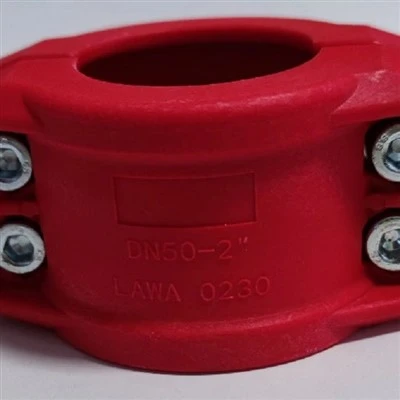
When you’re ready to discuss your custom hardware needs and explore tailored cost-saving strategies, reach out to our team to start a conversation about your project.
Hose Mender References
- National Association of Manufacturers. (2023). Cost Optimization in Custom Manufacturing: Material and Process Insights.
- American Society of Mechanical Engineers. (2022). Design for Manufacturing (DFM) Best Practices for Custom Hardware Production.
- U.S. Small Business Administration. (2024). Managing Production Costs for Small Hardware Startups.
Suzhou Fuyikang Metal Industrial Co., Ltd.
As one of the most professional custom hardware manufacturers and suppliers in China, we have world-leading production equipment and strong manufacturing capabilities. We warmly welcome you to buy bulk high quality custom hardware for sale here from our factory.
Address: No.26.Mudong Rd,Mudu Town, Wuzhong Distric, Suzhou City,Jiangsu Province,China
E-mail: SZFYK@SZFUYIKANG-COUPLING.COM
WebSite: https://www.fyk-coupling.com/
