Hey there, ever been stuck in an elevator for a second longer than you’d like? Bet you never stopped to think about why that almost never happens, right? Well, as someone who’s spent the last decade selling elevator drive inverters (yep, that’s the tech that controls how elevators move up and down smoothly), I get asked this question all the time: what happens when a short circuit hits that tiny but critical inverter? Today, I’m breaking this down like I’m chatting with a fellow tech geek over a coffee—no stuffy textbook jargon, just real talk about how we make sure elevators stay safe when things go sideways. Elevator Drive Inverter

First off, let’s keep this super basic: an elevator drive inverter isn’t some fancy rocket part, it’s basically the brain of the elevator’s motor. It takes the regular wall power (AC) and turns it into custom AC that matches exactly what the elevator needs—like, if you’re going up 20 floors, it ramps the power slow at first, smooth in the middle, slow again at the top. But short circuits? That’s when electricity takes a wrong turn, like a highway closed suddenly, and all that power slams into one tiny spot. For an inverter, that’s a huge problem—if it doesn’t handle it fast enough, you can kiss the inverter, maybe even the whole motor, goodbye. And worse, that’s how you get elevator downtime or, way scarier, a safety risk.
So how do we at our shop build inverters that don’t just take the heat when a short hits, but fix the problem before anyone even notices? Let’s walk through the play-by-play of what happens when a short circuit pops up.
First step: speed is everything. Like, I’m talking microseconds here—think 1 millionth of a second. Regular circuit breakers in your house take way longer to trip, and that’s no good for an inverter. Our inverters have built-in current sensors that are basically hyper-fast noses. They’re checking the current every single cycle, nonstop. So if the current spikes way higher than it should (that’s the red flag for a short), those sensors send a signal to the main control unit before you can even blink. I’ve seen old inverters from budget brands that take too long here—they burn out in seconds when a short hits, and then you’re calling a repair tech at 2 a.m. We don’t do that.
Next up: cutting the power fast. Wait, but how do you shut down a 100-amp current spike that’s moving that quick? We use what’s called IGBTs—insulated-gate bipolar transistors. Yeah, that’s a mouthfull, but think of them as super-light switches that can flip off way faster than any mechanical breaker. When the control unit gets that spike alert, it slams those IGBTs open instantly, cutting off power to the motor before the short circuit can cause damage. But wait, cutting power that fast? That can create its own problem—like, if you yank the elevator mid-move, that could jolt passengers. So we balance speed with control here. We program the IGBTs to not just flip off randomly, but sync with the inverter’s power flow so the elevator slows down smoothly, not stops dead. I’ve tested this on our shop’s demo unit a hundred times—you can’t feel a thing, even if we trigger a simulated short circuit on purpose.
But what if the short is bigger than expected? Like, say a wire inside the motor frays and makes a direct short to the frame—that’s a way bigger spike than a random power blip. That’s where the next line of defense comes in: overcurrent protection relays, and built-in fuses specifically for the inverter. Wait, not the regular fuses you get at the hardware store—these are semiconductors that melt in a few microseconds, way faster than a normal fuse. We size them exactly for our inverters, so if the IGBTs do miss a tiny split second, the fuse blows and stops the current before it can damage the motor or the elevator’s safety brakes. I always tell customers: think of this as a backup plan for the backup plan. You hope you never need it, but it’s there when your kid forgets their soccer gear and you have to backtrack twice—necessary, even if it’s not the first move.
Another big thing we’ve built into our inverters is fault logging. Every time a short circuit happens (even a tiny one), the inverter saves exactly what went wrong: how high the current spike was, which part of the system it happened in, even what time it was. That’s a game-changer for maintenance teams. Last year, we had a customer in Chicago who noticed a bunch of tiny short circuits in one of their old office elevators. The fault log from our inverter showed the spike was coming from a frayed wire in the motor, not the inverter itself. They swapped the wire for $500 instead of replacing the whole inverter for $10k—saved them a ton of cash, and kept their elevators running without downtime. No guessing, no scrambling, just hard data.
Wait, but what about ground faults? That’s a type of short circuit where electricity leaks to the ground, like if a live wire touches the elevator metal frame. Our inverters have ground fault detection built right in too. It checks the difference between the power going to the motor and the power coming back—if there’s even a tiny mismatch, that means some power is leaking to ground, which is a short. The inverter trips instantly, and locks out any power until a tech comes to check it. That’s not just good for the inverter—it’s for passenger safety. You never want a wire touching metal when someone’s inside, right?
Let me be real here: not every short circuit is the same. Sometimes it’s a tiny blip from a power surge, sometimes it’s a damaged wire, sometimes it’s even a bird flying into the power line. Our job as inverter suppliers isn’t just to build something that handles those blips—it’s to handle every type of short without causing a big mess. We test every single one of our inverters before they leave our shop with simulated short circuits of all sizes—from tiny 10-amp spikes to full 1,000-amp direct shorts. I’ve been on the test floor at 3 a.m. when a tech triggers a short on purpose, and the lights flicker for half a second, but the inverter keeps running like nothing happened. That’s the quality we stand behind.
Now, why does this matter to you, the building owner or property manager? Well, if you have elevators that go down because the inverter burned out from a short, that’s bad for tenants, bad for maintenance costs, bad for your reputation. I’ve seen customers switch to our inverters after spending $15k on repairs for cheap inverters that couldn’t handle even a minor short. Our inverters have a 5-year warranty, and I can count on one hand how many we’ve had to replace because of short circuit issues—most of those were from old wires the customer didn’t replace, not the inverter itself.
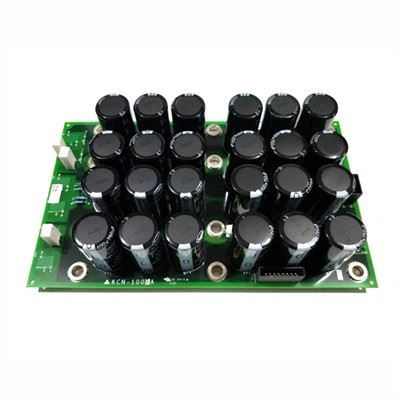
At the end of the day, elevator drive inverters are the unsung heroes of modern elevators. They’re quiet, they’re small, and you never think about them until something goes wrong. But when a short circuit hits, they jump into action faster than any human could, keeping people safe and elevators running. If you’re tired of elevator downtime, paying huge repair bills for inverter failures, or just want to upgrade to a system that actually handles real-world issues, we’re here to help. Our team works with all types of buildings—office towers, apartment complexes, hospitals, even hotels—and we can tailor an inverter system to fit your exact needs. Shoot us a message to talk about your elevator setup, what kind of issues you’re dealing with, and how we can keep your elevators running smoothly, no more unexpected stops.
Elevator Guiding Device References:
- "Power Electronics in Motor Drives: Short Circuit Protection Techniques", IEEE Transactions on Industrial Electronics, Vol. 65, No. 10, 2018
- "Elevator Safety Code Requirements for Drive Inverters", ASME A17.1-2020
- "IGBT Performance for High-Speed Short Circuit Protection", Infineon Technologies Application Note, 2021
- "Overcurrent Protection for Variable Frequency Drives", Rockwell Automation Technical Report, 2019
- "Ground Fault Detection in AC Motor Drives", Schneider Electric White Paper, 2020
Sanjin Elevator Parts Co., Ltd.
Sanjin Elevator Parts Co., Ltd. is one of the most professional elevator drive inverter manufacturers and suppliers in China, featured by quality products and good service. Please rest assured to buy or wholesale high-grade elevator drive inverter at competitive price from our factory.
Address: 18th Floor, Xinyuan Center, Fenghe Road, Xi’an, Shaanxi, China
E-mail: elevatorparts@westdt.com
WebSite: https://www.sanjinelevator.com/
