If you’re someone in the stone, tile, or even custom fabrication game, I’m sure you’ve stood in a job site or showroom and stared at a giant marble slab, wondering “how on earth do they cut this without breaking it?” If you’re shopping for a slab cutting machine, that same question is front and center: what’s the largest slab a machine can actually handle, and does that number match what you actually need for your work? I get it—this isn’t some trivial spec to check off a list; it’s the difference between nailing a big commercial kitchen project or wasting $2k on a machine that can’t get the job done. Slab Cutting Machine
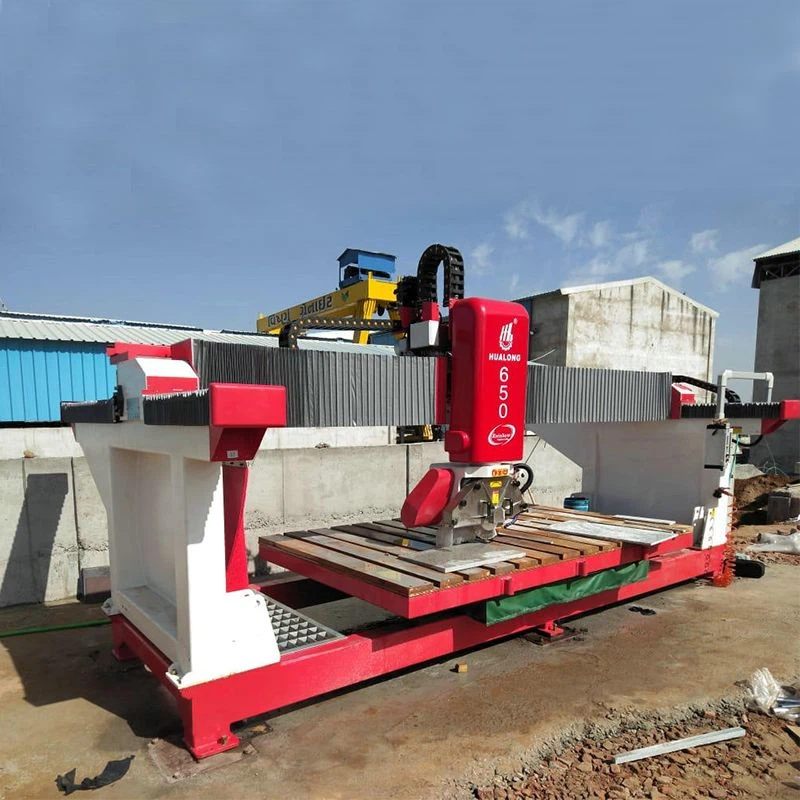
I’ve been around slab cutting machines for over a decade now, starting out as a tech fixing broken units for small fabrication shops before moving into selling them directly. So I’ve seen it all: a shop that bought a machine listed as handling 120-inch slabs, only to find out the measurement included a 6-inch overhang that they couldn’t use, or a contractor that tried to cram a 130-inch quartz slab into a machine with a 125-inch max, and shattered it before the first cut. Today, I’m breaking down what actually determines a machine’s max slab size, the common myths floating around, and how to avoid the headaches that come from picking the wrong spec.
First off, let’s clear up a big lie you’ll see on most spec sheets: the “max slab length” or “max slab width” listed isn’t just the slab itself. Yeah, it sounds like it should be—if a machine says 120-inch max, you’d assume a 120-inch slab will fit. But that’s almost never the whole story. Slabs are heavy, right? A single 120-inch granite slab can weigh 800+ pounds, and even a thinner quartz is pushing 500 pounds. To keep that from toppling mid-cut, you need at least 3 to 5 inches of overhang on both ends of the slab to mount it securely on the machine’s cradle, plus another 2 inches on each side for clamps and guide rails. Those are non-negotiable. So that 120-inch spec? Your actual usable slab size is more like 110 inches if you’re being safe. I’ve watched new buyers skip this detail and jam a 115-inch slab into a machine that couldn’t handle the overhang, and half the time they end up with a cracked slab and a damaged machine. That’s not a fun Tuesday.
Now, what actually does determine the largest slab a machine can handle? It’s not just one number—three key factors play into this, and if you ignore any of them, you’re setting yourself up for trouble.
First is the machine’s work envelope, which is just a fancy way of saying how much physical space it has to hold a slab. For most horizontal slab cutters (the standard for most fabrication shops), the work envelope is the distance between the end stops on the cradle, plus the extra space needed for the head to move back and forth to cut. Smaller machines, usually around 5-axis units for residential work, have a work envelope of about 130 inches total. That means your usable max slab here is more like 118 inches, assuming you add the overhangs and clamp space. Then there are the industrial-grade machines, which are the ones you see in big commercial shops. Those have a work envelope up to 160 inches, so usable max slab is around 145 inches. I’ve sold a handful of those to companies doing large hotel lobbies or multi-unit condo projects, and they swear by it because they can tackle those extra-long quartz slabs that come in for big counter jobs.
Second factor is slab weight, and this is one that gets overlooked way too often. I mentioned earlier that a 120-inch granite slab is 800 pounds, but what happens if you’re handling two of them stacked for a backsplash? No, most machines list their “max slab weight” alongside the length, but don’t take that as a separate number—if your shop routinely handles heavy natural stone, you can’t just pick a machine with a 120-inch max slab and a 700-pound max weight, because those numbers don’t add up. I’ve had a customer call me panicking once because his machine’s weight sensor wouldn’t let him load a 750-pound marble slab that fit the length, but the machine was rated for 650 pounds. He’d forgotten that natural stone is way denser than quartz, so the weight spec matters almost as much as the length. For reference, residential quartz slabs are usually 500 to 600 pounds, while large-format granite or travertine can hit 1,000 pounds, so if you’re working with those, you need to bump your weight spec 100 to 200 pounds above your average slab.
Third, and this is the one that even old heads mess up, is the cutting head’s reach. A lot of people think the head just moves back and forth along the slab, but if you’re cutting a large slab that’s 140 inches long, the head has to move the full length without getting stuck on the slab’s edge or the machine’s frame. Some cheaper machines cut corners here (pun intended) by making the head’s travel 10 to 15 inches shorter than the work envelope. So if a machine says 150-inch work envelope, but the head only travels 135 inches, you can’t cut a full 140-inch slab without leaving a 5-inch uncut strip on one end. That’s a huge waste when you’re dealing with material that costs $50+ a square foot. I once had a fabricator drive 2 hours to see a machine he found online, only to realize the head’s reach was 10 inches shorter than the spec sheet said, and he couldn’t cut the 130-inch slabs he bought. He called me that afternoon asking if we had a unit with proper head travel, and we got him set up in a week.
Now, let’s talk about the big debates in the industry right now. Some people will tell you there’s a universal max slab size of 144 inches, and anything bigger than that is a custom job. Others say you can get 160-inch machines if you’re willing to pay for the heavy-duty ones. Here’s the real tea: those 144-inch numbers come from standard commercial slab sizes—most marble and granite quarries produce slabs around 120 to 144 inches, so that’s the sweet spot for most small to mid-sized shops. If you’re a shop that only does residential counter tops, you’ll never need a machine over 130 inches work envelope, because most residential slabs max out at 120 inches. But if you’re doing commercial vanities, large wall cladding, or even outdoor stone features like patios, you’ll want to shoot for 140 to 150 inches work envelope, because those projects often require oversized slabs to minimize seams.
Wait, seams—let’s circle back to why this actually matters. A seam is the line where two slabs meet, right? Every seam is a weak spot, and it adds time and material cost to a project. If you can use a 130-inch slab instead of two 60-inch slabs, you’re cutting down on seams by half, which means fewer installation hours, fewer chances for the seam to crack or look uneven, and happier clients. I had a client who did high-end residential work; he switched from a 120-inch max machine to a 135-inch max, and he told me he cut his project time by 20% because he rarely had to join two slabs for a kitchen counter. That’s a concrete return on investment, not just a spec number.
Now, let’s address the myths that circulate in shop break rooms and online forums. Myth number one: “Bigger is always better.” Sure, a 160-inch machine can handle huge slabs, but if you’re only doing residential work, that $80k machine is overkill. You’re paying for space and weight capacity you’ll never use, and it’ll take up twice the floor space in your shop. I see shops every year buy the biggest machine they can afford, only to use 50% of its capacity, and they’re paying for electricity and maintenance on a unit they don’t need. That’s throwing money out the door. Myth number two: “All machines’ max slab specs are the same.” Nope, a 5-axis CNC machine for small detail work will have a way different max slab size than a bridge saw for heavy stone. 5-axis units are great for cutting shapes, but their work envelope is smaller because the head needs to tilt and rotate, so they can’t handle as large a slab as a standard horizontal bridge saw. Myth number three: “You can modify a smaller machine to handle bigger slabs.” I’ve seen people try it—add a longer cradle, upgrade the motor—but nine times out of 10, they end up with a machine that’s unstable, can’t cut straight, or breaks within six months. Modifying isn’t worth it; it’s cheaper to just buy a machine that’s built for the size slabs you need.
So, how do you actually figure out the right max slab size for your shop? Let’s walk through a quick step-by-step, no fancy calculators needed. First, list out all the projects you do on a regular basis. Are they mostly 10-foot kitchen counters (that’s 120 inches) or 12-foot commercial lobbies (144 inches)? Second, measure the actual slabs you’re using—don’t go by the industry “standard,” because some quarries have bigger slabs, especially for quartz. Third, add 8 to 10 inches to that slab length to account for overhang and clamp space. That number is your minimum work envelope. Fourth, check the weight: take your heaviest slab, add 150 pounds (for edge trim and extra material), and make sure the machine’s weight rating is at least that. If you’re working with natural stone, add another 100 pounds, because it’s denser than most people realize.
I can’t tell you how many times a shop owner has come to me saying “I need a machine that can do 150-inch slabs” only to realize they’re only working with 100-inch slabs, or vice versa. Last month, a shop in Dallas contacted me because they were bidding a 20-unit condo project that needed 130-inch quartz slabs. They’d bought a machine with a 125-inch work envelope and couldn’t fit the slabs, so they were paying extra to split the slabs and deal with more seams. We hooked them up with a 138-inch max machine, and they told me a week later it was exactly what they needed—no more extra seams, no more wasted material.
Now, what about the edge cases? What if you’re handling oversized slabs, like 160-inch ones for large wall features or public art installations? Those are less common, but they do exist. For those, you’ll need a heavy-duty industrial machine, usually with a work envelope of 160 inches or more, and a reinforced cradle that can handle 1,200+ pounds. These machines aren’t cheap, but if that’s your bread and butter, they’re worth every penny. I sold one to a studio in New York City last year that does public art pieces, and they said they hadn’t found any machine that could handle the 165-inch marble slabs they get from Italian quarries until they bought ours.
One thing I always emphasize to customers is to test the machine if you can. A lot of suppliers will let you bring a sample slab to their shop to see if it fits. Do that! I’ve had customers bring a slab that fit the spec sheet, but when they loaded it, the overhang was too much, or the head couldn’t reach the other end, and they walked away from the sale. I even had one guy who brought a 125-inch slab to test, and it turned out the machine’s clamps couldn’t fit the slab’s thickness—even if the length works, you have to check thickness too. Most machines handle slabs up to 3 cm thick, but some thinner ones can only do 2 cm, so if you’re cutting thick natural stone, that’s another spec to confirm.
Let’s wrap this up with a quick real-world example. Let’s say you’re a mid-sized shop that does 80% residential kitchen counters, 15% bathroom vanities, and 5% small commercial jobs. Your average slab is 110 inches long, 2 cm thick, and 550 pounds. Add 10 inches for overhang and clamps, so your minimum work envelope is 120 inches. The weight spec is already at 550, so a machine rated for 600 pounds is perfect. That’s a solid 5-axis bridge saw, not an industrial monster. You’ll have enough space to handle all your regular jobs, and you can even squeeze in a commercial vanity project if it comes up.
If you’re still stuck on figuring out what size machine works for you, don’t overthink it. Skip the generic online spec lists, and instead, think about your actual work, not what you hope to do someday. Bigger machines are tempting, but they come with bigger costs: higher price tag, more floor space, higher utility bills, more maintenance. The best machine isn’t the biggest—it’s the one that matches your current needs, with a little room to grow if you plan to take on bigger projects down the line.

And hey, if you’re in the market for a slab cutting machine and you’re not sure where to start, just reach out. I’ve helped shops of all sizes, from one-person operations to 10-person commercial shops, find the right machine for their slab needs. We don’t push the biggest or most expensive unit; we push the one that’ll actually make your job easier, not just pad our sales numbers.
Stone Splitting Machine Reference:
Stone Fabrication Machinery Specifications. 2023. Stone Tech Association.
Industrial Slab Handling and Cutting Guidelines. 2022. National Tile Contractors Association.
CNC Bridge Saw Work Envelope Best Practices. 2021. Fabrication Equipment Review.
Fujian Province Hualong Machinery Co., Ltd.
Fujian Province Hualong Machinery Co., Ltd. is one of the most professional slab cutting machine manufacturers and suppliers in China, featured by quality products and good price. Please rest assured to buy high-grade slab cutting machine for sale here from our factory.
Address: Huangshi Industrial Zone, Putian City, Fujian Province, China
E-mail: hualongpro@hualongm.com
WebSite: https://www.stonecuttingmachine.com/
