If you’ve ever worked on a road repair, utility installation, or residential driveway project, chances are you’ve seen a trencher chewing through soil at a steady pace—but what about asphalt? This is a question I get at least a dozen times a week, from homeowners asking if they can upgrade their old yard trencher to dig near their driveway, to construction foremen planning a municipal water line that crosses a 1-inch thick asphalt residential street. The short answer is yes, a trencher can cut through asphalt—but not every trencher, and not every asphalt job is a match. As a trencher supplier who’s walked hundreds of job sites with customers, I’ve seen what works, what wastes time, and what outright ruins a machine or a paving surface. Let’s break this down with the kind of on-the-ground context you won’t find in a generic equipment manual. Trencher
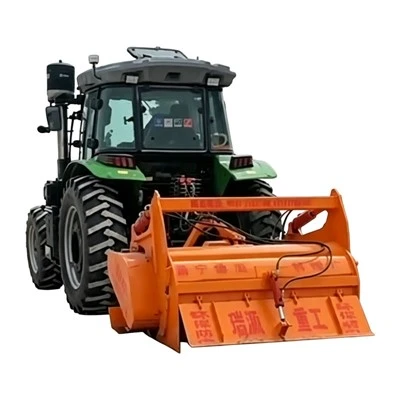
First, let’s start with what makes asphalt different from dirt. Asphalt isn’t just “hard soil”—it’s a composite material: asphalt binder (the glue that holds it together) mixed with aggregate (crushed stone or sand) and sometimes recycled asphalt pavement (RAP) millings. The density, thickness, and age of asphalt vary wildly. A new residential driveway might be 2 to 3 inches thick, made with soft binder that’s easy to cut. An old city street might be 4 to 6 inches thick, with a harder, aged binder that’s almost as dense as concrete in spots. That’s why the first rule of trenching through asphalt is: you can’t use the same machine you’d use for digging through loam or clay. Walk-behind trenchers, for example, are designed for light to medium soil. A standard walk-behind with a generic digging chain might struggle with even 2 inches of asphalt, and if you force it, you’ll either skip over the surface (leaving a ragged edge that requires extra patching) or bend the teeth on the digging chain.
Wait, let’s clarify: when we say a trencher “cuts through asphalt,” we’re not just breaking through it—we’re making a clean, uniform trench wall that fits the utility line (usually fiber optic, water, or electrical) you’re installing. A ragged, uneven trench can mean extra work smoothing the edges, or even having to re-cut sections if the line doesn’t sit right. So what type of trencher works best? For light jobs—like a homeowner installing a ½-inch fiber line across a thin driveway—your best bet is a small walk-behind trencher with a specialized asphalt cutting chain. These chains have tungsten carbide-tipped teeth, not the standard steel teeth used for dirt. Tungsten carbide is 3 times harder than steel, so it bites into aggregate and binder without dulling quickly. I saw a customer last month try to use a dirt chain on a 2-inch asphalt driveway; after 10 feet, he had to replace 12 teeth, which cost more than the extra hour he would have spent renting the right chain. That’s a rookie mistake.
For heavier commercial or municipal jobs, you’re looking at ride-on trenchers, specifically those with a power rating of 25 horsepower or higher. The extra horsepower is non-negotiable here. A 15-horsepower ride-on can dig through 4 inches of soft asphalt, but it’ll strain, slow down, and potentially damage the drive train. A 30-horsepower model, on the other hand, can handle up to 8 inches of aged asphalt, and paired with a trencher that has a rocksaw or asphalt-specific cutting attachment, it can make a 12-inch deep trench in one pass. I recently worked with a crew installing a gas line on a 6-inch thick main road; they used one of our 35-horsepower ride-on trenchers with a reinforced asphalt chain, and they finished the 200-foot trench in 45 minutes, with no ragged edges and no damage to the road surface. Compare that to their old 20-horsepower model, which took 3 hours and left them re-patching 10 feet of edge because the teeth skipped.
Now, let’s talk about variables that most people overlook. First, asphalt thickness and condition. Cold-mix asphalt, the kind used for pothole repairs, is much softer than hot-mix, which is used for new roads. If you’re cutting through cold-mix, you can get away with a lighter machine, but if you’re cutting through hot-mix that’s been down for 10+ years, you need that extra power. Another variable: the base layer under the asphalt. Most asphalt roads and driveways have a base of crushed stone or gravel, called aggregate base. When your trencher cuts through the asphalt, it’s going to hit that base too. If you use a dirt chain, the base aggregate will bend the teeth; if you use an asphalt chain with carbide tips, it will slice through both the asphalt and the aggregate base without slowing down much.
Wait, what about trencher attachments specifically? This is where a lot of customers get confused. Many people think any trencher attachment works for asphalt, but there are three main types: dirt chains (steel teeth for soil), asphalt chains (carbide-tipped teeth for paved surfaces), and rock chains (heavy-duty, extra carbide teeth for concrete or very dense rock). If your job is only asphalt (no rock base), an asphalt chain is the most cost-effective. If you’re going through asphalt and a rock base, you’ll need a rock chain to avoid damaging the machine. I had a customer last year who tried to use an asphalt chain on a job that required cutting through 2 inches of asphalt and 6 inches of solid limestone base. The chain lasted 15 feet before three teeth snapped, and he spent $800 on replacements plus 2 hours of downtime. That’s a cost he never would have incurred if he’d checked the sub-base before starting.
Another common question: can you use a trencher with a saw attachment instead of a digging chain? For some jobs, yes. A concrete saw (often paired with a trencher’s frame) can make a straight, clean cut through asphalt before you use the trencher to widen the trench. This is especially useful for old, brittle asphalt that’s prone to cracking when you force a digging chain through it. I recommend this method for driveway jobs where you want a professional, smooth edge after installation—no one wants a trench that’s wider on one side than the other, leading to uneven pavement when you patch. That said, a saw attachment adds cost, and if you’re digging a trench deeper than 12 inches, you’ll still need the trencher to remove the material from the trench. It’s a supplemental tool, not a replacement for a trencher.
Now, let’s cover the risks if you use the wrong trencher or attachment. First, machine damage: bending or snapping teeth, straining the engine, or even cracking the trencher’s frame from the force of cutting through hard asphalt. Second, surface damage: if the machine isn’t powerful enough, it will “skip” across the asphalt, leaving gouges and uneven edges that require rework. Third, safety: forcing a light-duty trencher to cut through asphalt can cause the machine to kick back, which is a major hazard for operators. I’ve seen a walk-behind trencher flip when a operator tried to cut through 3 inches of asphalt without adjusting the depth control—luckily, he only had a broken rib, but the machine was totaled. That’s why we always emphasize matching the trencher to the job’s asphalt thickness and sub-base before you start.
Let’s also talk about job-specific scenarios to make this concrete. Scenario 1: Residential fiber line across a 2-inch thick, 5-year-old asphalt driveway. Solution: Small walk-behind trencher (10-15 HP) with an asphalt carbide chain. Cost-effective, easy to maneuver around yard obstacles, and makes a clean enough trench that you can patch the driveway in less than an hour. Scenario 2: Municipal water line on a 6-inch thick, 15-year-old city street. Solution: Ride-on trencher (30+ HP) with a reinforced asphalt chain, paired with a saw attachment to score the edges first. This is the most efficient way to complete a large trench without damaging the road or slowing traffic. Scenario 3: Commercial electrical line for a shopping center, cutting through 4 inches of asphalt over a gravel base. Solution: Mid-size ride-on trencher (20-25 HP) with a rock-asphalt hybrid chain. This balances power for the asphalt and durability for the gravel base, so you don’t have to change attachments mid-job.
A lot of customers come to us asking, “Can I rent a trencher for asphalt work?” and the answer is yes, but only if you ask the rental company for an asphalt-specific attachment. I’ve seen too many people rent a basic dirt trencher and wonder why it doesn’t work for their driveway. If you’re buying a trencher for regular asphalt jobs, we always recommend investing in the right attachments upfront—they’re cheaper in the long run than replacing damaged teeth or machines.
Wait, one thing I hear all the time: “A trencher is just for dirt, right?” That’s a myth that’s been around since trenchers were first invented in the 1920s for digging utility lines. Early trenchers had steel teeth for soil, but as utility lines started being installed under paved surfaces, manufacturers quickly developed specialized chains and higher-power engines. Today, most modern trenchers are built with interchangeable attachments, so you can switch from dirt to asphalt in less than 10 minutes. That flexibility is why a good trencher is a valuable investment for anyone who works on both dirt and paved projects.
Let’s wrap this up with what to do before you start an asphalt trenching job. First, measure the asphalt thickness. Use a core drill (you can rent one cheaply) to take a small sample, or check with your local public works department for road thickness if you’re working on a city street. Second, check the sub-base—ask the property owner or look for existing cuts nearby to see if there’s gravel, limestone, or concrete under the asphalt. Third, match your trencher and attachment to those measurements. If you’re unsure, don’t guess—call a trencher supplier (that’s us, by the way) and we can help you pick the right machine for your project.
At the end of the day, a trencher absolutely can cut through asphalt—but success depends on matching the right machine and attachment to your specific job. Too many people waste time and money using the wrong equipment, and too many avoid asphalt projects because they think a trencher can’t handle it. I’ve seen small walk-behind trenchers finish a residential fiber job in 20 minutes, and large ride-on trenchers finish a municipal job in a single day—all because they were set up for the asphalt, not against it.
If you’re planning an asphalt trenching project, or you’re looking to upgrade your equipment to handle paved jobs, we’re here to help you find the perfect trencher and attachments for your needs. Reach out to our team to discuss your project, ask questions, and get tailored recommendations that fit your budget and timeline.
Cold Recycling Mixer References
- American Society of Civil Engineers. (2021). Utility Installation Standards for Paved Surfaces. ASCE Manuals and Reports on Engineering Practice No. 150.
- Trencher Manufacturers Association. (2022). Attachment Compatibility Guide for Paved Surface Trenching.
- Federal Highway Administration. (2020). Guidelines for Trenching Operations on Public Roadways. FHWA Report No. FHWA-HRT-20-047.
- Asphalt Institute. (2019). Best Practices for Cutting Asphalt for Utility Installation. Research Report No. 19-02.
Zhihao Highway Engineering Machinery Co., Ltd.
As one of the most professional trencher manufacturers and suppliers in China, we have world-leading production equipment and strong manufacturing capabilities. Please rest assured to wholesale customized trencher made in China here from our factory. For price consultation, contact us.
Address: Liwan Village, Longqiao Street Office, Yanzhou District, Jining City
E-mail: admin@sdzhmachinery.com
WebSite: https://www.zhroadmach.com/
