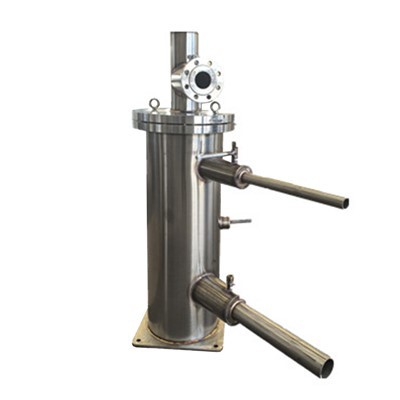
If you’ve ever worked with cryogenic pressure vessels—think the tanks hauling liquid nitrogen, LNG, or liquid oxygen for hospitals or industrial processes—you know these aren’t your average storage containers. They hold materials at temps hundreds of degrees below zero, under precise pressure, and even a tiny flaw can turn a routine operation into a dangerous hazard. That’s why recertification isn’t just a bureaucratic hoop to jump through—it’s how we keep those vessels working safely, reliably, and compliant with global standards. As a cryogenic pressure vessel supplier, I’ve walked clients through this process dozens of times, and it’s way more than a quick check; it’s a step-by-step deep dive that ensures every tank is good to go for another 5 or 10 years, depending on its design. Cryogenic Pressure Vessel

First, let’s get clear on the basics: no matter where your vessel is operating—whether here in the U.S., the EU, or Australia—you can’t skip recertification. Regulations like ASME BPVC (that’s the American Society of Mechanical Engineers Boiler and Pressure Vessel Code, the gold standard for North America), PED (Pressure Equipment Directive, for the EU), and Canada’s CSA B51 all mandate periodic recertification for cryogenic tanks. Unlike regular pressure vessels, cryo ones have extra vulnerabilities: extreme cold makes metals brittle over time, thermal cycling (heating up and cooling down as you fill and empty the tank) causes tiny cracks to form, and external corrosion eats away at insulation or the vessel’s outer shell. Recertification catches all that before it becomes a problem.
Let’s break the process down into the phases I actually walk customers through, no jargon overload, no fancy red tape.
Phase 1: Pre-Inspection Prep (The Hidden Work)
A lot of people think recert starts when the inspector shows up, but the best prep starts 4–6 weeks before that. First, you need to pull all the vessel’s docs: original manufacturing certifications, past recert reports, maintenance logs, and any repair work that’s been done. These aren’t just paperwork—inspectors use them to track how the vessel has held up over its life. For example, if you’ve had a small leak fixed on a liquid nitrogen tank two years ago, the inspector will zero in on that spot during the check.
Next, you need to get the vessel ready for the big day: it has to be completely emptied, warmed to room temp, dried out, and cleaned inside. Cryo tanks hold super cold liquids, so any residual moisture or old product can freeze during inspection, mess with test gear, or even create a safety hazard. Also, make sure access points (manholes, nozzles, valve connections) are clear—you’d be surprised how often a client stacks boxes or leftover parts right where the inspector needs to stand.
One pro tip I always pass along: if your vessel is mobile (like a cryo tank on a truck trailer) vs. stationary (sitting on a plant pad), mobile ones have extra rules. You’ll also need to check local transport rules to move it to the inspection shop if you’re not doing the check on-site. Don’t cut corners here—skimping on prep will just mean the inspector has to reschedule, costing you time and money.
Phase 2: Non-Destructive Testing (NDT) – No Cutting, No Damage
This is the core of the recert, and it’s all about checking for flaws without ruining the tank. We use a bunch of NDT methods, depending on the vessel’s age, material, and use case.
First, visual testing (VT) is the first step. Inspectors walk the entire vessel—inside and out—looking for dents, corrosion, insulation damage, or cracks around welds. For cryo tanks, we pay extra attention to the outer vacuum shell (that’s the layer that keeps the cold inside) and the support skids (the legs holding the tank up). A dent in the vacuum shell might not seem like a big deal, but if it crushes the insulation, your tank will lose efficiency—wasting cryo product and costing you money on energy to keep it cold.
Then there’s liquid penetrant testing (PT) for non-magnetic metals like aluminum or stainless steel (common for cryo tanks). We dab a red penetrant liquid on welds, wipe it off after 10 minutes, and apply a developer—any tiny crack will pull the penetrant out and show up as a bright line. For magnetic materials, we use magnetic particle testing (MPT), which works similar but uses magnetic dust to catch surface cracks.
For deeper flaws, ultrasonic testing (UT) is key. We run a wand over the vessel’s walls, and sound waves bounce off any hidden cracks or thinning metal—think of it like an ultrasound for the tank. This is super important because cryo tanks get thinner over time from thermal expansion and contraction, and thinning walls can’t handle pressure like they’re supposed to.
If the vessel has a vacuum insulation jacket (the most common type for cryo tanks), we also do a vacuum hold test. We pull a vacuum on the jacket and check for any pressure increase over 24 hours—if it rises too much, that means air is leaking in, and your insulation is shot. No good—you’ll start losing product faster, and that’s a big cost for operations that run on LNG or liquid oxygen.
Phase 3: Pressure Testing – Proving It Can Handle the Load
Once the NDT checks out, we move to pressure testing—this is where we make sure the vessel can handle its design pressure safely. For cryo vessels, this is usually a hydrostatic test (filling the tank with water instead of cryo liquid, since testing with LN2 or LO2 is way more dangerous). The inspector pressurizes the tank to 150% of its maximum allowable working pressure (MAWP)—that’s the highest pressure the tank is rated for—and holds it there for at least 30 minutes. No leaks, no deformation, no cracks = pass.
Wait, why 150%? Because a vessel has to be able to handle pressure spikes, and this test is the only way to confirm its structural integrity. Some people ask if we use pneumatic testing (pressurizing with gas) instead, but we almost never recommend that for cryo tanks—gas is compressible, so if the tank fails, it can explode with way more force. Hydrostatic is way safer, as long as the tank is designed for it (most cryo tanks are).
For mobile vessels (like cryo tank trailers), we also do a burst test? No, wait—no, we don’t do destructive tests. Burst tests are only for new designs, not recert. For recert mobile tanks, we add a cyclic pressure test: we cycle the pressure from 0 to MAWP a few times to make sure it doesn’t fatigue, which is a common issue for tanks that get loaded and unloaded every week.
Phase 4: Documentation, Sign-Off, and Post-Recert Steps
Once all tests pass, the inspector will issue a formal recertification certificate. This is your proof that the tank is compliant, and you have to keep it on file for as long as you operate the vessel—OSHA, ISO, and other regulators will ask for it during audits.
But it’s not just a piece of paper. We also give clients a set of post-recert tips to keep the vessel in shape for the next 5–10 years. For example:
- Don’t exceed the MAWP—even if you’re in a pinch, overpressuring is a fast way to ruin a good recert.
- Inspect the vacuum jacket annually (if you have one) with a simple pressure gauge—if the vacuum level drops, it’s time to get it checked.
- Keep maintenance logs updated, even for small repairs—future inspectors will thank you.
Now, let’s talk about timelines and costs. A standard stationary cryo tank recert usually takes 1–2 weeks from start to finish, including prep and inspection. Mobile tanks take a bit longer, since you have to transport them. Costs depend on the tank’s size, material, and any repairs that pop up during inspection—usually ranging from $1,500 for a small 500-gallon LN2 tank to $10,000+ for a large 10,000-gallon LNG trailer. That sounds like a lot, but it’s way cheaper than a fine for non-compliance, or a safety incident that shuts down your operation.
I’ve seen too many clients put off recert to save a buck, and it almost always backfires. Last year, a small medical lab I work with put off their liquid oxygen tank recert for two years. During inspection, we found a 2-inch crack in a weld from thermal cycling. If that had ruptured, their oxygen supply would have cut out, putting patients at risk and costing them millions in downtime. Recert isn’t just a rule—it’s protecting your people, your equipment, and your bottom line.
LNG Fueling Station If you’re a facility manager, operations lead, or someone in charge of cryo vessels and you’re not sure when yours is due, or you need help coordinating the recert process, hit me up. I work with clients across industries from healthcare to energy to manufacturing, and I can walk you through every step, connect you with certified inspectors, and make sure your vessel stays safe and compliant.
References
- American Society of Mechanical Engineers (ASME). 2023. Boiler and Pressure Vessel Code, Section VIII: Pressure Vessels.
- European Committee for Standardization (CEN). 2021. Pressure Equipment Directive (PED) 2014/68/EU.
- Canadian Standards Association (CSA). 2022. CSA B51: Boiler, Pressure Vessel, and Pressure Piping Code.
- International Organization for Standardization (ISO). 2020. ISO 21001: Cryogenic vessels – Operation and maintenance.
Tianjin Baiyan Technology Co., Ltd.
With abundant experience, we are one of the most professional cryogenic pressure vessel manufacturers and suppliers in China. We warmly welcome you to buy customized cryogenic pressure vessel made in China here from our factory. If you have any enquiry about pricelist and quotation, please feel free to email us.
Address: No.36, Jixian Road, Shuangqiaohe Development Zone, Jinnan District, Tianjin, China
E-mail: sales@tjbaiyan.com
WebSite: https://www.baiyan-tech.com/
