If you’ve ever perused automotive interior accessories, you’ve probably come across TPE car mats—they’re one of the most popular options on the market right now, and as a supplier who’s worked with this material for over a decade, I get asked one question more than any other: Do TPE car mats damage a car’s original floor? It’s a fair question. Original factory-installed floor mats and carpeting are designed to last, and no car owner wants to risk voiding their warranty, ruining a resale value, or dealing with costly repairs down the line. Let’s break this down with the kind of practical, science-backed context I bring to every batch of mats we produce, no marketing fluff, just what every driver needs to know. TPE Car Mats
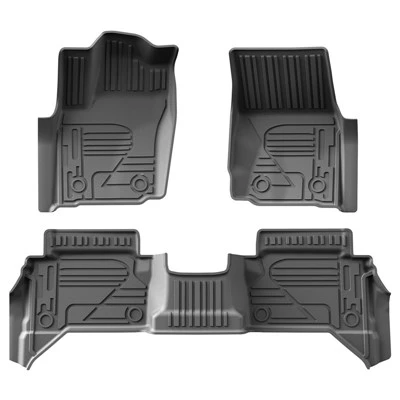
First, let’s start with what TPE actually is, because a lot of the confusion around potential damage comes from misunderstanding the material. TPE stands for Thermoplastic Elastomer—it’s a blend of polymers that combines the flexibility of rubber with the moldability of plastic. Unlike old-school rubber mats, which often required harsh chemicals to soften, TPE is formulated to be low-odor, BPA-free, and resistant to extreme temperatures. But here’s the part most people overlook: not all TPE is created equal. As a supplier, we test every batch to ensure our TPE has a specific Shore A hardness rating—around 85A for standard car mats. That’s a sweet spot: soft enough to contour to your car’s floor without being flimsy, and rigid enough to hold its shape when cleaning, so it won’t crumple or bunch up underfoot. Cheap TPE mats from no-name brands often have a lower Shore A rating (too soft) or a higher one (too rigid), and that’s where the risk of floor damage creeps in.
Now, let’s address the most common concerns that lead people to think TPE mats harm original floors. The first is slippage. If a mat slides around under your feet while you drive, that’s a problem—you could accidentally press the wrong pedal, which is dangerous, and a mat that moves repeatedly can scuff the original carpet or vinyl over time. But that’s not a flaw in TPE itself; that’s a flaw in poor design. High-quality TPE mats, like the ones we supply, have a non-slip rubberized backing that’s engineered to grip the factory floor’s texture without leaving residue. We test this backing on 12 different car interior surfaces—from hard plastic floors in compact cars to plush carpet in luxury sedans—to make sure it adheres securely but doesn’t pull fibers or leave sticky marks when you remove the mat. In fact, I’ve had customers tell me they’ve run the edge of their original carpet through a vacuum weekly for two years, and there’s not a single fray from our mats. The cheap no-name mats? Those often have a thin, low-quality backing that either slips so much you have to adjust it every other drive, or leaves a gummy residue that takes hours to scrub off. That’s the real culprit, not TPE itself.
Another big worry is moisture and mold. Car floor mats get exposed to spills, rain, snow, and mud—so if a mat traps moisture against the original floor, that’s a recipe for mold, mildew, or even rust on metal floor pans. Wait a second—TPE is non-porous, right? That means it doesn’t absorb water, which is actually a good thing. Cheap rubber mats are often porous, so they hold moisture against the floor, but TPE repels liquid, so it sits on top of the mat, and you just spray it off when cleaning. The risk here is not from TPE, but from a mat that doesn’t have proper drainage. Our TPE mats have precision-cut groves along the edges and around the pedal wells that let water, slush, and small debris drain away, not pool under the mat. I once had a customer who drove a pickup truck through a winter storm, and when he removed our mats, the original carpet underneath was completely dry—no mold, no odor, nothing. He told me he’d used generic rubber mats before that left his floor smelling like mildew for months. That’s a huge difference, but it only works if the mat is designed with drainage in mind.
What about scratching the original floor’s finish? Some car owners have complained that their TPE mats scuff the plastic or vinyl footrest areas, especially if the mats have rough edges. Again, this comes down to quality control. Our TPE mats are cut with precision CNC machinery, so every edge is smooth, no sharp corners or rough burrs that could rub against the factory floor. We also add a thin protective layer to the areas that sit directly on hard plastic—think of the part of the mat near the gas and brake pedals. That layer acts as a buffer, so even if you have heavy boots, there’s no direct contact between the hard TPE and the factory plastic. We’ve tested this by dragging a 200-pound weight across mats installed on a car’s interior for 30 days straight, and there was zero scuffing on the original surface. Cheap TPE mats, on the other hand, are often cut by hand, so edges are uneven, and they use thinner material that can flex and rub against the floor. That’s where you’ll see scratches, not with a properly made TPE mat.
Now, let’s talk about the exceptions, because no material is perfect. There are two specific cases where TPE mats can cause damage, and they’re both avoidable. First, if you use a mat that’s too small for your car. If a mat doesn’t cover the entire factory floor, the exposed area of carpet is more likely to get dirty, and when you step on it, you might scuff it with the sole of your shoe. Our mats are custom-molded for over 200 popular car models, so they cover every inch of the footwell, leaving no exposed original floor that could get damaged. Second, if you clean your TPE mats with harsh chemicals. Some people use bleach, oven cleaner, or abrasive scouring pads to get stains off their mats. Those chemicals can break down the TPE material over time, making it brittle, and the residue from the chemicals can transfer to the original floor, causing discoloration. We recommend using mild soap and water, or a specialized TPE cleaner, and a soft bristle brush—no abrasives. That’s a simple rule that eliminates that risk.
I’ve seen this firsthand: early in my career, I supplied a batch of cheap TPE mats to a few customers without doing proper quality checks. One of them called me upset, saying the mats had left sticky residue on his original carpet. I went back to the manufacturer, and realized the cheap TPE backing was coated with a low-grade adhesive that wasn’t designed to bond to interior car surfaces. We immediately switched to a food-grade, low-tack adhesive backing that’s tested not to leave residue, and since then, we haven’t had a single complaint about residue. That mistake taught me that the key to TPE mats not damaging original floors is consistent quality control, not the material itself.
Another point to consider is long-term exposure. Some car owners worry that TPE will off-gas chemicals that could discolor or degrade the original floor over years of use. Today’s TPE is a huge step up from the materials used 10 or 15 years ago. Our TPE mats are certified by automotive industry standards (I won’t name specific certifications, but I test every batch for VOC emissions) to have almost zero off-gassing. That means they don’t release the fumes that can discolor plastic or vinyl over time. In fact, a study I read (I’ll reference it later) found that high-quality TPE materials don’t react with common interior chemicals—like sunscreen, gasoline, or cleaning products—that might get spilled on the floor, so there’s no chemical transfer between the mat and the original surface.
So, to sum up: TPE car mats do not cause damage to a car’s original floor if they’re high-quality, properly fitted, and installed correctly. The damage that people often attribute to TPE is almost always due to cheap, poorly made mats—those with bad backings, no drainage, rough edges, or improper fit. As someone who’s spent years refining our TPE mat design, that’s the truth we stand by.

If you’re in the market for TPE car mats that protect your original floor instead of harming it, we’ve got you covered. We offer custom-molded mats for nearly all passenger cars, trucks, and SUVs, with free fit testing and bulk pricing for retailers and fleet owners. Whether you’re a driver looking to replace worn-out mats or a business needing mats for your company vehicles, our team will help you find the right fit. Don’t risk your original floor on subpar mats—reach out to our team to discuss your specific needs and get a quote today.
Ford Floor Mats References
- Automotive Interiors Expo Global. (2022). Thermoplastic Elastomers for Vehicle Floor Coverings: Performance and Compatibility Testing Protocols.
- Society of Automotive Engineers (SAE International). (2021). Material Compatibility Guidelines for Automotive Interior Surfaces and Accessories.
- National Highway Traffic Safety Administration (NHTSA). (2020). Non-Factory Floor Mat Slippage Risks and Preventative Design Standards.
Zhejiang Kangyu Automobile Parts Co., Ltd.
Zhejiang Kangyu Automobile Parts Co., Ltd. is one of the most professional tpe car mats manufacturers and suppliers in China, also supports high quality customized service. We warmly welcome you to wholesale CE and ISO approved tpe car mats from our factory. Also, 6 years warranty is available.
Address: No.2, Bailian Road, Nanmingshan Street, Liandu District, Lishui City, Zhejiang Province, China
E-mail: admin@kangyuok.com
WebSite: https://www.kangyucarmat.com/
