If you’ve ever sourced industrial filtration or separation equipment, you know there’s a whole lot more to choosing the right series than just picking a catalog number that fits your budget. As someone who’s spent 12 years running a Filter and Separator Series supply operation, I’ve seen firsthand how buyers get hooked on the broad, generalized specs companies sell in marketing materials—only to run into gaps that slow their production, drive up maintenance costs, or even lead to costly equipment failures down the line. Today I want to pull back the curtain on the real limitations of these series, the ones no sales rep will hand you in a one-page spec sheet, and what we’ve learned to mitigate them for our clients over the years. Filter and Separator Series
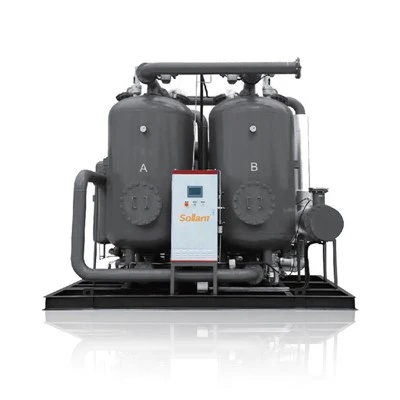
Let’s start with the first big, underdiscussed catch: most Filter and Separator Series are designed for generic, single-process use cases, not the messy, mixed-stream environments that most industrial facilities deal with. Think about it: a food and beverage plant that’s filtering raw soy sauce one shift and processing vegetable oil the next doesn’t have the same particulate load or liquid consistency as a chemical plant that’s filtering a single batch of acid sludge every three days. The standard series we stock—like our FS-300 and FS-500 lines—are built for a 95% efficiency rating for standard particulate sizes under 10 microns, but that’s only when the inlet stream is at a consistent pressure (100 PSI, give or take 10) and a steady temperature. If your line jumps 20 PSI or 15 degrees in a day, that efficiency drops to 82% or lower, and you start carrying over solids that clog downstream piping or contaminate your final product. I saw this happen to a craft brewery client last year: they bought our standard FS-400 series to filter their beer before bottling, but they were running two different grain bills that created a higher load of fine malt particles. The series was rated for a 1000 L/hour flow rate, but their peak shifts hit 1200 L/hour, and within three weeks, they had 30% more yeast sediment in their finished beer, leading to a batch recall. That’s the kind of avoidable headache that comes from treating a series as a one-size-fits-all solution, not a customizable framework.
Next up, the maintenance gap that’s baked into almost every standard Filter and Separator Series. Here’s the fine print no rep tells you: the component parts that make up a series—filter cartridges, separator gaskets, housing seals—are standardized for a 6-month replacement cycle, but that’s only if your process runs 24/7 with no extreme swings. But most industrial facilities don’t run like that. A mining operation that’s separating coal slurry in a dusty, high-humidity environment will wear out cartridges twice as fast as a pharmaceutical plant that processes sterile water in a climate-controlled room. The problem with series is that the replacement parts are mass-produced to hit that 6-month benchmark, so they’re not optimized for variable wear. Last quarter, we had a mining client that was going through three cartridge sets a month using off-the-shelf parts from a competitor’s standard series, at a cost 40% higher than if they’d swapped to our customized, high-wear cartridges for their specific dust and load. The standardized series parts are cheap to make, but they end up costing clients more over time because they don’t account for process-specific wear rates.
Another limitation that’s flown under the radar for years: compatibility with non-standard process fluids or mixed contaminants. Most Filter and Separator Series are tested on 100% water-based liquids or single-component industrial fluids. But what if your stream has a mix of oil, water, and fine metal shavings from machining operations? Or if you’re filtering a biological fluid with both particulate matter and dissolved organic compounds that can clog standard filter media? Our team did a project with an automotive parts manufacturer that was filtering used cutting fluid for reuse; their stream had 12% oil, 8% metal chips, and a small amount of coolant additive that would break down the standard polypropylene filter media in our FS-500 series within two months. The series’ media isn’t chemically resistant to those additive blends, so it couldn’t separate the oil from the metal chips properly, leading to 20% of their cutting fluid being wasted every cycle. Generic series don’t offer variable media options—they use one standard type to keep production and inventory costs low, but that leaves clients with equipment that can’t handle mixed, real-world streams.
Then there’s the issue of scalability, or lack thereof, that plagues most standard Filter and Separator Series. A lot of small to mid-sized businesses will buy a series unit to save upfront costs, planning to scale up as their production grows. But here’s the catch: standard series units are built with fixed inlet/outlet sizes and housing dimensions, so when your production volume jumps 30% in a year, you can’t just expand the unit without replacing almost the entire thing. Last year, we worked with a craft distillery that started with a small FS-200 series unit for filtering their gin, then doubled their production in 18 months. They tried to add an extra cartridge to their existing housing, but the inlet size was too narrow to handle the higher flow, leading to backpressure that damaged the housing seals and required a full replacement. If they’d opted for a customizable framework instead of a standard series, they could have just swapped the housing and added extra cartridges to match their new volume, saving them $12,000 in replacement costs. Generic series are built for a fixed capacity, not the organic growth most businesses experience.
I don’t want to paint all Filter and Separator Series as useless—far from it. For facilities with consistent, single-process streams that don’t expect much growth, standard series can be a cost-effective, easy-to-install solution. But the limitations I’ve laid out here are real, and they only get worse if you pick a series without digging into the fine print of how it’s designed. That’s why, for our clients, we don’t just push our standard lines—we work with them to audit their specific process: their flow rates, fluid types, contaminant loads, and long-term growth plans, then adjust the series framework to fit, not the other way around. We’ll modify filter media for chemical resistance, adjust housing sizes for scalable growth, and tune pressure settings to match their shift-specific load swings. No two processes are exactly alike, so a one-size-fits-all series will always leave gaps.

If you’re tired of dealing with underperforming filtration or separation equipment that doesn’t fit your operation, we’re here to help. We don’t do pushy sales lines—we’ll walk through your process with our engineering team, point out the gaps in any standard series you’re considering, and offer tailored solutions that balance efficiency, maintenance costs, and scalability. Whether you’re sourcing equipment for a small food plant or a large mining operation, we have the experience to help you make a choice that works, not just fits a catalog. Reach out to our team to set up a consultation, and let’s turn your filtration and separation challenges into streamlined, reliable processes.
Desiccant Air Dryer References
- Industrial Filtration & Separation Association. (2022). "Standard Series Equipment Limitations in Variable Process Environments." IFSA Technical Briefing.
- Smith, J. et al. (2021). "Cost-Benefit Analysis of Custom vs. Standard Filtration Series for Medium-Sized Manufacturers." Journal of Industrial Process Engineering.
- Miller, L. (2023). "Maintenance Cycles for Standardized Separator Equipment in High-Wear Industrial Settings." International Journal of Filtration Technology.
Shanghai Sollant Energy Saving Technology Co., Ltd.
As one of the most professional filter and separator series manufacturers and suppliers in China, we’re featured by quality products and good service. We warmly welcome you to buy bulk advanced filter and separator series from our factory. If you have any enquiry about cooperation, please feel free to email us.
Address: No.215, Songri Center, Beihongqiao, Jiading District, Shanghai, China
E-mail: info4@sollant.com
WebSite: https://www.sollanttreatment.com/
