If you’re out there in the industrial game, chances are you’ve heard “heavy duty lathe” thrown around like it’s just a bigger version of the lathe you use for small parts. But let’s cut to the chase—there’s a lot more to these machines than just beefy frames and powerful motors. One of the most critical pieces, and something I get asked about all the time by shops upgrading their setups, is the spindle nose type. If you’re a machinist, shop foreman, or someone who’s ever had a part slip mid-turn, you know this isn’t just a technical detail—it’s what keeps jobs on track, parts accurate, and downtime to a minimum. Heavy Duty Lathe
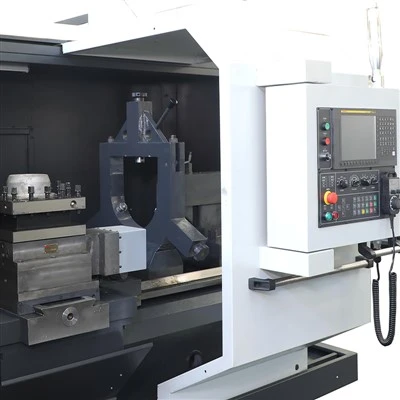
For those who don’t know me, I’m the guy who’s been supplying heavy duty lathes to job shops, aerospace manufacturers, and energy sector clients for over 15 years. I’ve seen guys waste weeks of work because they picked the wrong spindle nose for a job, and I’ve walked shops that crank out consistent, precision parts day in and day out because their spindle nose was matched perfectly to their operations. Today, I wanna break down what a heavy duty lathe spindle nose actually is, the main types you’ll run into, when to use each, and why picking the right one isn’t something you want to guess at.
First, let’s start with the basics: what even is a spindle nose? Think of the heavy duty lathe spindle as the “arm” that holds your workpiece, and the spindle nose is the flat, patterned end of that arm where your chuck, faceplate, or custom fixture attaches. Unlike a small benchtop lathe, heavy duty lathes are built for parts that weigh hundreds (or even thousands) of pounds—think large pump casings, wind turbine components, or marine engine parts. So their spindle noses aren’t just bolted on; they’re precision-machined to handle massive torque, axial (front-to-back) force, and radial (side-to-side) pressure without deflecting or wearing out too fast.
Over the years, I’ve run into every type of spindle nose under the sun, but there are three main ones that dominate the heavy duty lathe space. Let’s go through each, how they work, their pros, cons, and which jobs they’re perfect for.
First up: the D1 spindle nose. Wait, before you zone out on the numbers—let me explain what that D1 means. “D” stands for “camlock,” right? These noses have a series of precision-cut slots around their face, and the chuck or faceplate you attach has matching cam lugs. To lock it in, you line up the lugs with the slots, slide the chuck tight against the nose, then give it a quarter turn with a wrench—boom, it’s locked down. The D1 is super common for mid-range heavy duty lathes, like the ones we supply for general manufacturing.
Here’s what I like about D1 noses: they’re fast to change over. If you’ve got a shop bouncing between jobs, swapping chucks on a D1 takes a couple minutes, not 20. They have a pretty good clamping force too—enough for parts up to, say, 10 tons, which covers most jobs for job shops and small to medium aerospace components. But there’s a catch: D1 noses rely on that cam lock to pull the fixture tight, so over time, those slots can wear, especially if you’re yanking heavy parts off or slamming fixtures on. I’ve seen shops get 5-7 years out of a D1 before they need re-machining, but if you’re running 24/7 with 20-ton parts, that timeline shrinks. Also, D1 noses don’t handle as much axial force as some other types—so if you’re doing a lot of heavy facing cuts, like planing a big flat surface on a valve body, you might feel a little flex. That’s not a dealbreaker for most, but it’s something to keep in mind.
Next, the SAE spindle nose. If you’re in the automotive or heavy equipment industry, you’ve definitely heard of this one. SAE stands for Society of Automotive Engineers, and these noses were originally made for the big lathes used to build truck axles, tractor parts, and large industrial gearboxes. Unlike D1’s cam slots, SAE noses have a long, threaded section that sticks out, and the fixture attaches with a big nut that screws onto the thread. Wait, but not just any nut—they’re precision-ground threads, so the fit is super tight, no slop allowed.
I’ve run shops that swore by SAE noses for their ruggedness. The threaded connection means you get way more clamping surface than a cam lock, so they handle tons of axial and radial force—we’re talking parts up to 30 tons or more. That’s why you’ll see SAE noses on lathes used for heavy turning, like machining large crankshafts or wind turbine hubs. The downside? Changing fixtures is a total pain. That big nut? It’s huge, and it takes forever to thread on and off, especially if you’re dealing with a 20-inch nut on a 12-foot spindle. I’ve seen shops with dedicated setup guys just to swap chucks on SAE lathes because it’s so labor-intensive. So if your shop runs the same big part for weeks at a time, SAE is a solid pick. If you’re bouncing between jobs every day, you’ll hate wasting time on that nut.
Now, the big one for high-precision, heavy duty work: the NMTB spindle nose. NMTB stands for National Machine Tool Builders Association (now it’s called the Association for Manufacturing Technology, but everyone still calls ’em NMTB noses). These are the workhorses for the aerospace and energy sectors, where a 0.001-inch error can ruin a $100,000 part. What makes NMTB different? Instead of cam slots or threads, they have a series of precision-machined serrations (those little zig-zag teeth) around the face, plus a taper that matches the fixture’s taper. You slide the fixture onto the taper, engage the serrations, then a drawbar from inside the spindle pulls the whole thing tight—so it’s locked on both the face and the taper.
Let me tell you why NMTB is my go-to for high-stakes jobs. The serrations eliminate any chance of rotation between the spindle nose and the fixture, which means your part stays perfectly aligned, no matter how much torque you’re putting into the cut. The taper takes almost all the radial force, so you get zero deflection—even when you’re facing a 6-foot-diameter part or boring a 3-foot hole. I had a client a few years back in the wind energy space who was machining 15-foot turbine hubs for a new offshore farm. They were using a D1 nose at first, and they were getting 0.003-inch taper on the bores, which meant the hubs wouldn’t fit the gearboxes. Switched to an NMTB nose, and they nailed every part to 0.0005-inch tolerance on the first try. The only downside of NMTB? It’s more expensive to build into the lathe, and setup takes a little longer than D1, because you have to make sure the taper is clean and the serrations align just right. But if you’re making parts that have to meet strict industry specs (like AS9100 for aerospace), the extra cost is worth every penny.
Wait, I should also mention that there are other types, like the hydraulic spindle nose, which is a variation on these basic types that uses hydraulic pressure to lock the fixture instead of cam locks or drawbars. But honestly, most heavy duty lathe operators I talk to say the standard types are more than reliable, and hydraulic noses just add unnecessary complexity for most shops. If you’re curious about hydraulic, sure, but don’t overthink it until you’ve got a specific need for it.
Now, let’s talk about a common mistake I see all the time: shops buying a heavy duty lathe with the wrong spindle nose for their workflow. I had a guy reach out to me last year, panicking. He’d just bought a used heavy duty lathe for his shop, which does mostly custom parts for small construction companies. The lathe had an SAE spindle nose, and he was trying to swap chucks to handle 2-foot-diameter pump parts. It took him 45 minutes to swap the nut, and he was burning through parts because the flex from the SAE’s slow changeover was leading to off-center cuts. We ended up swapping it to a D1 nose with a hydraulic cam lock, which cut his changeover time to 5 minutes, and his part accuracy went way up. That’s the kind of thing I love to fix—because it’s not about the lathe being bad, it’s about picking the right part for what you do.
Another thing to keep in mind: spindle nose size doesn’t equal durability. A lot of guys think a bigger D1 or SAE nose means a better lathe, but that’s not always true. We build heavy duty lathes with NMTB noses that are only 18 inches in diameter, but they handle 25-ton parts with more accuracy than some 24-inch D1 noses. It’s about the fit, the material (we use heat-treated alloy steel for all our spindle noses, no cheap cast iron here), and how the nose is aligned with the spindle itself. If the spindle isn’t perfectly machined to the nose, even the best type will flex.
Maintenance is another piece that ties into the spindle nose type. D1 noses need you to check those cam slots every few months—use a feeler gauge to make sure there’s no wear, and lubricate the slots so they don’t seize. SAE noses need the threads cleaned regularly, no dirt or metal shavics getting in there, because that’s what causes slop over time. NMTB noses need the taper and serrations kept spotless—even a tiny spec of metal between the nose and the fixture can throw off your alignment. I tell all my clients to keep a small parts washer right next to the lathe, and a lint-free cloth—taking 2 minutes to wipe down the nose before setup saves hours of rework later.
Look, at the end of the day, the spindle nose is the unsung hero of the heavy duty lathe. It’s not the motor or the bed or the control panel, but if it’s not matched to your jobs, none of those other parts matter. Whether you’re a small job shop doing custom parts, a big aerospace facility turning turbine blades, or an energy company machining large industrial components, there’s a spindle nose type that’s perfect for you.
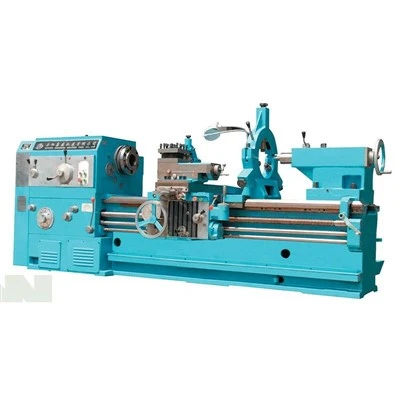
If you’re in the market for a new heavy duty lathe, or you’re looking to upgrade your current setup because your old spindle nose is causing downtime, hit me up for a chat. I don’t do pushy sales stuff— I’ll ask you about the parts you run, the weight, the tolerances, how often you swap fixtures, and I’ll tell you exactly what spindle nose you need (no upselling, I promise). We build our lathes with whatever nose type works for your workflow, not just the one that makes us the most money. Don’t waste another month dealing with parts that won’t align or changeovers that take forever—let’s figure out the right solution for you.
Small Turning Lathe REFERENCES
- Smid, P. CNC Turning Handbook: Practical Guide to Programming and Operation. Industrial Press, 2020.
- Oberg, E., et al. Machinery’s Handbook, 31st Edition. Industrial Press, 2020.
- Association for Manufacturing Technology (AMT). Heavy Duty Machine Tool Specification Guide, 2022.
Anyang Xinsheng Machine Tool Co., Ltd.
As one of the most professional heavy duty lathe manufacturers and suppliers in China, we have world-leading production equipment and strong manufacturing capabilities. Please feel free to buy high quality heavy duty lathe at competitive price from our factory.
Address: No.68 Renmin road, Anyang, Henan, China
E-mail: sales@xslathe.com
WebSite: https://www.xs-lathe.com/
