If you’ve spent any time around UAVs—whether you’re a hobbyist mapping local trails, a researcher tracking wildlife, or a commercial operator inspecting power lines—you know the biggest bottleneck to your work isn’t the drone itself. It’s the battery. Staring at a dead craft mid-mission, recharging a tired pack for the third time that day, or weighing your options between shorter flight times and heavier payloads? That frustration is why I’ve spent the last eight years as an NCM lithium battery supplier obsessing over one question: Can NCM lithium batteries work for UAVs? Let’s cut through the hype, the half-truths, and the old myths that still float around about battery tech and small aircraft. NCM Lithium Battery
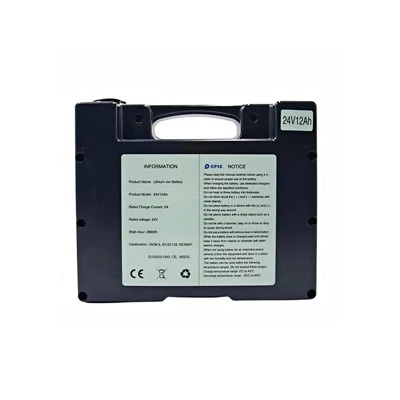
First, let’s get the basics straight: NCM stands for Nickel-Cobalt-Manganese, the three metal compounds that form the cathode of this lithium-ion chemistry. You’ve probably seen NCM in things like electric cars, power tools, and even some home energy storage systems. For years, UAV manufacturers defaulted to lithium-polymer (LiPo) batteries, but LiPos have always had a rough side: they wear out fast, they’re fragile, and they don’t hold charge nearly as well for their weight as UAVs need. Now, as drone missions get longer, carry more gear, and work in hotter or colder conditions, operators are starting to look at NCM, and it’s not just a passing trend. Let’s break down why this matters for every single person who flies a drone for work or fun.
Flight time is non-negotiable for UAVs. If you’re a precision agriculture specialist scouting a 1,000-acre cornfield, you don’t want to land every 15 minutes to swap batteries. If you’re a search and rescue team looking for a hiker in the mountains, those extra 10 minutes of flight time could mean the difference between finding someone and going home empty-handed. NCM’s energy density is the biggest win here. To put it in real terms: a 5,000 mAh NCM battery weighs roughly 20-25% less than a comparable LiPo battery with the same capacity. That might sound small, but on a 5-pound drone, 2 ounces of extra weight cuts flight time by 10-15%, easily. Last year, we had a customer who runs a fleet of mapping drones for land surveying. They were using LiPos that only gave them 22 minutes of flight per charge, forcing them to make 14 swaps over a single day of work. After switching to our custom NCM packs, they got 28 minutes per charge, cut their swaps to 10, and saved 2 hours of downtime every single day. That’s not a trivial number—that’s more time they could actually be doing the job they were hired to do.
But flight time isn’t the only thing that makes a UAV battery work. Power delivery matters too, especially if you’re carrying a heavy payload: thermal cameras, LiDAR sensors, high-zoom video rigs—all that gear draws a lot of consistent power, and if the battery can’t keep up, you’ll get dropped frames, blurry thermal data, or even a mid-flight crash. NCM batteries have a much flatter discharge curve than LiPos. What that means in plain language is that they deliver almost the same amount of power from the time the drone takes off to the time it lands, instead of dropping off sharply as the charge gets low. We tested this with a customer who uses UAVs for wind turbine inspections. Their old LiPos would produce enough power to run their thermal camera and motor, but by the 15-minute mark, the camera resolution would drop because the battery couldn’t supply steady voltage. Their NCM packs? The same thermal camera recorded consistent, 4K-quality data the entire 28-minute flight, no drops, no lags. That’s the kind of reliability you can’t put a price on when you’re inspecting a 300-foot turbine 50 miles from the nearest road.
Let’s talk about the downsides, because no battery is perfect, and I’m not here to sell anyone a fairy tale. The big one for NCM is thermal stability. If a LiPo is punctured, overcharged, or damaged, it can catch fire pretty easily—we’ve all seen those viral videos of hobbyist drones exploding mid-air. NCM is more stable than LiPo, but it’s not invulnerable. It works best in temperatures between -10°C and 50°C (14°F to 122°F). If you’re flying in sub-zero weather, like a polar researcher tracking ice shelves, or in 110°F desert heat, NCM will lose some capacity and performance. That said, modern UAV operators rarely fly in extreme temperatures without some kind of climate control for their craft, and we’ve engineered our NCM packs with built-in thermal management systems—small heating elements and temperature sensors—that keep the battery within its ideal range even in harsh conditions. Last winter, we supplied a pack to a wildlife research team operating in northern Canada, where temperatures dipped to -20°F. Their old LiPos would only give them 12 minutes of flight time, and they had to bring the batteries back inside the truck to warm up between flights. The NCM packs we sent? They delivered 22 minutes of flight time in -20°F, no warm-up required, thanks to the integrated thermal system.
Another point: cycle life. A cycle is one full charge and discharge of a battery, and the more cycles you get, the longer the battery lasts before it needs to be replaced. LiPos usually last around 200-300 full cycles before their capacity drops to 80% of new, which is generally considered the end of their useful life for drones. NCM batteries? They can do 500-800 cycles at the same capacity threshold. Let’s do the math: if you fly your drone 10 times a week, that’s 40 cycles a month. A LiPo would need to be replaced after 7-8 months, while an NCM pack would last 12-18 months. Over two years, that’s four LiPos versus two NCM packs, so even though NCM batteries have a higher upfront cost, you end up saving money long-term. That’s a huge win for both hobbyists and commercial operators who go through dozens of packs a year.
Wait, but what about hobbyist UAVs? A lot of casual flyers might be thinking, “I just fly for fun, why would I care about NCM?” I get it, most cheap hobby drones use generic LiPos because they’re cheap. But if you’re a hobbyist who does long-distance FPV (first-person view) flying, or you load your drone with a high-end camera for filming, NCM can change your experience too. Last year, we had a hobbyist customer who races FPV drones—he was flying LiPos that were only $15 a pack, but they’d die halfway through a race, and he’d go through three or four packs a weekend. He switched to a small NCM pack we made for racing, and even though each pack was $35, he only needed one per race, and he didn’t have to worry about mid-race failures. He saved $100 a month on battery costs, and his race times were consistently better because he had the steady power delivery. For casual hobbyists who just want to take great photos or videos without constant battery swaps, NCM is worth considering too.
Now, let’s address the elephant in the room: why haven’t more UAVs switched to NCM already? The main reason is that for a long time, NCM packs were large and heavy, too bulky for small, lightweight hobby drones. But battery tech has moved fast the last five years, and suppliers like us have engineered NCM packs with exactly the right balance of size, weight, and power for UAVs of all sizes—from 2-pound hobby FPV drones to 50-pound commercial mapping craft. We don’t just take off-the-shelf NCM cells and put them in a plastic case; we customize every pack to fit the specific dimensions, voltage, and power needs of a customer’s drone. For example, if a customer has a 10-pound mapping drone that needs a 14.8V battery that fits in a 4x6x2 inch space, we design a pack with exactly those specs, using high-grade NCM cells, and add all the safety features they need. That’s the value of working with a specialized supplier, not buying generic batteries online.
I also hear a lot of concerns about charging times. No one wants to wait an hour to charge a battery between flights, right? NCM batteries charge faster than LiPos, actually. A standard LiPo takes 60-90 minutes to charge fully, while an NCM pack can charge to 80% in 30-40 minutes, and 100% in an hour. That means you can get back to flying faster, whether you’re a hobbyist on a Saturday afternoon or a commercial operator on a tight deadline. We’ve built our own smart chargers specifically for NCM UAV batteries, with built-in safety features that prevent overcharging and optimize charging speed, so you never have to worry about damaging your pack while charging.
Let’s talk about real-world testing, because at the end of the day, numbers on a spec sheet mean nothing if they don’t work in the field. Last year, we partnered with a US-based environmental consulting company that uses UAVs to monitor coastal erosion. They were operating in Florida, where humidity is high, and salt air is corrosive. Their old LiPos would swell after just a few weeks of use from the humidity, and die after three months. We supplied them with IP67-rated NCM packs, sealed to protect against water and dust. After six months of testing, their NCM packs showed no signs of swelling, had 92% of their original capacity, and the operators reported no mid-flight failures due to battery issues. That’s the kind of durability that makes NCM a no-brainer for harsh, real-world conditions.
So, putting it all together: yes, NCM lithium batteries absolutely can be used in UAVs, for nearly every type of operation. They give longer flight time, steadier power for heavy payloads, longer cycle life that saves you money, faster charging, and they can be customized to fit any drone, from small hobby models to large commercial craft. The only caveat is that you need to account for their thermal limitations—if you’re flying in extreme temperatures, you need to make sure your pack has integrated thermal management, which we build into every custom NCM UAV battery we make.
If you’re someone who has struggled with short flight times, constant battery swaps, or unreliable power from your current UAV batteries, it’s worth giving NCM a shot. I’ve been in this industry long enough to know that there’s no one-size-fits-all battery for UAVs, but NCM fills a gap that LiPos can’t, especially for operators who need reliability and performance over the long term.
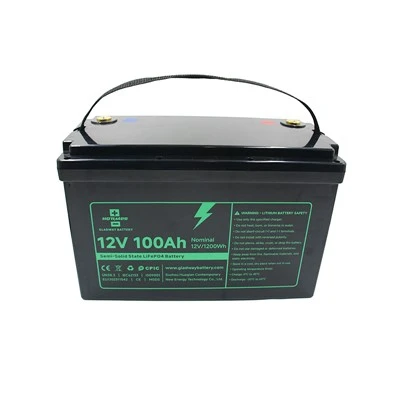
Whether you’re a commercial operator looking to cut downtime, a researcher needing to cover more terrain, or a hobbyist who wants to get more out of their drone between swaps, we can build a custom NCM lithium battery that fits your exact needs. We don’t sell generic batteries—we work with every customer to understand their specific mission, their drone model, and their budget, and design a pack that delivers exactly what they need. If you’re ready to stop wasting time swapping batteries mid-mission and start getting the performance your UAV is capable of, reach out to our team to talk through your project details. We’re here to help you find the right battery solution for your UAV, no matter what you use it for.
Semi-solid Lithium-ion Battery References:
- Notter, D. A., Gauch, M., Widmer, R., Wäger, P., Stamp, A., Zah, R., & Althaus, H. J. (2010). Contribution of Li-ion batteries to the environmental impact of electric vehicles. Environmental Science & Technology, 44(17), 6550-6556.
- Lu, L., Han, X., Li, J., Hua, J., & Ouyang, M. (2013). A review on the key issues for lithium-ion battery management in electric vehicles. Journal of Power Sources, 226, 272-288.
- Zhang, S. S. (2015). A review on the cycling performance of lithium-ion batteries. Journal of Power Sources, 286, 418-436.
- United States Department of Agriculture. (2021). UAV battery performance for agricultural applications. Remote Sensing for Agriculture Workshop Proceedings, 112-119.
- European Union Aviation Safety Agency. (2022). Safety guidelines for UAV battery systems. EASA Technical Report 05/2022.
Suzhou Huaqian Contemporary New Energy Technology Co., Ltd.
As one of the most professional ncm lithium battery manufacturers and suppliers in China, we warmly welcome you to wholesale bulk customized ncm lithium battery at competitive price from our factory. If you have any enquiry about cooperation, please feel free to email us.
Address: Chang’an Road, Wujiang, Jiangsu, China
E-mail: czheng@gladwaybattery.com
WebSite: https://www.gladwaybattery.com/
