As a seasoned provider in the realm of Turn Mill Centers, I’ve witnessed firsthand the transformative power of live tooling in these sophisticated machining systems. Live tooling is not just an accessory; it’s the linchpin that elevates the capabilities of a Turn Mill Center from basic turning operations to a comprehensive machining solution that can handle complex geometries and multi – axis tasks with precision. In this blog, I will delve into how live tooling works in a Turn Mill Center, sharing insights gathered from years of experience and continuous innovation in this field. Turn Mill Center
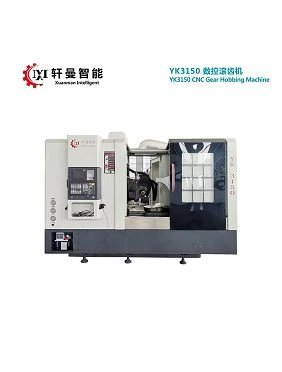
The Basics of a Turn Mill Center
Before exploring live tooling, it’s essential to understand the foundation of a Turn Mill Center. A Turn Mill Center combines the functions of a lathe and a milling machine. Traditional lathes are primarily designed for turning operations, where the workpiece rotates while a stationary cutting tool shapes it. On the other hand, milling machines have a rotating cutting tool that moves across a stationary or moving workpiece to create various features such as slots, holes, and complex profiles.
A Turn Mill Center integrates these two operations, allowing for high – precision machining in a single setup. This not only reduces the time and cost associated with multiple setups on different machines but also improves the accuracy of the final product. The integration of turning and milling capabilities makes Turn Mill Centers ideal for manufacturing complex parts with tight tolerances, such as those found in the aerospace, automotive, and medical industries.
What is Live Tooling?
Live tooling refers to the cutting tools that can rotate independently on a Turn Mill Center. Unlike traditional non – rotating tools used in turning operations, live tools can perform milling, drilling, tapping, and other multi – axis machining operations while the workpiece is being turned. This functionality is made possible by the incorporation of additional drive mechanisms and spindles within the turret or the tool holder of the Turn Mill Center.
The key advantage of live tooling is that it enables the creation of more complex parts in a single clamping. Instead of transferring the workpiece to a separate milling machine for secondary operations, the Turn Mill Center can handle all the required machining processes right on the spot. This reduces the overall manufacturing time, eliminates the potential for misalignment due to multiple setups, and ultimately enhances the quality and productivity of the machining process.
How Live Tooling Works in a Turn Mill Center
1. Power Transmission
The heart of live tooling is its power transmission system. In a Turn Mill Center, there are two main types of power transmission to the live tools: direct – drive and belt – drive systems.
- Direct – Drive Systems: In a direct – drive system, the motor is directly connected to the tool spindle. This eliminates the need for intermediate components such as belts or gears, resulting in a more efficient power transfer and higher torque output. Direct – drive systems offer faster acceleration and deceleration of the tool spindle, which is crucial for high – speed machining operations. They also provide better rigidity and precision, making them suitable for applications that require tight tolerances and fine surface finishes.
- Belt – Drive Systems: Belt – drive systems use a belt to transfer power from the motor to the tool spindle. While they are generally less efficient than direct – drive systems in terms of power transmission, they offer some advantages. Belt – drive systems can isolate the motor from the tool spindle, reducing the vibration and noise transmitted to the cutting tool. This can be beneficial for improving the surface finish of the machined part. Additionally, belt – drive systems are often more cost – effective and easier to maintain compared to direct – drive systems.
2. Tool Actuation and Control
Live tooling in a Turn Mill Center is actuated and controlled by the machine’s control system. The control system is responsible for coordinating the movement of the tool spindle, the rotation of the workpiece, and the feed rate of the cutting tool.
- Tool Positioning: The control system can precisely position the live tool relative to the workpiece. It can move the tool in multiple axes (X, Y, Z, and sometimes additional rotary axes) to access different features on the part. This allows for the creation of complex geometries, such as off – center holes, cross – drilled features, and helical grooves.
- Tool Speed and Feed Control: The speed of the tool spindle and the feed rate of the cutting tool are critical parameters that affect the machining quality and productivity. The control system can adjust these parameters in real – time based on the material being machined, the type of operation, and the desired surface finish. For example, when machining a hard material, the spindle speed may be reduced to prevent excessive tool wear, while the feed rate may be increased to maintain an efficient cutting process.
- Tool Change: A Turn Mill Center equipped with live tooling can have multiple live tools in its tool magazine. The control system can automatically change the tools during the machining process, allowing for seamless transition between different operations. This feature significantly reduces the non – cutting time and increases the overall productivity of the machine.
3. Synchronization with the Workpiece
One of the most remarkable aspects of live tooling in a Turn Mill Center is its ability to synchronize with the rotation of the workpiece. This synchronization is crucial for performing operations such as milling and drilling on a rotating part.
- Synchronous Milling: In synchronous milling, the live tool rotates at a speed that is synchronously related to the rotation of the workpiece. This allows the cutting edges of the tool to interact with the workpiece in a controlled manner, resulting in precise machining. For example, when creating keyways or splines on a shaft, synchronous milling ensures that the features are evenly spaced and accurately machined.
- Drilling on a Rotating Workpiece: When drilling on a rotating workpiece, the live tool must be precisely aligned with the center of rotation of the workpiece. The control system of the Turn Mill Center uses advanced sensors and algorithms to ensure that the drill bit is centered and oriented correctly. This enables the creation of holes with high accuracy and straightness, even on a rotating part.
Real – World Applications of Live Tooling in Turn Mill Centers
The versatility of live tooling in Turn Mill Centers has led to its widespread adoption in various industries.
1. Aerospace Industry
In the aerospace industry, where parts are often made from high – strength materials and require complex geometries, Turn Mill Centers with live tooling are indispensable. For example, the production of aerospace engine components such as turbine blades and shafts demands high precision and tight tolerances. Live tooling allows for the creation of intricate cooling holes, slots, and profiles on these components in a single setup, reducing the manufacturing time and improving the overall quality of the parts.
2. Automotive Industry
The automotive industry benefits from live tooling in Turn Mill Centers for the production of engine parts, transmission components, and suspension parts. These parts often require a combination of turning and milling operations to achieve the desired functionality. Live tooling enables the efficient production of these components, with features such as cross – drilled holes, threaded bores, and machined flats being created accurately and cost – effectively.
3. Medical Industry
Medical devices, such as surgical implants and instruments, require high precision and excellent surface finish. Turn Mill Centers with live tooling are used to manufacture these parts from biocompatible materials such as titanium and stainless steel. The ability to perform multiple operations in a single setup minimizes the risk of contamination and ensures the accuracy and repeatability of the manufacturing process.
The Impact of Live Tooling on Productivity and Quality
The implementation of live tooling in a Turn Mill Center has a profound impact on both productivity and quality.
1. Productivity Improvements
- Reduced Setup Time: As mentioned earlier, live tooling eliminates the need for multiple setups on different machines. This significantly reduces the non – cutting time associated with transferring the workpiece between machines, allowing for more efficient use of production time.
- Increased Machining Speed: The ability to perform multiple operations simultaneously or in rapid succession on a Turn Mill Center with live tooling speeds up the overall manufacturing process. This is especially beneficial for high – volume production, where even small improvements in cycle time can lead to significant cost savings.
- Enhanced Automation: Live tooling, combined with the advanced control systems of Turn Mill Centers, enables a high degree of automation. Automated tool change, precise positioning, and synchronization with the workpiece all contribute to a more streamlined and efficient manufacturing process.
2. Quality Enhancements
- Improved Dimensional Accuracy: The single – setup machining provided by live tooling reduces the potential for misalignment and errors that can occur during multiple setups. This results in parts with better dimensional accuracy and tighter tolerances.
- Better Surface Finish: The precise control of the cutting parameters and the ability to synchronize the tool with the workpiece contribute to a better surface finish. This is particularly important for applications where the surface quality of the part directly affects its performance, such as in medical implants and aerospace components.
Conclusion and Call to Action
In conclusion, live tooling is a game – changer in the world of Turn Mill Centers. Its ability to combine turning and milling operations in a single setup provides manufacturers with a more efficient, accurate, and cost – effective way to produce complex parts. As a supplier of Turn Mill Centers, we are committed to providing our customers with the latest live tooling technology and support to help them stay competitive in the global market.
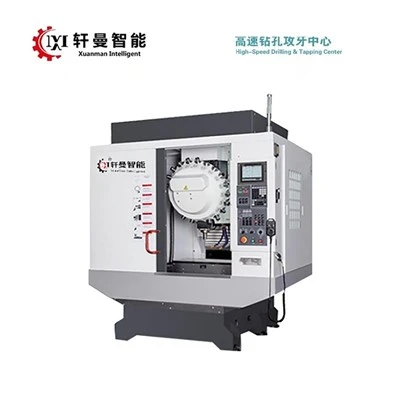
CNC Drilling Tapping Machine If you are looking to enhance your manufacturing capabilities, improve productivity, and achieve higher quality in your machining operations, we encourage you to reach out to us. Our team of experts is ready to discuss your specific requirements and recommend the most suitable Turn Mill Center with live tooling for your business. Let’s work together to take your machining processes to the next level.
References
- "Modern Machining Technology" by John A. Schey
- "Turn – Mill Machining: Fundamentals and Applications" by Yoram Koren
Jiangsu Xuanman Intelligent Equipment Co., Ltd.
As one of the most professional turn mill center manufacturers in China, we’re featured by quality products and low price. Please rest assured to buy discount turn mill center made in China here from our factory. Customized orders are welcome.
Address: No.1-1, Weier Road, Jieji Equipment Manufacturing Industrial Park, Sihong County, Suqian City, Jiangsu Province, China
E-mail: jsxmzn@163.com
WebSite: https://www.xm-machs.com/
