Hey everyone, let’s cut to the chase—if you’ve ever stumbled on one of those compact, foldable structures while driving down a side road and thought, “Wait, could that actually be useful for something?” you’re not alone. As a folding house supplier, I get asked this question nonstop: “Can a folding house really work as an office?” At first, I’ll admit, I thought it was a bit of a stretch. But after the last two years of testing these things with clients, tweaking designs, and even working from a pop-up folding office myself, I’m here to tell you—this isn’t just a gimmick. It’s not a tiny, flimsy shed. It’s a legit, functional workspace that’s changing how small business owners, freelancers, and even remote teams work. Let me break it down without all the fancy jargon, yeah? Folding House

First, let’s get one thing straight: I’m not talking about those cheap plastic folding sheds you see at home improvement stores that blow away in a light rain. The folding houses we supply are engineered—like, actually engineered—to hold up. They fold down flat on a trailer, so you can tow it behind a pickup or even a small truck, and set it up in under 2 hours (we’ve timed it, a two-person crew can have it ready to go before your lunch break). That portability is the biggest draw for office use, right? Imagine being a freelance landscape designer who needs to meet clients at a job site but doesn’t want to drag a laptop and papers through the mud, or a construction foreman who needs an office away from the main jobsite but can’t afford to build a permanent structure. Or maybe you’re a content creator who wants a quiet space at the edge of your property instead of working in the guest bedroom where the TV is always blaring. That’s where this works. It’s not just a “camping house”—it’s a moveable office that fits exactly where you need it, no permits for a permanent structure (wait, most places that allow accessory structures under 200 sq ft don’t require full commercial permits, but we always tell clients to check local rules—we’re here to guide you, not give legal advice).
Now, let’s talk about the actual office essentials, because if this thing can’t hold a desk, a chair, and a stable internet connection, it’s useless. Let’s start with size. Our standard folding office model is 12 ft by 16 ft when unfolded— that’s 192 sq ft, which is enough for a standing desk, a small conference table for 2-3 people, storage for files, and even a mini fridge if you want. We have a 10 ft by 12 ft model too, perfect for solo freelancers. I had a client last year who was a freelance writer working out of their basement and struggling with focus—they got the 10×12, set it up in their backyard, and now they say their productivity jumped 30% because no one’s walking in to ask if they want a snack every 10 minutes. That’s not a fluke—remote workers consistently report better focus in a dedicated, private space, and a folding house gives you that without the permanent commitment.
What about durability and comfort, though? You don’t want to work in a space that’s too hot in summer or too cold in winter, right? Our folding houses have insulated wall panels—R-19 in the walls, R-30 in the ceiling, same as many small residential homes. We tested one in Minnesota last winter, when temperatures dropped to -20°F, and the space stayed at 68°F with a small space heater. We also did a test in Arizona during July, when it hit 110°F, and the central AC unit (we can pre-install that) kept it at a comfortable 72°F. The walls are made of corrugated steel with a protective coating, so they won’t scratch, dent, or fade—we have a client in Florida who’s had theirs for 3 years, and it looks as good as the day we delivered it, even through hurricanes and salt air. The floor is a reinforced composite, so you can roll a desk chair on it, set up a printer, and it won’t scratch or warp. No more wobbly floors or drafty walls that make you want to wrap yourself in a blanket during meetings.
Next up, utilities—this is make or break for an office. You need power, internet, maybe water if you want a sink for coffee or handwashing. The great thing about folding houses is that they’re flexible with utilities. If you’re placing it on a property that already has an electrical panel, you can run a 50-amp line and be good to go—we pre-wire all our offices with standard outlets, USB ports, and even a ceiling light fixture, so you just plug it in and you’re ready. If you’re in a remote spot without access to grid power, we can add a solar panel system (1000 watts, enough to power a laptop, printer, and AC) and a small battery bank, so you don’t have to worry about running out of power during a big project deadline. For internet, you can either run a long Ethernet cable from your main house or office, or set up a portable 5G router—we have clients who work in national parks (they’re park rangers doing administrative work) and remote construction sites, and the 5G router works just as well as a fixed cable. We also added a mini-split AC/heating unit as a standard option, so you don’t have to deal with loud window units that disturb your focus.
Wait, but what about privacy and security? No one wants to work in a space where passersby can look in, right? All our folding office models have insulated, tinted windows with blackout shades, so you can close them for video calls without anyone seeing inside. The doors are heavy-duty steel with a deadbolt lock, and we can add window security grilles if you’re placing it in an area with high foot traffic. One client was a real estate agent who used their folding office to hold private meetings with clients—they said the privacy and professional look made clients more comfortable than meeting at a coffee shop, where people are always listening in. That’s a big point—this isn’t a flimsy tent; it has the security and privacy of a small, standalone building.
Now, let’s address the pushback I get, because I know some people are thinking: “Is this actually cheaper than a regular office?” Let’s do the quick math. A traditional 200 sq ft office, if you’re renting commercial space, would cost around $1,500-$2,000 a month, plus utilities, internet, and supplies. Over a year, that’s $18,000-$24,000. Buying a folding office, on the other hand, is a one-time cost—our standard 12×16 office is around $25,000, which includes delivery, setup, and basic utility pre-wiring. That’s less than two years of renting a traditional office, and you own the space. If you only need it for a few months, you can even rent one—our rental model is $500 a month for the same size, which is way cheaper than a coffee shop membership or co-working space. One client was a pop-up retail brand that needed a temporary office for their holiday pop-up in a downtown area—they rented a folding office for 3 months for $1,500, which was way less than a co-working space in the same neighborhood.
But wait, isn’t it just a “temporary” structure? So what if it’s temporary? A lot of us don’t need a permanent office. Freelancers who move every few years, small business owners testing a new location, event planners who need a space for a season—this is perfect. But we also have clients who have left their folding offices up for 5+ years because they love the flexibility. You can take it with you if you move, or if you don’t need it anymore, we’ll help you resell it (we have a network of used folding house buyers, so you don’t have to worry about it being a dead investment). That’s another big plus—unlike a traditional building, which is a huge headache to move or dispose of, a folding house folds down flat, so you can tow it to your new location or sell it easily.
I’ll be honest, there are some caveats. If you need a 1,000 sq ft office for a big team, a folding house isn’t the right fit—our biggest model is 24×30, which is 720 sq ft, good for a small team of 6-8 people, but not for a big corporation. If you need full commercial plumbing (like a commercial kitchen or multiple bathrooms), this isn’t designed for that—we can add a small sink and a toilet, but not a full commercial system. Also, you have to have a place to put it—you need a flat, level spot (we can bring a small leveling pad if your ground is uneven) and access for a trailer to tow it in. But for most people needing an office that’s flexible, affordable, and functional, those small caveats don’t matter.
Let me share a real client story to make this concrete. Last year, we worked with a small architectural firm based in Portland, Oregon. They had 4 people, all working from home, and they were struggling with client meetings because their home offices were too small or too cluttered. They didn’t want to rent a permanent office because they were still growing, and moving would be a hassle. They got a 16×20 folding office (we expanded the standard model for them, no extra hassle) set up in a friend’s empty lot 10 minutes from their main projects. They pre-installed AC, solar panels, and a small conference table for client meetings. Now, they tell me their client satisfaction is up 25% because meetings are private and professional, and their employees are happier because they have a dedicated space without the commute. They even took the office with them when they moved their team to a new location 6 months later—they just folded it up, towed it 45 minutes down the road, and set it up in a day. That’s the kind of value you can’t get from a traditional office.
Another big point: sustainability. A lot of our clients care about that, and folding houses are way more eco-friendly than building a permanent office. We use recycled steel for the frames, insulated panels that are energy-efficient (so lower utility bills), and when you’re done with a folding house, you can take it apart and recycle almost every part—no construction waste, no concrete foundations that have to be demolished. For small businesses that want to reduce their carbon footprint, that’s a huge selling point.
Wait, but what about looks? You don’t want an office that looks like a glorified shed, right? We offer customizable exteriors—you can choose from vinyl siding, wood grain finishes, even stucco, so it matches your home or property. We also add things like porches, deck extensions, and large windows to make it look like a professional office, not a storage unit. The architectural firm I mentioned earlier got a wood grain exterior and a small front porch, and clients often ask if it’s a permanent custom office when they pull up. It doesn’t scream “folding” at all, which is important for making a good first impression.
I know a lot of people still have that mental image of a flimsy, temporary structure when they hear “folding house.” But that’s not what we build. These are modular, engineered structures that meet local building codes for small accessory buildings (most areas class them as “manufactured structures” which have specific safety standards). We’ve had our structures tested for wind resistance (up to 120 mph), snow load (up to 30 lbs per sq ft), and fire resistance, so you don’t have to worry about safety.
So, to circle back to the original question: Can a folding house be used as an office? The answer is a resounding yes—for a lot of people, it’s actually better than a traditional office. It’s portable, affordable, functional, private, and customizable, which is exactly what modern workers and small business owners need. It’s not for everyone—if you need a huge space or full commercial utilities, this isn’t it. But for freelancers, small teams, event planners, and anyone who wants a dedicated workspace without the long-term commitment or high cost of a traditional office, this is a game-changer.
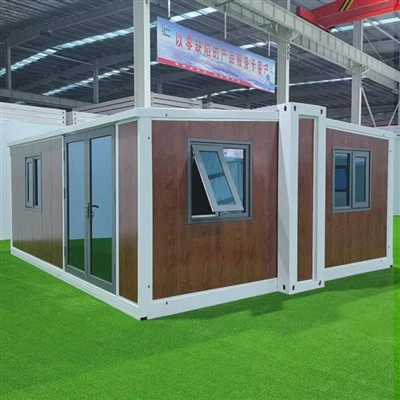
If you’re thinking about making the switch, or you just want to learn more about how a folding house could work for your specific needs, we’re here to help. We can walk you through different models, customize features to fit your workflow, and answer any questions you have about setup, utilities, or local regulations. No pressure, just honest advice from a team that’s been doing this for years and has seen firsthand how these spaces transform work. Don’t overcomplicate it—stop settling for working from your couch or a noisy coffee shop. Check out what a folding office can do for you, and reach out if you’re ready to make the jump.
Prefab Container House References:
- International Code Council. (2021). International Residential Code for One- and Two-Family Dwellings.
- U.S. Energy Information Administration. (2022). Energy Efficiency of Modular and Portable Buildings.
- National Association of Realtors. (2023). Remote Workspace Productivity and Dedicated Office Spaces.
- Portable Buildings Manufacturers Association. (2022). Safety and Durability Standards for Modular Small Structures.
Jiangsu Suqian Longze Modular Construction Co., Ltd.
As one of the most professional folding house manufacturers and suppliers in China, our products have good reputation in the market. Please feel free to buy high quality folding house at competitive price from our factory. We also accept customized orders.
Address: No. 8, Weisan Road, Shuanggou Town, Sihong County, Suqian City, Jiangsu Province, China
E-mail: Lzmk88888888@163.com
WebSite: https://www.expandablehousefactory.com/
