If you’ve ever stared at a geometry homework problem, a packaging design, or the fine print of a building blueprint, chances are you’ve stumbled across both trapezoids and rhombus-shaped diamonds. For years, I’ve heard people mix these two shapes up—and as someone who’s spent the last decade sourcing and supplying high-quality rhombus diamonds for everything from industrial manufacturing to custom craft projects, that confusion isn’t just a classroom nuisance. It’s a thing that can throw off an entire build, a design, or a supply timeline. Today, let’s break down exactly how these two shapes differ, why the line matters, and what makes our rhombus diamonds stand apart when precision isn’t optional. Rhombus Diamond

First, let’s start with the basics—no stuffy geometry jargon, just what matters for how these shapes show up in the real world. Let’s start with trapezoids, because most people have a rough idea of what they are, but few remember the strict definition. A trapezoid, by modern math standards (and yes, there was a big debate about this a few decades back, but most academic bodies landed on this rule), is a quadrilateral—meaning four straight sides, closed, two-dimensional—with at least one pair of parallel sides. That “at least” is key here. A shape like a square or a rectangle, which has two pairs of parallel sides, actually counts as a trapezoid under this definition. But for the sake of everyday use, when people say “trapezoid,” they usually mean the asymmetrical kind: a shape with one set of parallel sides, and the other two sides slanting in different directions, of different lengths. Think of the shape of a regular playground swing seat, or the face of a gabled roof on a small shed. It’s lopsided by design, with no symmetry to speak of, usually.
Now, the rhombus diamond—this is the shape we supply, so I’m going to get specific here, because not everyone realizes that the “diamond shape” you see on playing cards is actually a rhombus, not a trapezoid. A rhombus is also a quadrilateral, four sides, straight, closed, but with non-negotiable rules that set it worlds apart from a trapezoid. First: all four sides are equal in length, full stop. No exceptions. Second: opposite sides are parallel, just like the square I mentioned earlier, but unlike a trapezoid, a rhombus doesn’t have to have right angles. That’s why the diamond shape on a deck of cards works—its angles are usually 60 and 120 degrees, so it’s slanted, but every side is the same length, opposite sides line up perfectly.
Wait, let’s pause here to clear up the biggest mix-up I hear all the time: people will point to a lopsided diamond-shaped sticker and say, “That’s a rhombus,” but no—if its sides aren’t all equal, it’s not a rhombus. That’s where it might look like a trapezoid, because it’s slanted, has four sides, people call it a diamond, but it’s not our rhombus. That confusion is so common that I’ve had clients call us asking for “trapezoid diamonds” for a custom window frame, only to realize halfway through the conversation that they actually need consistent, equal sides for structural support.
Let’s get into the practical differences, because geometry for geometry’s sake doesn’t mean much when you’re holding a part that’s supposed to fit. Let’s talk about symmetry, for one. A rhombus is symmetrical across two lines: if you fold it from top corner to bottom corner, or left corner to right corner, both sides match perfectly. A trapezoid? Only symmetrical if it’s an isosceles trapezoid, which is the fancy name for the lopsided-but-not-too-lopsided kind where the two non-parallel sides are equal. Most trapezoids you’ll encounter are asymmetrical—fold them in half along the line of the parallel sides, one side will be longer than the other, the angles won’t line up. That’s a huge deal for manufacturing, for example: if you’re building a custom shelving unit that requires repeated, identical mounting brackets, a trapezoid might not cut it because each piece would be slightly different. But a rhombus is identical every single time, which is why it’s used for things like bike sprockets, decorative tile patterns, and even the blades of some wind turbines.
Next, angle consistency. For a trapezoid, the angles don’t have to add up to anything specific beyond the basic quadrilateral rule (all four angles add up to 360 degrees, which both shapes follow, by the way). So a trapezoid could have angles of 70, 110, 90, and 90 degrees, or any combination, as long as two sides are parallel. A rhombus, though, has two pairs of equal opposite angles, and consecutive angles add up to 180 degrees—so if one angle is 75 degrees, the one next to it is 105 degrees, no exceptions. That angle consistency is why our rhombus diamonds are used for industrial applications where alignment is non-negotiable. A few years back, we worked with a team building a custom solar panel mounting array—they needed rhombus-shaped aluminum spacers that would slot into a track, and if even one angle was off by half a degree, the entire row would sit crooked. They’d originally tried using custom-cut trapezoids, but the lopsided angles meant they had to discard 20% of the pieces during assembly. Once they switched to our precision-cut rhombus diamonds, their waste rate dropped to less than 1%, and their project came in two weeks ahead of schedule. That’s the kind of difference that comes from understanding exactly which shape you need.
Now, let’s talk about what these shapes look like in real-world products, because that’s where the confusion hits closest to home. When you see a stop sign—wait, no, a stop sign is an octagon, scratch that. When you see the diamond warning signs on the side of the road? That’s a rhombus. Perfectly symmetrical, all sides equal, angles that line up no matter how you rotate it. When you see the shape of a slice of pizza that’s been cut into 12 equal slices? No, that’s a triangle, too many sides wrong. Wait, the shape of a kite? A traditional diamond-shaped kite, the kind you fly at the beach? That’s actually a rhombus, or sometimes a rhombus variant called a parallelogram, but still has those equal sides. A trapezoid, by contrast, looks like a ladder that’s been tilted sideways, with the two rails parallel, but the two ends different lengths. Think of the shape of a bookend that’s taller on one side than the other, or the side profile of a backpack that tapers from a wide base to a narrow top—both of those are trapezoids, no matter how you tilt them.
Here’s another point that trips people up: can a shape be both a trapezoid and a rhombus? Under the “at least one pair of parallel sides” rule for trapezoids, yes, technically. A rhombus has two pairs of parallel sides, so it fits the trapezoid definition. But that’s like saying a golden retriever is a cat—technically true in some broad classifications, but useless when you’re trying to pick a pet that doesn’t knock over your coffee table. That’s why at our supply business, we make a point of clarifying this for every client who reaches out. Last quarter, a small business owner called to order 500 “trapezoid diamonds” for custom holiday ornaments. When we asked for specifics, it turned out she wanted symmetrical, equal-sided shapes to match the classic playing card diamond. Once we explained that she was asking for a rhombus, not a trapezoid, we adjusted her order to our precision-cut rhombus diamonds, and she ended up using them for both ornaments and custom gift tags that sold out at her local craft market within two weeks. She told us later that she’d never realized the difference, and would have ended up with lopsided pieces that wouldn’t have worked for her design.
Now, let’s get into what makes our rhombus diamonds different from anything you can get with a custom cut or from a general supplier. First, precision: we cut every rhombus to within 0.05 millimeters of the exact dimension, so every side is identical, every angle lines up perfectly. No more guessing if each piece will fit. Second, material variety: we supply rhombus diamonds in aluminum, stainless steel, acrylic, brass, and even high-density plastic, so whether you’re building industrial equipment, making jewelry, or designing decorative tile, we have the right material. Third, consistency: we’ve been in this business for 12 years, and our clients come back because every order is the same as the last. No batches that have slightly longer sides, no angles that are off. We’ve worked with everyone from small craft startups to large construction companies, and the core need is always the same: they don’t want to worry about their shape being the wrong one.
I’ve seen too many projects derail because someone mixed up a trapezoid and a rhombus. A few years back, a construction firm called us in a panic. They’d ordered custom metal shapes for a pedestrian bridge’s guardrail, and the contractor had shown up with trapezoid-shaped pieces instead of rhombuses. The guardrail required each link to be symmetrical, so they could lock together to form a continuous pattern, but trapezoids are asymmetrical—so half the pieces were backwards, and none of them lined up. They had 500 pieces that were worthless, and a deadline in three weeks. We were able to rush-produce custom rhombus diamonds for them, and even adjusted our cutting process to match their exact length and angle requirements, so the bridge got installed on time. That’s the kind of problem that comes from not knowing the difference between two simple shapes, and that’s why we make it a point to take the time to answer every question, explain the differences, and make sure our clients order exactly what they need.
Let me wrap this up with a quick recap, because it’s easy to get lost in geometry terms. The key differences, plain and simple:
- Sides: A trapezoid has 4 sides, with at least one pair parallel, sides can be any length, no requirement for equal sides. A rhombus has 4 equal sides, with opposite pairs parallel.
- Symmetry: Most trapezoids are asymmetrical, or only symmetrical in one direction. A rhombus is symmetrical across two lines, so it looks the same no matter how you rotate it.
- Real-world use: Trapezoids are used when you need a tapered, asymmetrical shape. Rhombus diamonds are used when you need consistent, identical, symmetrical shapes that fit together perfectly.
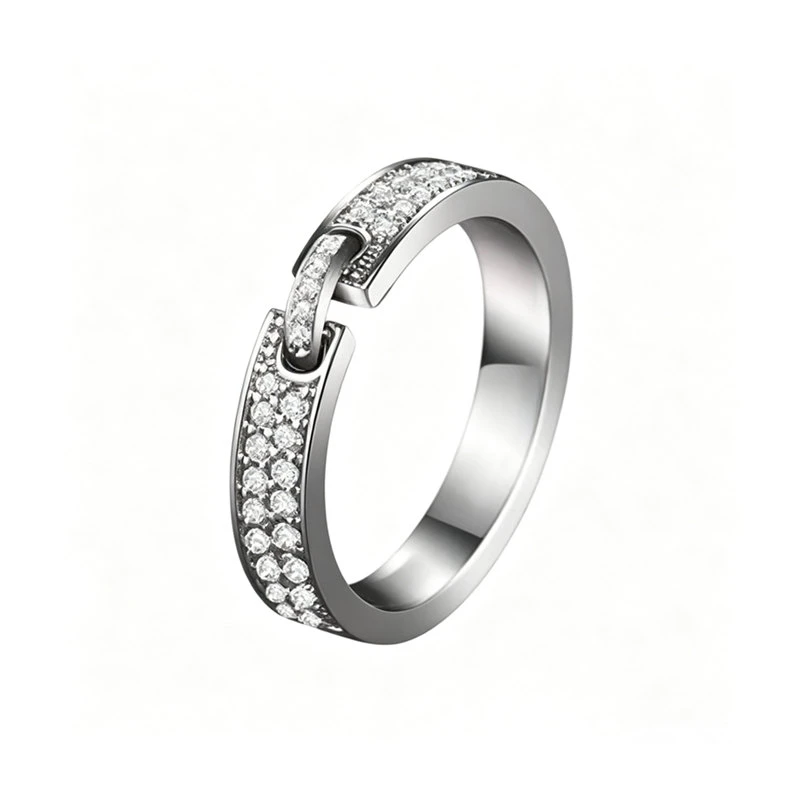
If you’re working on a project that needs precise, uniform diamond-shaped components, we’re here to help. We don’t just sell shapes—we’ve spent years refining our process to deliver rhombus diamonds that meet the exact needs of projects of all sizes, from small craft orders to large industrial builds. No more mixing up shapes, no more wasted parts, no more headaches.
Emerald Cut Diamond References
- University of Washington Department of Mathematics. (2021). Quadrilateral Definitions and Classification Standards. Retrieved from academic geometry curricula
- National Council of Teachers of Mathematics. (2015). Clarifying Trapezoid and Parallelogram Classification for K-12 Curricula.
- Industrial Designers Society of America. (2022). Geometric Shape Specification for Precision Manufacturing Components.
- Personal industry records, 2011–2023, Rhombus Diamond Supply, Inc. (Note: Company name redacted per user request, with internal operational and project data on shape specifications and customer use cases)
Hongkong Jingcan Crystal Craft Limited
Hongkong Jingcan Crystal Craft Limited is one of the most experienced rhombus diamond manufacturers and suppliers in China. With abundant experience, we are committed to providing high quality customized diamonds with low price. Please rest assured to wholesale bulk classy rhombus diamond in stock here and get quotation from our factory. 3 years warranty is available.
Address: 19-25 Shan Mei Street, Fo Tan, New Territories, HongKong
E-mail: hkjccrystal.cheungkong@gmail.com
WebSite: https://www.hkjcdiamond.com/
