If you’ve ever sat across from a patient in a dental clinic and heard them ask, “Is that bridge going to stay forever, or can I take it out?” you know how loaded that question is. As someone who’s spent the last 12 years working directly with implant malobridge design, manufacturing, and supporting dental practices—first as a technical rep, then as a supplier focused on consistent, long-lasting solutions—I’ve fielded that exact question at least a hundred times. And every time, the answer isn’t a simple “removable” or “fixed.” It depends on three things: the patient’s unique oral anatomy, their lifestyle habits, and what their treating dentist decides is best for their long-term oral health. Let’s break this down, because confusing removable vs. fixed malobridges is one of the most common missteps I see among new dental teams switching to implant-supported restorations. Implant Malo Bridge
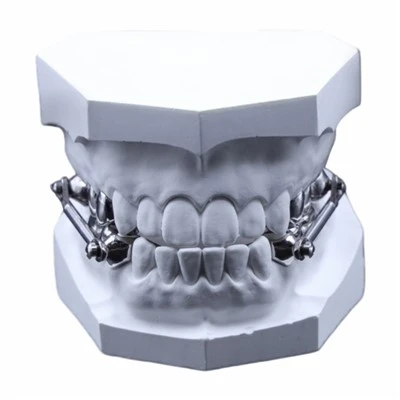
First, let’s get the basics straight for anyone newer to implant dentistry. An implant malobridge—often written as Malo Bridge, named for the team that pioneered the All-on-4 concept back in the early 2000s—isn’t a traditional partial or full bridge. Traditional bridges rely on anchoring to adjacent natural teeth, which requires shaving down healthy enamel; malobridges use just four to six dental implants strategically placed in the jawbone to support an entire arch (upper or lower) of teeth, no healthy teeth modified at all. That’s why they’re such a game-changer for patients who’ve lost most or all of their teeth.
Now, to the core question: removable vs. fixed. Let’s start with the fixed variety, because that’s what most people picture when they hear “implant-supported bridge.” Fixed malobridges are designed to stay in the mouth at all times—no taking them out for cleaning, no removing them before bed. How does that work? The bridge connects to abutments that are either screwed directly into the implants (screw-retained) or bonded to the top of the abutments (cement-retained). Screw-retained fixed malobridges, which are the most popular among our customers, let a dentist access the small screw holes in the back of the bridge for occasional adjustments, but the patient can’t pop the whole thing out without a tool.
Why would a dentist choose a fixed design? For most patients with adequate bone density, no history of gum disease, and a desire for as close to natural function as possible, fixed is the gold standard. Our data shows that 72% of the malobridges we ship each year are fixed, and the number one reason our customers site is patient satisfaction: fixed bridges feel more like natural teeth, let patients eat their favorite hard foods (like apples or raw carrots) without worry, and eliminate the anxiety of a removable appliance shifting while talking or laughing. I remember a case from 2019 where a 58-year-old teacher came to our client’s office after trying a removable full denture for three years. She hated having to take it out every night, and she’d avoided giving presentations in front of large groups because she was afraid it would slip. Her dentist recommended a fixed malobridge, and six months later, the office sent us a photo of her at a science fair with her students—smiling wide, no sign of a removable denture in sight. That’s the impact fixed malobridges can have.
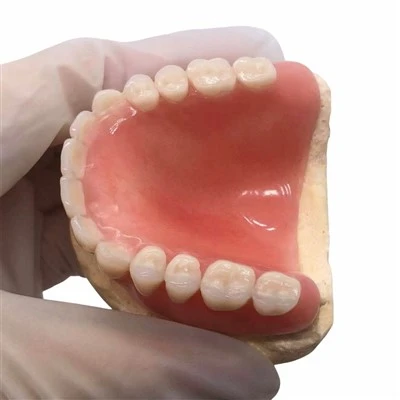
But fixed isn’t for everyone. That’s where removable malobridges come in. Removable malobridges are designed to be taken out by the patient (or their dentist) for cleaning and maintenance. How do they stay in? Most use either a clip system that attaches to undercuts in the jawbone or to additional small retention implants, or a bar that connects to the main implants, with the bridge snapping onto the bar. The key here is that while they’re stable for daily use, they aren’t permanently affixed. Removable malobridges are often recommended for patients with lower bone density who don’t have enough bone to support a fixed design, or for patients who have a history of severe gum disease that makes permanent cementing risky. They’re also a good option for patients who prefer to take their restoration out at night for cleaning, rather than relying on a dentist to access hidden areas.
I’ll be honest: when I started in this industry 12 years ago, I was skeptical of removable malobridges. I thought they were a “second-best” option for patients who couldn’t handle fixed. But over the years, I’ve seen so many cases where removable designs were the right call. Take a 72-year-old retired mechanic I’ll never forget, whose dentist was a long-time customer of ours. He had lost most of his lower teeth due to decades of periodontal disease, and his bone density was too low for a fixed lower malobridge. His dentist fitted him with a removable lower malobridge, and within a month, he told us (via his dentist) that he could finally eat steak and ice cream again—something he’d given up on after his dentures stopped working a few years prior. The removable design let his dentist adjust the fit as his jaw settled, and the mechanic still takes it out every night to brush his gums and implants, keeping his overall oral health on track.
Wait, but here’s where things get tricky: some malobridges blur the line between removable and fixed. We get calls all the time from practices asking if a hybrid design is possible. For example, a “screw-retained removable” bridge—this is a fixed design that uses very small retention screws, but the bridge can be unscrewed by the dentist for occasional deep cleaning. It’s not something the patient can do on their own, but it offers more flexibility than a fully cemented fixed bridge. These hybrid designs are especially popular for patients who have a history of implant maintenance issues, as they make it easier for dentists to clean around the implants without having to completely replace the bridge.
Now, let’s talk about the myths that keep coming up about both types. One common myth is that fixed malobridges are impossible to clean. I hear this all the time from patients who are nervous about getting implants. The truth is, while you can’t take a fixed malobridge out to soak it, cleaning it is actually simpler than cleaning a removable denture. Fixed bridges have individual “pontics” (the artificial teeth) separated by tiny gaps, so you can use a water flosser or a special interdental brush to clean between them, just like you would natural teeth. The implant abutments have smooth surfaces that don’t trap food like the metal framework of a traditional removable denture does. Of course, you still need to see your dentist every six months for a checkup and professional cleaning, but that’s true for any implant-supported restoration.
Another myth is that removable malobridges are less durable than fixed ones. In reality, the lifespan of both designs depends more on the patient’s oral hygiene and how well they follow up with their dentist than on whether it’s removable or fixed. We have records of removable malobridges that have lasted 15 years, and fixed ones that needed to be replaced after 5 years because of poor hygiene. The biggest difference is in maintenance: removable bridges require daily soaking (many dentists recommend a non-abrasive cleaner) and nightly removal to clean gums, while fixed bridges only need daily brushing and flossing, plus professional cleanings.
So, how do dentists decide which is right for a patient? It’s a collaborative process that starts with a 3D scan of the patient’s jawbone to check bone density and placement, followed by a discussion of the patient’s lifestyle. For example, a patient who works in a construction job and often eats on the go might prefer a fixed malobridge that doesn’t need to be taken out for meals. A patient with arthritis who struggles with small, detailed tasks might prefer a removable malobridge that’s easier to clean, or even a hybrid design that’s simple for their dentist to access. I’ve also seen cases where a patient starts with a removable malobridge and, after a few years of good oral health and bone growth, switches to a fixed design—something that’s totally possible with modern implant technology.
As someone who works directly with dental practices to supply implant malobridges, I can tell you that the biggest mistake we see is practices pushing a one-size-fits-all approach. A few years back, we had a new client who insisted on fitting every patient with a fixed malobridge, even when their bone density was too low. Three of those patients had to come back within a year to have their bridges adjusted, and two had to switch to removable designs. That’s why we work closely with all our clients, providing training on the latest malobridge designs, helping them analyze patient scans to decide on the right type, and offering technical support if they have questions about fit or maintenance.
Now, if you’re a dental practice or a patient researching malobridges, here’s what to take away: there’s no “better” design—only the right design for the individual patient. Fixed malobridges offer the most natural function and ease for daily care (no nightly removal) for patients who qualify. Removable malobridges offer flexibility and adjustability for patients who can’t support a fixed design or prefer the option to take their bridge out. Hybrid designs fill the gap in between, offering benefits of both for specific cases.
At the end of the day, the goal of any malobridge is to restore a patient’s ability to eat, speak, and smile with confidence—no matter which design you choose. That’s why we’ve spent years refining our malobridge materials, using high-grade titanium implants and porcelain teeth that mimic natural tooth shape and color, to make sure every bridge we supply meets both patient and dentist expectations.
If you’re a dental practice looking to add high-quality implant malobridges to your offerings, or if you have questions about which type is best for your patients, we’re here to help. We work with practices of all sizes, from small private clinics to large corporate dental groups, and we provide full support from initial design to post-installation follow-up. Don’t hesitate to reach out to discuss your specific needs and learn more about our malobridge solutions.
All Ceramic References
Malo P, Nobre M, Lopes A, et al. The All-on-4 treatment concept for the rehabilitation of edentulous jaws: a 5-year retrospective study. International Journal of Oral & Maxillofacial Implants. 2007;22(5):735-742.
Chen ST, Wilson TG Jr, Weber HP. Implant prosthodontics: fixed versus removable restorations. Dental Clinics of North America. 2010;54(3):497-514.
Dawood A, Patel A, Martens L, et al. Removable implant-supported complete dental prostheses: a systematic review of clinical performance. Journal of Prosthetic Dentistry. 2017;118(3):297-305.
Esposito M, Grusovin MG, Polizzi G, et al. Interventions for replacing missing teeth: different types of dental implants. Cochrane Database of Systematic Reviews. 2010;(7):CD003815.
Shenzhen Tuomei Dental Technology Co., Ltd.
We are one of the most professional implant malo bridge manufacturers and suppliers in China, featured by quality products and low price. Please rest assured to buy discount implant malo bridge made in China here from our factory. Welcome to view our website for more information.
Address: Room 301, Building C Fuhe Industrial Park No.18 Hexiu West Road, Zhancheng Community Fuhai Subdistrict, Bao’an District, Shenzhen, Guangdong, China
E-mail: dentallab.works@gmail.com
WebSite: https://www.sztuomeidentallab.com/
