As a cleanroom air filter supplier who’s spent the last decade working with labs, pharmaceutical facilities, aerospace cleanrooms, and even biotech startups, I’ve lost count of the number of times people ask me: “Why do cleanrooms care so much about air filters? Isn’t a regular lab coat and a face mask enough to keep people safe in there?” It’s a fair question—after all, most of us only associate cleanrooms with protecting products, like a vaccine batch or a microchip, from contamination. But what many people don’t realize is that cleanroom air filters do far more than safeguard the items inside a controlled space. Their most critical, often underdiscussed, role is protecting the people who work in those spaces day in and day out. Cleanroom Air Filters
Let’s start with the basics of what a cleanroom actually is, because the term is easy to misunderstand. A cleanroom isn’t just a room that’s a little dustier or cleaner than an average office; it’s a controlled environment with a defined level of particulate matter—measured in particles per cubic meter—regulated by standards like ISO 14644. For context, an ISO Class 5 cleanroom (common in semiconductor manufacturing and cell therapy labs) allows only 100 particles sized 0.5 micrometers or smaller per cubic meter. To put that in perspective, the air you breathe right now in a typical office has roughly 100,000 of those same particles per cubic meter. That massive difference is achieved almost entirely by the cleanroom’s HVAC system and its air filters.
But when we talk about protecting personnel, we’re not just talking about keeping them from inhaling random dust particles. Cleanrooms house a range of hazards that most workers never encounter in a standard workplace. In pharmaceutical manufacturing, for example, you might find cytotoxic drugs—compounds powerful enough to kill cancer cells, which means they can damage healthy human cells too. In biotech labs, there are live viruses, bacteria, and other biohazards. Aerospace cleanrooms work with volatile chemicals and residual rocket fuel compounds that can be toxic when inhaled or absorbed through the skin. Even in electronics cleanrooms, where the product is a microchip, the cleaning solvents used during manufacturing release volatile organic compounds (VOCs) that can cause chronic respiratory issues or other long-term health problems.
That’s where cleanroom air filters come in as the first line of defense for personnel. Let’s break down how that works, starting with the different types of filters we supply, because not all filters are created equal, and each serves a specific purpose in protecting workers. The first stage is usually a pre-filter, like a MERV 11 or MERV 13 filter, which captures larger particles—think lint, hair, dust mites, and pet dander—before they can reach finer, more critical filters. But pre-filters do double duty here: they extend the life of the downstream HEPA and ULPA filters (more on those in a minute) by keeping bulk debris out, but they also stop larger, often more visible irritants that could cause immediate discomfort or allergic reactions in workers. For example, in a cleanroom that handles animal-derived media for cell cultures, pre-filters capture stray animal dander that would otherwise circulate and trigger asthma or allergy attacks in sensitive staff.
Next are the HEPA filters—High Efficiency Particulate Air filters. These are the workhorses of any cleanroom, and they’re designed to capture 99.97% of particles 0.3 micrometers in size, and even higher percentages of larger and smaller particles. That 0.3 micrometer size is called the “penetration particle size” because it’s the hardest size to trap, meaning if a HEPA filter catches that, it catches everything. For personnel, HEPA filters in the cleanroom’s supply system are filtering the air that workers breathe directly. So in a lab handling influenza virus samples, HEPA filters stop virus particles (which are around 0.08 to 0.12 micrometers, smaller than that 0.3 micrometer benchmark) from entering the worker’s breathing zone. In a facility manufacturing chemotherapy drugs, HEPA filters capture tiny drug particles that could become airborne if a vial breaks during production, preventing workers from inhaling these toxic compounds.
Then there are ULPA filters—Ultra Low Penetration Air filters— which are even more efficient, capturing 99.999% of particles 0.12 micrometers in size. These are used in the most stringent cleanrooms, like those making single-use medical devices or space hardware, where not only is product safety critical, but personnel may be working with highly pathogenic agents or radioactive materials. For example, cleanrooms handling plutonium components for nuclear medicine use ULPA filters to ensure even the smallest radioactive particles are contained, so workers aren’t exposed to long-term radiation risks.
But here’s a part that surprises a lot of new cleanroom managers: it’s not just supply air filters that protect personnel, it’s exhaust air filters too. I’ve seen this mistake happen more than once: a facility will invest in top-tier supply filters to keep workers safe on the inside, but skip proper exhaust filters, leading to hazardous materials being released into the surrounding area. Let me share a real example from a lab I worked with a few years ago: a small biotech startup that was testing a new COVID vaccine candidate. They installed HEPA supply filters but only used a standard industrial filter for exhaust, not realizing that viral particles could be small enough to pass through. A routine air quality test near the building found elevated levels of live virus, forcing the facility to shut down operations for three weeks to upgrade their exhaust filters. That not only cost them thousands in lost production, but also put their neighboring staff and visitors at risk. Exhaust filters are a key part of personnel protection because they keep hazardous materials from being circulated outside the cleanroom, which means workers commuting to the facility, cleaning staff, and even people working in adjacent offices aren’t exposed to the same risks.
Another way cleanroom air filters protect personnel is by maintaining consistent air quality that reduces long-term health risks. I’ve had conversations with cleanroom workers who’ve complained about chronic sinus issues, headaches, or dry, irritated eyes, and when we test the air, the root cause is often VOCs or airborne irritants that aren’t being properly filtered out. Modern filter media, like the electrostatically charged microfibers used in HEPA filters, don’t just trap particles—they also adsorb many VOCs and gaseous contaminants, depending on the filter type. For example, activated carbon filters can be added to the filter bank to neutralize chemical fumes from cleaning solvents, which is a huge relief for workers who spend 8 hours a day in a space with those fumes. I recently supplied a set of combined HEPA and activated carbon filters to a pharmaceutical cleanroom that manufactures inhalers; before that upgrade, workers were reporting 30% more reports of throat irritation and headaches, and within six months of installing the new filters, those complaints dropped by 80%. That’s the tangible impact filters have on workers’ daily well-being, not just their safety in the event of an emergency exposure.
It’s also important to talk about filter maintenance and why that’s a critical part of personnel protection, not just a routine task. A lot of cleanroom managers treat filters as a “set it and forget it” expense, but a clogged or damaged filter can be just as dangerous as no filter at all. If a pre-filter is clogged, it doesn’t just restrict air flow (which can lead to uncomfortable stuffiness in the cleanroom, another worker complaint) but it also forces the downstream HEPA filters to work harder, which can cause microfiber tears or gaps in the seal, allowing unfiltered particles to pass through. I’ve seen HEPA filters that were past their replacement date develop seal leaks, and in a cleanroom handling tuberculosis bacteria, that meant workers were being exposed to viable pathogens. For that reason, we supply not just the filters, but also custom replacement schedules and on-site testing services to check filter integrity, because we know that a filter that’s not working properly is no protection at all.
Wait, but what about when a filter needs to be replaced? That’s another point that’s easy to overlook: the process of removing old filters and installing new ones has to be done in a way that doesn’t expose the maintenance workers to hazardous materials. We design our filter housings with containment features, like negative pressure transfer ports, so when you remove a used HEPA filter, it’s sealed in a plastic bag before it leaves the cleanroom, preventing any trapped particles from being released into the air. That’s a detail that a lot of generic filter suppliers miss, but it’s a critical part of protecting not just the cleanroom personnel, but also the people who keep the cleanroom running.
Let’s address a common misconception head-on: some people think that the cleanroom’s gowning (the sterile suits, masks, gloves, and shoe covers) is enough to protect personnel, so filters are just an extra cost. But gowning is a barrier, not a containment or filtration system. If a worker coughs, their respiratory droplets (which can carry bacteria, viruses, or even chemical compounds) can become airborne, and without proper filters in the HVAC system, those droplets would circulate in the cleanroom. Gowning also has limitations: even the best sterile suit can have tiny gaps at the wrist or neck, and particles that get trapped on the suit can be dislodged as the worker moves, so filters are capturing those too. I once worked with a microelectronics cleanroom where workers were required to wear full-body gowns and shoe covers, but they were still seeing high particulate counts in the product testing. The problem? Workers’ hair was shedding tiny strands, and without the HVAC filters capturing those, the strands were dislodging and entering the breathing zones of nearby workers. Adding high-density pre-filters solved that, and not only improved product quality but also reduced the number of workers complaining about hair getting in their faces or causing irritation.
So how do you, as a cleanroom manager, ensure your filters are actually doing their job of protecting personnel? It starts with matching the right filter type to your specific hazards. If you’re in a biocontainment level 3 (BSL-3) lab, you need ULPA filters with biocontainment seals, not standard HEPA filters. If you’re in a pharmaceutical cleanroom handling cytotoxic drugs, you need filter media that’s resistant to chemical degradation, so it doesn’t break down and release particles. It also means investing in regular filter testing, like DOP ( Dioctyl Phthalate) testing, which checks for leaks in filter seals, to make sure every filter is performing as it should.
At the end of the day, cleanroom air filters are the unsung heroes of cleanroom safety. They’re invisible, they’re tucked away in HVAC units, and most workers don’t even think about them until there’s a problem. But they’re the reason a researcher working with Ebola in a BSL-3 lab can go home at the end of the day healthy, the reason a manufacturing worker in a semiconductor cleanroom doesn’t develop chronic respiratory issues from solvent fumes, and the reason that a facility handling hazardous drugs can operate without endangering its staff or the surrounding community.
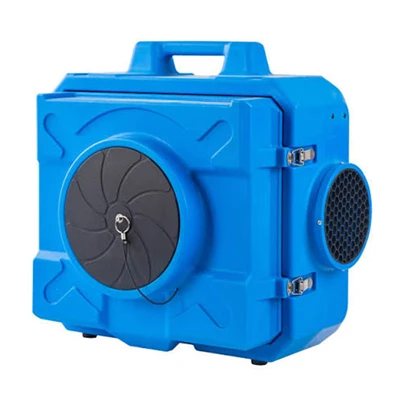
If you’re a cleanroom manager, safety officer, or facility lead looking to make sure your filters are protecting your personnel, or if you need to upgrade your filter systems to meet new health and safety standards, reach out to us to discuss your specific needs. We work with cleanrooms of all sizes, from small startup labs to large aerospace manufacturing facilities, to design and supply the right filter solutions for your unique hazards.
Gas Turbine Filtersa References
ISO 14644-1:2015, Cleanrooms and associated controlled environments — Part 1: Classification of air cleanliness by particle concentration.
United States Pharmacopeia (USP) Chapter <800>, Hazardous Drugs — Handling in Healthcare Settings.
National Sanitation Foundation (NSF) Standard 49, Class II (Laminar Flow) Biosafety Cabinetry.
Occupational Safety and Health Administration (OSHA) Technical Manual, Chapter IV, Section 1: Air Contaminants and Ventilation.
Jiangsu Renhe Energy Saving Technology Co., Ltd.
As one of the most professional cleanroom air filters manufacturers and suppliers in China, we also accept customized order. We warmly welcome you to wholesale durable cleanroom air filters in stock here from our factory. If you have any enquiry about quotation, please feel free to email us.
Address: No. 358 Nanyuan Road, Tangqiao Town, Zhangjiagang City
E-mail: oversea@rhfilter.com
WebSite: https://www.rhccafenv.com/
