As a supplier of lab mining equipment, I’ve had the privilege of witnessing firsthand the unique characteristics and multifaceted requirements of both lab – scale and industrial – scale mining equipment. This perspective allows me to articulate the notable differences between these two crucial domains in the mining industry, which are often shaped by scale, purpose, and technological complexity. Lab Mining Equipment
Scale of Operation
The most obvious difference between lab – scale and industrial – scale mining equipment lies in the scale of operation. Lab – scale equipment is designed for small – scale, controlled experiments and analyses. It is typically used in research institutions, universities, and small – scale exploration companies. For example, a lab – scale rock crusher might be able to process only a few kilograms of rock samples at a time. This equipment is compact and can fit easily on a laboratory bench, enabling researchers to conduct a series of tests on a limited amount of material.
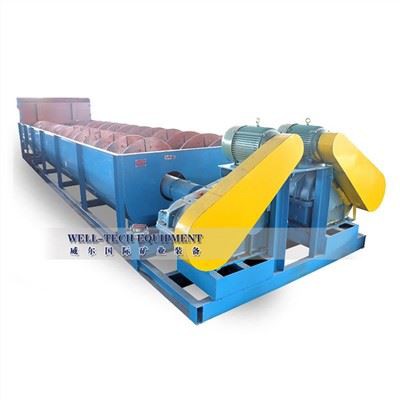
On the other hand, industrial – scale mining equipment is built for large – scale production. It is designed to handle massive quantities of ore and rock. An industrial – scale crusher can process hundreds or even thousands of tons of material per hour. These machines are often massive in size, taking up large areas in a mining site. For instance, a large – scale open – pit mining operation might use a primary crusher that is as big as a small house, capable of breaking down boulders into smaller pieces for further processing.
Precision and Accuracy
Lab – scale mining equipment is highly focused on precision and accuracy. In a laboratory setting, the goal is to obtain reliable and reproducible results. For example, a lab – scale assay balance can measure the mass of a sample with an extremely high degree of accuracy, often up to several decimal places. This precision is essential for determining the exact composition of a mineral sample, which can have significant implications for exploration and resource evaluation.
Industrial – scale equipment, while still engineered to perform effectively, does not require the same level of precision. The focus in industrial mining is on high – volume production. For example, an industrial – scale conveyor belt system is designed to transport large quantities of ore from one point to another. While it needs to operate efficiently and reliably, the exact amount of material it carries at any given moment is not as critical as in a laboratory setting. The emphasis is more on throughput and overall productivity.
Cost and Investment
Cost is another significant factor that differentiates lab – scale and industrial – scale mining equipment. Lab – scale equipment is generally more affordable in terms of upfront costs. Since it is smaller in size and designed for limited – scale operations, the manufacturing and acquisition costs are relatively low. For example, a basic lab – scale flotation machine can be purchased for a few thousand dollars, making it accessible to smaller research teams and startups.
In contrast, industrial – scale mining equipment represents a substantial investment. The cost of purchasing, installing, and maintaining these large – scale machines can run into millions or even billions of dollars. For instance, a new underground mining vehicle, such as a long – wall shearer used in coal mining, can cost several million dollars. Additionally, the cost of operating industrial equipment is high due to factors like energy consumption, maintenance, and labor requirements.
Technological Complexity
The technological complexity of lab – scale and industrial – scale mining equipment varies significantly. Lab – scale equipment often incorporates advanced analytical technologies. For example, a lab – scale X – ray fluorescence (XRF) spectrometer uses sophisticated detectors and software to accurately determine the elemental composition of a sample. This equipment requires highly trained technicians to operate and maintain, as it involves complex scientific principles and delicate instrumentation.
Industrial – scale equipment, while also technologically advanced, is more focused on mechanical robustness and automation. For example, modern industrial – scale crushers are equipped with advanced control systems that can adjust the crushing parameters based on the characteristics of the incoming material. However, the overall design is centered around withstanding the harsh conditions of a mining environment and achieving high – volume production. The automation in industrial equipment is aimed at reducing labor costs and increasing efficiency in large – scale operations.
Mobility and Portability
Lab – scale mining equipment is typically highly portable and mobile. It can be easily moved within a laboratory or transported to different locations for field research. For example, a portable core drill can be taken to a remote mining site for collecting rock samples. This mobility allows researchers to conduct on – site analyses and make quick decisions about potential resources.
Industrial – scale equipment, however, is often immobile or has limited mobility. Large – scale crushers, mills, and conveyor systems are usually fixed in place at a mining site. While some industrial equipment, such as haul trucks, can move around the mine, they are designed for relatively short – distance transportation within the mining operation. Relocating industrial – scale equipment is a complex and costly process that involves disassembling, transporting, and reassembling the machinery.
Safety Requirements
Both lab – scale and industrial – scale mining equipment have strict safety requirements, but they differ in nature. In a laboratory, safety is mainly focused on protecting the researchers from chemical hazards, electrical risks, and mechanical injuries. For example, lab – scale chemical extraction processes require the use of fume hoods to prevent the inhalation of toxic gases. Personal protective equipment (PPE) such as gloves, goggles, and lab coats are also mandatory for laboratory personnel.
In an industrial mining environment, safety is a broader concern. The large – scale nature of the operations means that there are risks associated with heavy machinery, blasting, dust exposure, and cave – ins. Industrial – scale equipment is equipped with safety features such as emergency stop buttons, guards, and warning systems. Additionally, extensive safety training programs are implemented for all workers in the mining operation to minimize the risk of accidents.
Maintenance and Lifespan
Lab – scale equipment generally has a shorter lifespan compared to industrial – scale equipment. Since it is used for less intensive operations and is often subject to more precise handling, the wear and tear on lab – scale equipment are relatively less severe. However, due to the advanced technology incorporated in lab – scale equipment, maintenance requires specialized skills. For example, a lab – scale electron microscope needs regular calibration and maintenance by technicians with in – depth knowledge of electron optics.
Industrial – scale equipment, on the other hand, is built to last for a long time. It is designed to withstand the harsh conditions of a mining environment, including high – temperature, high – pressure, and abrasive conditions. The maintenance of industrial – scale equipment is more focused on preventive maintenance to ensure continuous operation. For example, large – scale crushers require regular inspection and replacement of wear parts such as crusher liners to maintain optimal performance.
Adaptability and Flexibility
Lab – scale mining equipment offers high adaptability and flexibility. It can be easily modified to suit different experimental requirements. For example, a lab – scale leaching apparatus can be adjusted to change the temperature, pressure, and chemical composition of the leaching solution. This flexibility allows researchers to explore a wide range of mining processes and conditions.
Industrial – scale equipment is less flexible. Once installed, it is often difficult and costly to modify. The design of industrial – scale equipment is based on long – term production plans and specific ore characteristics. Any changes to the equipment require extensive engineering studies and significant investment. However, some modern industrial – scale equipment is designed with modularity in mind, which allows for limited flexibility in terms of upgrading and expansion.

If you are involved in mining research, exploration, or any related activities that require high – quality lab mining equipment, I’m here to assist you. Whether you need precision crushers for sample preparation, advanced analytical instruments for ore characterization, or reliable flotation machines for testing separation processes, we have a comprehensive range of products to meet your specific needs. I invite you to reach out to start a conversation about your lab mining equipment requirements. You can contact me to discuss the details and find the most suitable solutions for your projects.
Spiral Classifier References
- Hollings, P., & Herbert, R. (2003). Mineral Processing. Kluwer Academic Publishers.
- Wills, B. A., & Napier – Munn, T. J. (2006). Wills’ Mineral Processing Technology: An Introduction to the Practical Aspects of Ore Treatment and Mineral Recovery. Butterworth – Heinemann.
- Singh, R. P., & Srivastava, A. K. (2011). Handbook of Mineral Dressing: Theory and Practice. CRC Press.
Jiangxi Well-tech International Mining Equipment Co., Ltd.
Jiangxi Well-tech International Mining Equipment Co., Ltd. is one of the most professional lab mining equipment manufacturers and suppliers in China, featured by quality products and good service. Please rest assured to wholesale customized lab mining equipment at competitive price from our factory.
Address: Guzhang Industrial Park of Shicheng County, Ganzhou City, Jiangxi Province, China
E-mail: mily@benefication.com
WebSite: https://www.cn-welltech.com/
