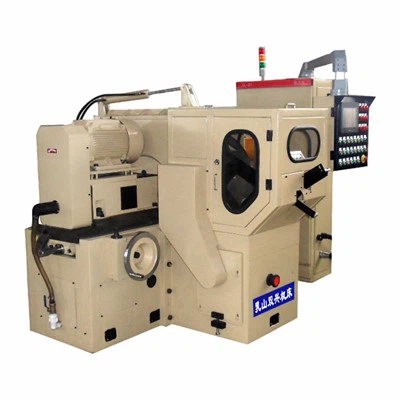
As a supplier of Double Disc Grinding Machines, I’ve witnessed firsthand the profound impact of the grinding process on the microstructure of workpieces. In this blog, I’ll delve into the intricate relationship between double disc grinding and workpiece microstructure, exploring the mechanisms at play and the implications for various industries. Double Disc Grinding Machines
Understanding the Basics of Double Disc Grinding
Double disc grinding is a precision machining process that involves simultaneously grinding two parallel surfaces of a workpiece using two rotating grinding wheels. This process is widely used in industries such as automotive, aerospace, and electronics to achieve high precision, flatness, and surface finish. The grinding wheels are typically made of abrasive materials such as diamond or cubic boron nitride (CBN), which are capable of removing material from the workpiece surface with high efficiency and accuracy.
The double disc grinding process can be divided into two main stages: rough grinding and finish grinding. During rough grinding, a large amount of material is removed from the workpiece surface to achieve the desired thickness and flatness. This stage typically uses a coarse-grained grinding wheel to maximize material removal rate. Finish grinding, on the other hand, is used to achieve the final surface finish and dimensional accuracy of the workpiece. This stage typically uses a fine-grained grinding wheel to minimize surface roughness and improve the overall quality of the workpiece.
Effects of Grinding Parameters on Workpiece Microstructure
The grinding process of double disc grinding machines is influenced by a variety of parameters, including grinding wheel speed, feed rate, depth of cut, and coolant flow rate. These parameters can have a significant impact on the microstructure of the workpiece, affecting its mechanical properties, surface integrity, and performance.
Grinding Wheel Speed
The grinding wheel speed is one of the most important parameters in the double disc grinding process. It affects the cutting speed, the amount of heat generated during grinding, and the material removal rate. A higher grinding wheel speed generally results in a higher cutting speed, which can increase the material removal rate and improve the productivity of the grinding process. However, a higher grinding wheel speed also generates more heat, which can cause thermal damage to the workpiece surface and affect its microstructure.
Feed Rate
The feed rate is the speed at which the workpiece is fed into the grinding zone. It affects the amount of material removed per unit time and the surface finish of the workpiece. A higher feed rate generally results in a higher material removal rate, but it can also increase the surface roughness of the workpiece. On the other hand, a lower feed rate can improve the surface finish of the workpiece, but it can also reduce the productivity of the grinding process.
Depth of Cut
The depth of cut is the amount of material removed from the workpiece surface during each pass of the grinding wheel. It affects the cutting force, the amount of heat generated during grinding, and the surface integrity of the workpiece. A larger depth of cut generally results in a higher cutting force and more heat generation, which can cause thermal damage to the workpiece surface and affect its microstructure. On the other hand, a smaller depth of cut can reduce the cutting force and heat generation, but it can also reduce the material removal rate and the productivity of the grinding process.
Coolant Flow Rate
The coolant flow rate is the amount of coolant that is supplied to the grinding zone during the grinding process. It affects the temperature of the grinding zone, the lubrication of the grinding wheel, and the removal of chips from the workpiece surface. A higher coolant flow rate generally results in a lower temperature in the grinding zone, which can reduce the thermal damage to the workpiece surface and improve its microstructure. It can also improve the lubrication of the grinding wheel, reduce the wear of the grinding wheel, and improve the surface finish of the workpiece.
Microstructural Changes in the Workpiece During Grinding
The grinding process of double disc grinding machines can cause a variety of microstructural changes in the workpiece, including grain refinement, phase transformation, residual stress, and surface damage. These microstructural changes can have a significant impact on the mechanical properties, surface integrity, and performance of the workpiece.
Grain Refinement
Grain refinement is the process of reducing the grain size of the workpiece material during grinding. It can improve the mechanical properties of the workpiece, such as hardness, strength, and toughness. Grain refinement can occur due to the high strain rate and high temperature generated during grinding, which can cause the grains to deform and recrystallize.
Phase Transformation
Phase transformation is the process of changing the crystal structure of the workpiece material during grinding. It can occur due to the high temperature and high stress generated during grinding, which can cause the atoms in the workpiece material to rearrange themselves into a different crystal structure. Phase transformation can have a significant impact on the mechanical properties of the workpiece, such as hardness, strength, and ductility.
Residual Stress
Residual stress is the stress that remains in the workpiece after the grinding process is completed. It can be caused by the thermal and mechanical stresses generated during grinding, which can cause the workpiece to deform and develop internal stresses. Residual stress can have a significant impact on the mechanical properties of the workpiece, such as fatigue life, crack propagation, and dimensional stability.
Surface Damage
Surface damage is the damage that occurs to the workpiece surface during the grinding process. It can be caused by the abrasive action of the grinding wheel, the high temperature and high stress generated during grinding, and the chemical reaction between the workpiece material and the coolant. Surface damage can have a significant impact on the surface integrity of the workpiece, such as surface roughness, surface finish, and corrosion resistance.
Implications for Various Industries
The impact of the grinding process on the microstructure of the workpiece has significant implications for various industries, including automotive, aerospace, and electronics. In the automotive industry, double disc grinding is used to manufacture engine components, transmission components, and brake components. The microstructural changes in these components can affect their mechanical properties, such as fatigue life, wear resistance, and dimensional stability, which can ultimately affect the performance and reliability of the vehicles.
In the aerospace industry, double disc grinding is used to manufacture turbine blades, compressor discs, and other critical components. The microstructural changes in these components can affect their high-temperature performance, oxidation resistance, and fatigue life, which can ultimately affect the safety and reliability of the aircraft.
In the electronics industry, double disc grinding is used to manufacture semiconductor wafers, printed circuit boards, and other electronic components. The microstructural changes in these components can affect their electrical properties, such as conductivity, resistivity, and capacitance, which can ultimately affect the performance and functionality of the electronic devices.
Conclusion
In conclusion, the grinding process of double disc grinding machines has a profound impact on the microstructure of the workpiece. The grinding parameters, such as grinding wheel speed, feed rate, depth of cut, and coolant flow rate, can affect the microstructural changes in the workpiece, including grain refinement, phase transformation, residual stress, and surface damage. These microstructural changes can have significant implications for the mechanical properties, surface integrity, and performance of the workpiece, which can ultimately affect the performance and reliability of the products in various industries.
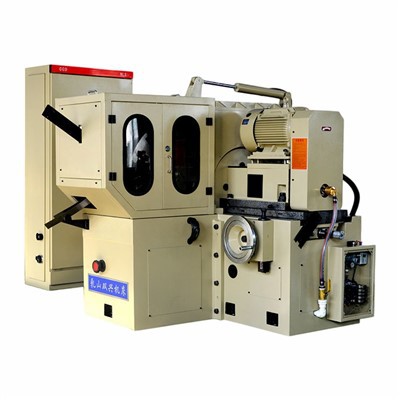
As a supplier of Double Disc Grinding Machines, we understand the importance of providing our customers with high-quality grinding machines that can achieve the desired microstructural changes in the workpiece. Our double disc grinding machines are equipped with advanced control systems and high-precision grinding wheels, which can ensure the accuracy and consistency of the grinding process. We also offer customized solutions to meet the specific requirements of our customers, including the selection of grinding parameters, the design of grinding fixtures, and the optimization of the grinding process.
Double Disc Grinding Machines If you are interested in learning more about our Double Disc Grinding Machines or have any questions about the grinding process and its impact on the workpiece microstructure, please feel free to contact us. We look forward to the opportunity to discuss your needs and provide you with the best possible solutions.
References
- Trent, E. M., & Wright, P. K. (2000). Metal cutting. Butterworth-Heinemann.
- Malkin, S., & Guo, C. (2008). Grinding technology: theory and applications of machining with abrasives. Society of Manufacturing Engineers.
- Shaw, M. C. (2005). Metal cutting principles. Oxford University Press.
- Rowe, W. B. (2009). Principles of modern grinding technology. Springer Science & Business Media.
- Astakhov, V. P. (2010). Metal cutting mechanics: theory, modeling, and simulation. CRC Press.
Rushan Shuangxing Machine Tool Manufacturing Co., Ltd.
Rushan Shuangxing Machine Tool Manufacturing Co., Ltd. is one of the most reliable double disc grinding machines manufacturers and suppliers in China, featured by quality products and low price. Please rest assured to wholesale durable double disc grinding machines for sale here from our factory. Customized orders are welcome.
Address: No. 28, Chuangye 1st Road, Rushan, Weihai, Shandong Province, China.
E-mail: wxm@rssxjc.net
WebSite: https://www.ddgmachine.com/
