Hey there! I’m a barite supplier, and I’ve been in this business for quite a while. Over the years, I’ve learned a thing or two about the quality standards for barite. In this blog, I’ll share what I know and why these standards matter so much. Barite
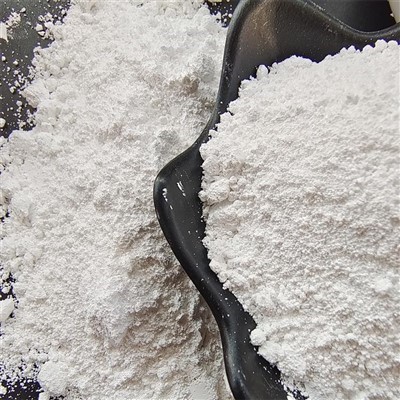
First off, let’s talk about what barite is. Barite, also known as baryte, is a mineral composed of barium sulfate (BaSO4). It’s a pretty common mineral, and it has a bunch of uses. The most well – known use is in the oil and gas industry, where it’s used as a weighting agent in drilling muds. But it’s also used in paint, plastics, rubber, and even as a filler in paper products.
So, what are the quality standards for barite? Well, there are several key factors that we suppliers and buyers look at.
Purity
Purity is one of the most important quality standards for barite. The higher the purity of barite, the better its performance in various applications. In the oil and gas industry, for example, high – purity barite is essential. Impurities in barite can cause problems during the drilling process. If there are too many impurities, it can affect the density and viscosity of the drilling mud, which can lead to issues like wellbore instability and poor drilling efficiency.
A good quality barite should have a high barium sulfate content. Usually, for oil and gas applications, barite with a BaSO4 content of at least 90% is preferred. Some high – end applications may even require barite with a purity of 95% or more. When I’m sourcing barite, I always make sure to test the purity. We use chemical analysis methods to determine the exact composition of the barite. This helps me ensure that I’m providing my customers with a product that meets their requirements.
Density
Density is another crucial quality standard. In the oil and gas industry, the density of barite is used to control the pressure in the wellbore. A higher – density barite can provide better pressure control, which is essential for safe and efficient drilling.
The density of barite is typically measured in grams per cubic centimeter (g/cm³). For most oil and gas applications, barite with a density of around 4.2 – 4.6 g/cm³ is ideal. If the density is too low, it won’t be able to provide sufficient weight to the drilling mud, and if it’s too high, it can cause problems with the flow properties of the mud.
I always measure the density of the barite I’m selling. We use a simple but accurate method called the pycnometer method. This involves measuring the mass and volume of a sample of barite to calculate its density. By ensuring that the barite has the right density, I can guarantee that my customers’ drilling operations will run smoothly.
Particle Size
Particle size is also an important quality factor. In the oil and gas industry, the particle size of barite affects the rheological properties of the drilling mud. If the particles are too large, they can cause abrasion in the drilling equipment, leading to increased wear and tear. On the other hand, if the particles are too small, they may not provide enough weighting effect.
For most applications, barite with a particle size distribution between 2 – 74 micrometers is preferred. This range ensures that the barite can be easily suspended in the drilling mud and provides the right amount of weighting. I use a particle size analyzer to measure the particle size of the barite. This helps me ensure that the product I’m selling meets the industry standards.
Solubility
Solubility is another aspect to consider. In some applications, such as in the production of paint and plastics, the solubility of barite can affect the final product’s quality. Barite is generally insoluble in water, but it can dissolve in some acidic solutions.
If the barite has a high solubility in acidic solutions, it may not be suitable for applications where chemical stability is required. I always test the solubility of the barite I’m selling to make sure it meets the specific requirements of my customers.
Color
Color may not seem like a crucial quality standard at first glance, but it can be important in some applications. For example, in the paint industry, the color of barite can affect the final color of the paint. A pure white barite is often preferred in applications where color is important.
I’ve found that customers in the paint and plastics industries are very particular about the color of the barite. So, I always make sure to select barite with a consistent and appropriate color.
Now, you might be wondering why these quality standards are so important. Well, for one thing, meeting these standards ensures that the barite performs well in its intended applications. In the oil and gas industry, using high – quality barite can lead to more efficient drilling, fewer equipment problems, and ultimately, cost savings.
In other industries, such as paint and plastics, high – quality barite can improve the quality of the final product. For example, in paint, high – purity barite can provide better hiding power and durability.
As a barite supplier, I take these quality standards very seriously. I know that my customers rely on me to provide them with a product that meets their needs. That’s why I have a strict quality control process in place. I source barite from reliable mines, and I test every batch to ensure that it meets the required standards.
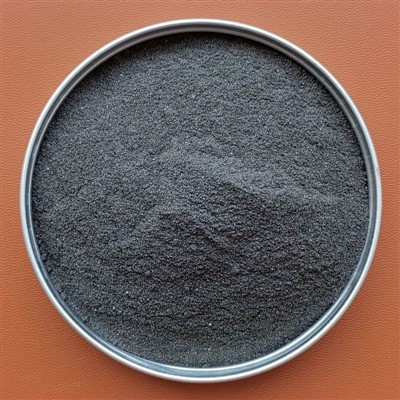
If you’re in the market for barite, whether it’s for the oil and gas industry, paint, plastics, or any other application, I’d love to talk to you. I can provide you with high – quality barite that meets all the necessary standards. Just reach out to me, and we can discuss your specific requirements. I’m confident that I can offer you a great product at a competitive price.
Mica References
- Handbook of Mineral Dressing, by A. M. Gaudin
- Oilfield Chemistry, by Norman R. Morrow
Lingshou County LM Mineral Products Co., Ltd.
As one of the most professional barite manufacturers and suppliers in China, we’re featured by quality products and good service. Please rest assured to buy customized barite made in China here from our factory. Contact us for more details.
Address: Dongzhuang Village, Nanyanchuan Township, Lingshou County, Shijiazhuang City, Hebei Province
E-mail: lmwtwz@163.com
WebSite: https://www.lmwtz.com/
